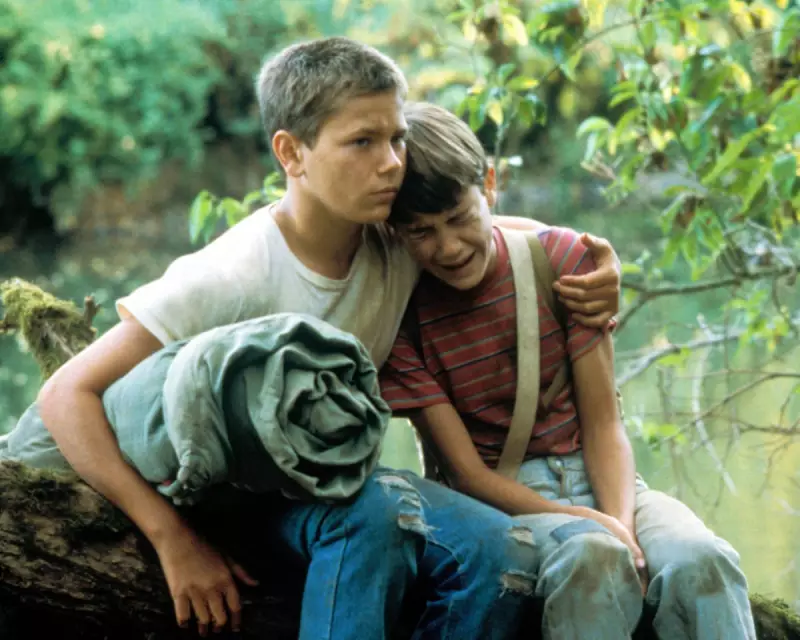
For a generation of viewers, Rob Reiner's 1986 film Stand By Me became a defining portrait of boyhood friendship and loss. But for the director himself, the story cut far deeper, serving as a poignant reflection of his own strained relationship with his father, comedy legend Carl Reiner. This profound personal connection was revealed during a unique retrospective interview in August 2006, marking the film's 20th anniversary.
A Pinch-Me Moment in Beverly Hills
The meeting took place in Reiner's office at Castle Rock Entertainment, the production company he co-founded in 1987, aptly named after the fictional town in the film. The walls were adorned with posters of his iconic works like This Is Spinal Tap and When Harry Met Sally, but focus quickly shifted to a modest television screen. For the journalist present, a self-confessed devotee who had watched the film "on loop" as a teenager, it was an overwhelming experience to sit with its creator.
As the opening scenes rolled, Reiner immediately pinpointed the film's emotional core. Watching the sensitive protagonist, Gordie Lachance (played by Wil Wheaton), struggle to connect with his dismissive father, Reiner explained, "It's all about him feeling that his father doesn't love him." He then turned the lens on his own life, confessing that despite his father Carl's monumental presence in Hollywood, he often felt unseen. "I felt that he didn't see me," Reiner admitted, revealing the personal wound that drew him to Stephen King's source novella, The Body.

Escape from a Shadow: Crafting a Classic
Prior to Stand By Me, Reiner was best known for comedy, both as an actor on All in the Family and as the director of This Is Spinal Tap. This film was a conscious departure—an attempt to step out of his father's shadow and explore the "bassline of melancholy" he found in King's story. Reiner, who was the same age as Gordie in 1959 when the film is set, saw himself in the "invisible boy."
He spoke fondly of the 60 sun-soaked days shooting in Oregon during the summer of 1985. To forge authentic bonds between his young cast—River Phoenix, Corey Feldman, Jerry O'Connell, and Wil Wheaton—Reiner organised workshops and even took them river rafting. The result was the palpable, ragged camaraderie that audiences cherish.
A Chilling Prophecy and Lasting Nostalgia
Watching the film together, the conversation often lapsed into a respectful, memory-stirred silence. Reiner noted the film made him look back on his own childhood with nostalgia. The viewing became particularly poignant during the final scenes, as an adult Gordie (Richard Dreyfuss) narrates the fate of his best friend, Chris, played by River Phoenix.
"We had no idea that River was going to die," Reiner said, referencing Phoenix's tragic death from an overdose in 1993. The scene where Chris walks away from the camera, fading from Gordie's life, and the narration detailing his death as an adult trying to break up a fight, now felt like a chilling prophecy. "When you look at the scene now, it's really chilling," Reiner murmured.
For the journalist, the day was magical, spent with a director as warm-hearted as his film. The experience reaffirmed how Stand By Me had nursed and shaped a generation of viewers dealing with their own familial disconnects and who found solace in friendship. As Reiner himself concluded, "Stand By Me means more to me than any of my other films." It was a sentiment born not from box office receipts, but from a deeply personal journey of a son seeking his father's love, immortalised on screen.