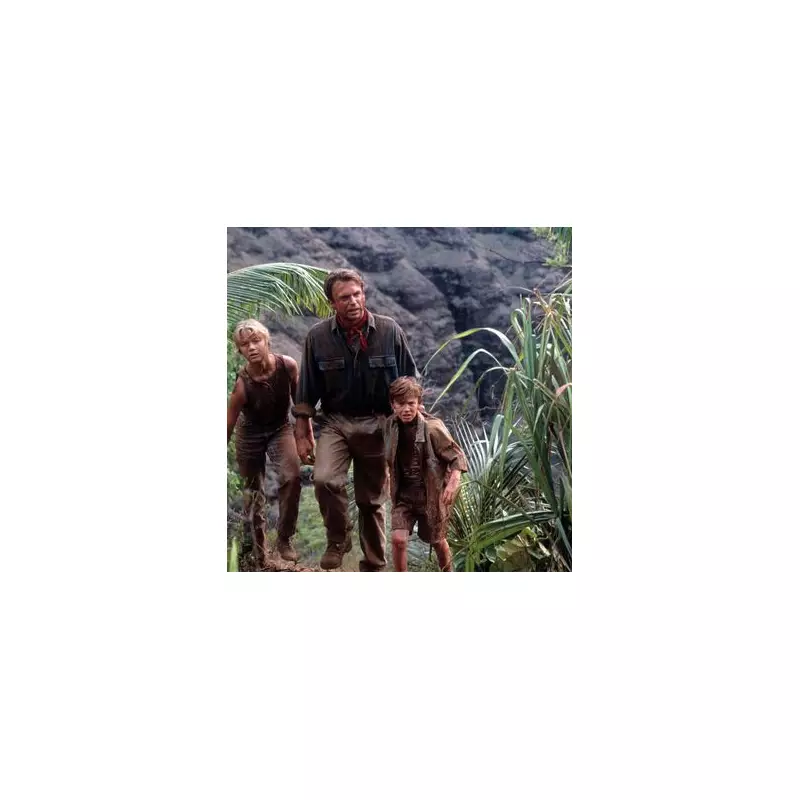
Steven Spielberg's 1993 blockbuster Jurassic Park remains a landmark in cinematic history, a thrilling adaptation of Michael Crichton's novel that forever changed visual effects. The film, starring Sam Neill, Laura Dern, Jeff Goldblum, and Richard Attenborough, follows the catastrophic collapse of a dinosaur theme park on Isla Nublar. Yet, the wildest stories unfolded not on screen, but behind the cameras, where a hurricane hit, animatronics developed minds of their own, and sound designers got creative with tortoises.
The Animatronic That Came Alive & Ingenious Sound Design
One of the film's most startling secrets concerns the iconic, full-size T-Rex animatronic. Crew members reported that the massive creature would sometimes shudder or move unexpectedly between takes. The cause was surprisingly simple: the animatronic absorbed water during rain scenes, leading to involuntary twitches and head turns that genuinely startled the cast and crew.
The film's legendary soundscape was built from an unexpected menagerie. The terrifying T-Rex roar was a complex mix of a baby elephant's squeal, a lion's roar, an alligator's hiss, slowed-down tiger growls, and even the yelp of a Jack Russell terrier. For the velociraptor's distinctive mating calls, sound engineers recorded the sounds of tortoises mating. The ground-shaking footsteps of the T-Rex were created by dropping heavy redwood trunks and capturing the impact.

Practical Effects Triumph & On-Set Chaos
Despite its reputation as a CGI pioneer, Jurassic Park relied heavily on practical effects. The movie contains only about 15 minutes of computer-generated imagery, with a mere 6 minutes of actual dinosaur CGI. The rest was achieved through advanced animatronics, puppets, and live-action rigs. A famous example is the raptors in the kitchen scene; while some shots used CGI, many were performers in incredibly detailed, practical suits, lending tangible realism to the suspense.
Even simple effects required ingenuity. To create the iconic ripples in the water glass signalling the T-Rex's approach, technicians plucked guitar strings attached beneath the dashboard of the Jeep until the vibration looked perfect on camera.
The production faced immense stress and real-world danger. Spielberg revealed that editing the tense sequence where Lex (Ariana Richards) is nearly crushed in a Jeep stressed the team so much he suggested they "see a therapist afterward." Furthermore, filming in Hawaii was interrupted by Hurricane Iniki, a real Category 4 storm that slammed into Kauai. While the crew sheltered in a hotel ballroom, Spielberg filmed footage of the tempest, some of which inspired the film's final storm sequences.
A Lasting Hollywood Legacy
The film's impact extended far beyond its own success. After viewing the groundbreaking CGI test for the dinosaurs, George Lucas reportedly stated it convinced him the technology was finally ready to proceed with his Star Wars prequels. Jurassic Park didn't just entertain audiences; it demonstrated a new frontier for filmmaking, blending practical and digital effects in a way that set the standard for decades to come.