BBC Faces Criticism Over 'Box-Ticking' Diversity Casting in Period Dramas
A comprehensive independent review has delivered a stark warning to the BBC, urging the corporation to cease what it describes as 'box-ticking' and 'shoe-horning' casting practices that place ethnic minority actors into historical dramas where their presence challenges audience expectations of authenticity.
Questioning Authenticity in Historical Settings
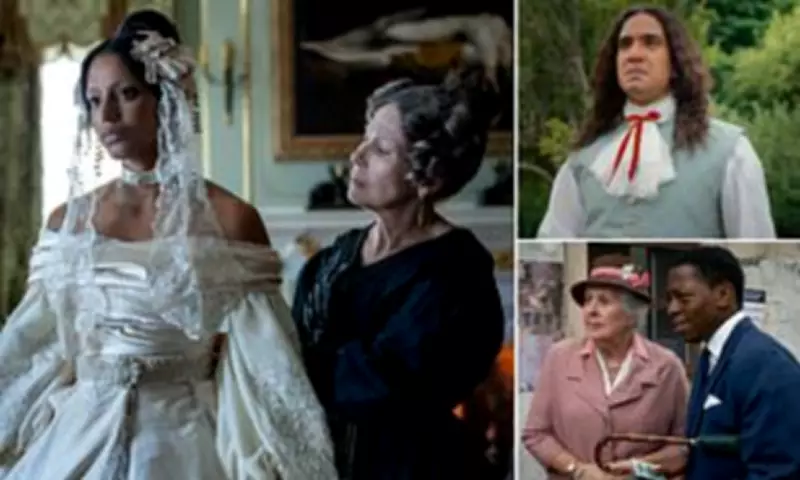
The report, conducted by former Bafta chairwoman Anne Morrison and media consultant Chris Banatvala, highlights several high-profile examples where casting choices have drawn viewer criticism for appearing anachronistic. It specifically cites the 2023 adaptation of Charles Dickens's Great Expectations, where mixed-race actress Shalom Brune-Franklin portrayed Estella, a character in a story set in the early to mid-19th century.
Another instance noted was mixed-race actor Nathaniel Curtis playing Sir Isaac Newton in a Doctor Who anniversary special. While the review acknowledged the science-fiction context made this 'less of a stretch', it underscored a broader pattern. The 2023 adaptation of Agatha Christie's Murder Is Easy was also scrutinised for casting David Jonsson as Luke Fitzwilliam and incorporating West African Yoruba cultural elements into a mid-century English village setting.

'Audiences are particularly unforgiving of this if it challenges their expectations of what they have switched on to see,' the review stated. 'If there's an Agatha Christie murder mystery over the Christmas period, they won't expect to be taken into anti-colonial struggles alongside the country house murder.'
Risk of Erasing Historical Realities
The report presents a nuanced argument, suggesting that such well-intentioned casting can have unintended negative consequences. It warns that depicting a historically inaccurate world where people of colour routinely held high societal positions risks erasing the genuine past exclusion and oppression faced by ethnic minorities.
'In depicting an anachronistic historical world... there may be the unintended consequence of erasing the past exclusion and oppression of ethnic minorities and breeding complacency about their former opportunities,' the review added. It recommended the BBC should feel as comfortable creating programmes with all-white casts as it does with all-black casts, like I May Destroy You.
Broader Representation Failings Beyond Period Drama
The criticism extends beyond historical fiction to contemporary programming. The review points to the crime drama Shetland, which cast actors of Tanzanian, Sri Lankan, and Jamaican/Irish heritage as Procurators Fiscal. It notes that ethnic minorities constitute just 3.2% of senior law officers in Scotland, with numbers in rural Shetland likely far lower, questioning the authenticity of such portrayals.
Furthermore, the report identifies significant shortcomings in how the BBC connects with working-class audiences and women over the age of 60. It found that perceptions of the broadcaster are notably lower among these groups, who feel less satisfied with their on-screen representation.
A London-Centric and Middle-Class Bias
A core finding of the review is that the BBC remains too 'London-centric' and 'middle class' in its outlook and decision-making. It asserts that power within the organisation is excessively concentrated in the UK capital, which has direct consequences for how the rest of the country is portrayed.
'Genuine production, rooted in the location, made by people who understand it in depth was described to us as fundamental to on-air authenticity. We agree,' the report said.
To address this, the review recommends relocating senior editorial staff and at least half of all senior TV genre commissioners outside London, particularly to areas where audience engagement is currently weaker. It also suggests moving elements of network radio commissioning out of the capital over time.

Gender Imbalance and Institutional Response
The review also highlighted a persistent gender imbalance, noting that men still outnumber women in BBC news, nations, and factual programming, a disparity that becomes more pronounced among older age groups. It called for a renewed effort to achieve gender balance and for the BBC to better utilise its data to track this issue, ensuring women have careers as long as their male counterparts.
In response, BBC Chairman Samir Shah acknowledged the critique, stating: 'It is vital the BBC authentically reflects the lives of all the communities, classes and cultures across the UK. Decision-making must happen closer to audiences.' The BBC Executive has committed to strengthening how it measures audience portrayal and representation, while welcoming recognition of the progress already made.