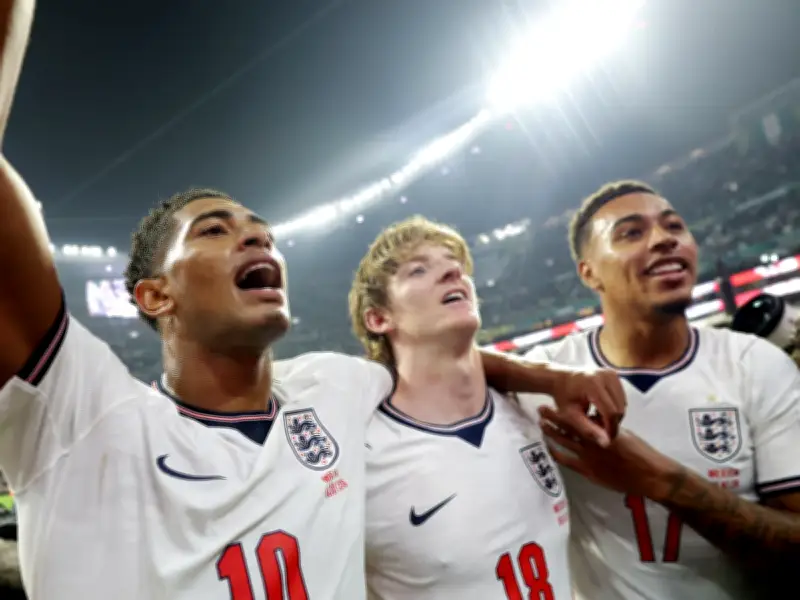
Oasis's iconic track 'Wonderwall' has been adopted by England's football team and fans as the unofficial anthem of the 2026 World Cup, sung after every victory. However, the song never reached number one in the UK charts and was almost sung by Noel Gallagher instead of Liam.
England's Love Affair with Wonderwall
Following England's World Cup wins, millions of fans have belted out 'Wonderwall' in stadiums and pubs. England captain Harry Kane lost his voice after singing it following a victory over Mexico. Jude Bellingham has also been seen joining in. The song gained renewed popularity during Oasis's reunion tour in 2025 and has seen a 300% spike in streams after England's recent matches.
Liam Gallagher has fueled excitement by saying 'I'm ready' when asked about performing the song live if England reaches the final. His brother Noel, a regular at Manchester City games, told TalkSport: 'For your information, that song belongs to the people, I don't see it as my song. I thought it was a brilliant moment.'
The Untold Story Behind Wonderwall
Released in 1995 on Oasis's album '(What's The Story) Morning Glory?', 'Wonderwall' was originally titled 'Wishing Stone' during demo sessions. The title was inspired by George Harrison's solo album 'Wonderwall Music'. Liam Gallagher initially hated the song, saying in the book 'Supersonic': 'I didn't get it at the time... It just didn't seem right. I thought it was weird.' He later admitted: 'I was totally wrong, and that's f**king right. I love that tune.'
The song's meaning remains ambiguous, with Noel calling it an ode to friendship or an imaginary friend, while others believe it was about his then-girlfriend Meg Matthews. Noel originally wanted to sing 'Wonderwall' himself after Liam refused, but Liam later changed his mind. Noel recalled: 'Liam hated Wonderwall when he heard it. He actually said "I'm not singing it, it's not f***ing rock and roll." I'll sing it then. When it takes shape, he decides that he's going to save it from mediocrity.'
Recording and Production
Noel attempted to record the guitar part outside on a wall at Rockfield studios in Wales, but background noise from sheep forced him to abandon the idea. Liam recorded the vocals in just four takes, and the song was mixed in two hours by producer Owen Morris, who said: 'What a pleasure it was to f**king record with Liam Gallagher... In two hours it was mixed and it's the biggest thing Oasis have ever done.'
The track features a mellotron played by Paul 'Bonehead' Arthurs. The music video, which won British Video of the Year at the 1996 Brit Awards, includes guitarist Scott McLeod, who briefly replaced bassist Paul 'Guigsy' McGuigan due to nervous exhaustion, and marked drummer Alan White's debut with the band.
Chart Performance and Legacy
'Wonderwall' entered the UK charts on November 11, 1995, and spent 28 weeks in the Top 40, but never reached number one. A pop cover by Mike Flowers also peaked at number two. The song reached the top 10 in 15 countries and hit number one in Australia. Following England's World Cup success, it is expected to re-enter the top 10.
Oasis's 'Don't Look Back in Anger' became an emotional anthem for Manchester after the 2017 Arena bombing. In contrast, 'Wonderwall' singalongs in 2026 symbolize national celebration and joy, uniting the country in support of the football team.