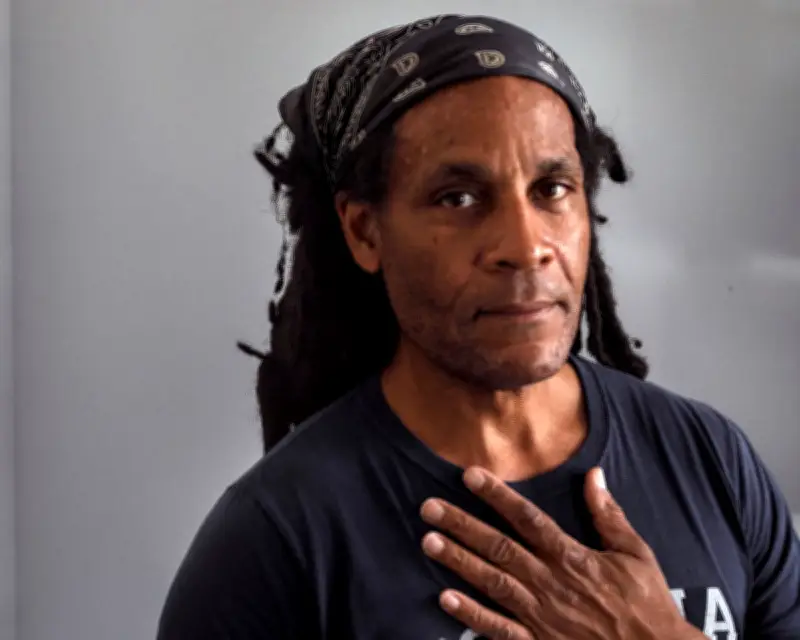
After winning the €100,000 Dublin literary award in 2006 for his debut novel Man Gone Down, Michael Thomas expected to produce a follow-up within a year. Instead, it took 20 years. His new memoir, The Broken King, reveals why.
Thomas rose to fame with Man Gone Down, which appeared on the cover of the New York Times Book Review and earned him a position as assistant professor at Hunter College. But success contributed to his breakdown. Receiving the award made him feel relief that he could pay off debts—he was two months behind on his mortgage—rather than celebration. 'I was really in a year-long descent,' he said.
A Crippling Break
In late 2007, Thomas had a six-page proposal for his next book, expecting to finish in six months to a year. 'Then I had a break, a really crippling break,' he said. He became 'short-cycling manic depressive,' experiencing rapid shifts between illumination and depression. On a book tour in Kansas City, he saw 'dragons and demons' and suffered a breakdown at the airport. 'I knew I was insane,' he wrote. Back in New York, his wife took him to a psychiatric hospital, where he told the doctor, 'It's a curious thing, the phrase "out of your mind"... My trouble now is that I'm in a way, in part, deep in it.'
The book catalogs these events in detail, alongside Thomas's broader memories, anxieties, and cultural references—from TS Eliot to James Baldwin to the Rolling Stones. He attributes his difficulties to a 'perfect storm' of poverty, racism, alcoholism, sexual violence, and mental illness.
Trauma and Neurodivergence
Thomas reveals that he was raped at age seven at a day camp in Boston. He didn't tell his parents, burning his clothes to hide it. 'I knew my pain would kill them,' he writes. The incident warped his life: he became distant, wild, drunk, and struggled with self-harm and intimacy. He told his future wife in his 20s after reading a passage about rape in a Baldwin novel, which triggered a fever and hospitalization.
Halfway through The Broken King, Thomas recounts an occupational therapist diagnosing his son with a 'non-specific cognitive disorder' and suggesting 'Like father, like son.' Until then, Thomas had blamed his struggles on race, class, and artistic temperament—not neurodivergence. As a child, he was diagnosed with dyslexia and ADHD, but only as an adult did he receive a level-1 autism diagnosis. 'The book is autistic,' he said. 'It's really just a study of someone with level-one autism trying to tell a story.'
Race and Family
Thomas grew up in public housing with a single mother who valued education. He recalls white people being dangerous: 'Benevolent whites didn't think I was Black. Blackness was something they were helping me overcome.' He married a white woman, and raising mixed-race children complicates matters. 'I don't want the things that happened to me to happen to my kids,' he said, adding that they get to define their own identity.
His father abandoned the family when Thomas was eight, struggled with depression, drank heavily, and often lived in his car. 'I could be living in my car right now,' Thomas said, acknowledging the role of privilege and support in his stability.
Finding Stability
Thomas divorced in 2014 and lost his mother to Covid in 2020. Now 58, he has a new partner and an eight-year-old son. He says he is becoming 'acutely aware of my strangeness, but not self-conscious about it.' 'I think I'm starting to accept myself,' he said. 'I don't have the anger I used to have. I don't have the fear I used to have—at least in this moment.' The Broken King is published by Summit Books.