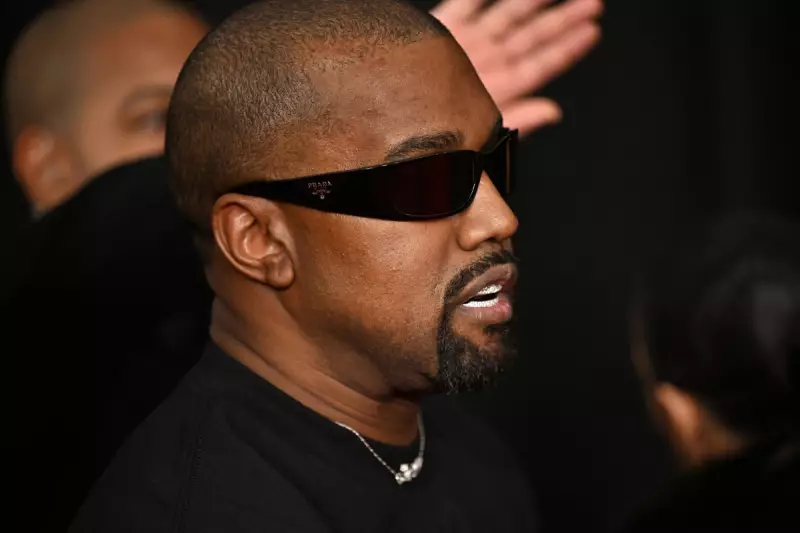
In a striking public mea culpa, the artist formerly known as Kanye West has issued a lengthy apology for years of controversial behaviour, directly attributing his actions to a traumatic brain injury sustained over two decades ago. The rapper, who now legally goes by Ye, placed a full-page advertisement addressed "To Those I've Hurt" in Monday's edition of The Wall Street Journal, just days before the scheduled release of his new album, Bully.
A Neurological Explanation for Erratic Conduct
Within the detailed open letter, the 48-year-old Grammy winner explicitly connected his recent antisemitic rants and other concerning public episodes to neurological damage caused by a near-fatal car accident in 2002. "Twenty-five years ago, I was in a car accident that broke my jaw and caused injury to the right frontal lobe of my brain," Ye wrote. He elaborated that while immediate medical attention focused on visible fractures and swelling, the deeper, internal cranial injury remained undetected for years.
According to his account, the possibility of this specific frontal-lobe injury was not raised until a formal diagnosis in 2023. This revelation, he suggests, provides a crucial medical context for understanding a pattern of behaviour that has frequently dominated headlines and sparked widespread condemnation.

The Complex Interplay with Bipolar Disorder
Ye further explained that he believes this brain injury has compounded his ongoing struggle with bipolar disorder, a condition he was diagnosed with in 2016 during his marriage to Kim Kardashian. He described the disorder's insidious nature, noting that denial is a common defence mechanism. "When you're manic, you don't think you're sick. You think everyone else is overreacting," he wrote, characterising the feeling as one of being "unstoppable" while simultaneously losing grip on reality.
He expressed profound regret for actions taken during these manic spirals, including a period where he "gravitated toward the most destructive symbol I could find, the swastika." Ye was careful to state that his medical conditions do not excuse his past behaviour, firmly asserting, "I am not a Nazi or an antisemite. I love Jewish people."
A Descent to Rock Bottom and a Path to Recovery
The apology letter delves into a particularly dark period in early 2025, which Ye describes as a four-month-long manic episode marked by psychotic, paranoid, and impulsive behaviour that "destroyed my life." He admitted there were moments when he "didn't want to be here anymore." It was after hitting this "rock bottom" that his wife, Bianca Censori, encouraged him to finally seek professional help.
Ye wrote of experiencing "disconnected moments" that led to poor judgment and reckless behaviour, often feeling like an out-of-body experience. "I regret and am deeply mortified by my actions in that state, and am committed to accountability, treatment, and meaningful change," he affirmed. The statement concludes with an appeal for "patience and understanding" from his fans as he works to earn their forgiveness.
Context and Previous Accountability Efforts
This public letter follows a meeting Ye had with a New York rabbi in November, where he reportedly expressed taking accountability and feeling "profound remorse" for his past antisemitic tirades. Representatives for the artist did not immediately respond to requests for further comment on the published apology.
The Independent includes resources for those experiencing distress: in the UK and ROI, the Samaritans can be contacted on 116 123; in the USA, the 988 Suicide and Crisis Lifeline is available 24/7.