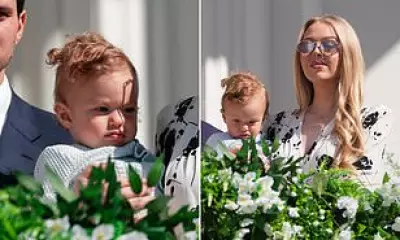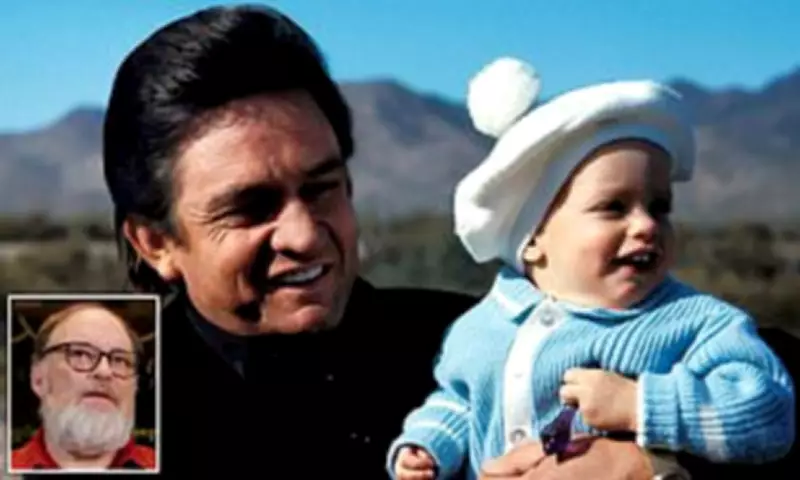
The phenomenon of the 'nepo baby' – children of celebrities leveraging family connections for fame – is more prominent than ever in today's entertainment landscape. From Kate Hudson, daughter of Bill Hudson and Goldie Hawn, earning Oscar and BAFTA nominations, to Miley Cyrus eclipsing the fame of her country singer father Billy Ray, many offspring find success seemingly handed to them. However, for John Carter Cash, the only son of music icons Johnny Cash and June Carter, the path has been fraught with unique pressures and identity struggles.
The Weight of a Legendary Legacy
John Carter Cash has candidly revealed the profound challenges of growing up as the son of Johnny Cash, one of the best-selling music artists of all time with over 90 million records sold. Hits like I Walk The Line and Ring of Fire cemented his father's status, but for John, sharing not only the same name but also the same profession made carving out his own identity exceptionally difficult.
In a revealing interview with The Times, John expressed the emotional burden: 'You feel like a lot has been placed on you. You will for ever be remembered as their son, not as yourself.' This sentiment captures the core dilemma faced by many children of famous parents, where public perception often overshadows personal achievement.

Forging an Independent Path
Determined to avoid becoming a mere Johnny Cash replica, John has actively pursued a multifaceted career. He has released solo albums, produced notable artists including Emmylou Harris and Elvis Costello, and authored a series of children's books. Reflecting on his journey, he confessed: 'Being the child of a famous person may open the door, but it doesn’t keep you there. You’ve got to forge your own path.'
Despite these efforts, John acknowledges that his legacy is inextricably tied to his parents. Now aged 55, he has come to accept that he will always be loved primarily for who his parents are – a connection he can never fully escape.
The Ballad of Johnny and June: A Personal Project
John's most significant career endeavour to date is his new musical, The Ballad of Johnny and June, which tells the authentic story of his parents' complex relationship. Approached by director Des McAnuff, John was keen to portray his parents realistically, moving beyond a simplistic 'happily ever after' narrative.
The musical delves into the couple's deep love, which began when Johnny fell for June while both were performing, despite him being married to his first wife, Vivian Liberto, at the time. They married in 1968, but their union was shadowed by Johnny's severe drug addiction.
Confronting Addiction and Love
John has openly discussed his father's struggles, noting that during the 1980s, the family had to stage an intervention. Johnny himself admitted to a habit of up to a hundred pills a day combined with a case of beer, describing it as 'deadly poisonous.' June also battled painkillers and opiates in her later years.
Yet, John emphasises that the musical is not a tragedy. Instead, it reflects how he learned to love his parents through their addiction. He explained: 'My parents were in love from the moment they got together until they died, but that’s not to say it was all wonderful.' When asked about being the product of music's greatest love affair, he retorted: 'Evidently, you weren’t there.'
Dispelling Myths and Celebrating Humanity
Through this project, John aims to challenge misconceptions that Johnny Cash was a 'dark figure.' He portrays his father as an incredibly hard worker with a strong sense of humour, and his parents as well-educated individuals who practised forgiveness and unconditional love.
John's childhood was far from ordinary. He travelled the world with his parents until Johnny's retirement in 1997, when John was 27. Staying in cheap motels on the road and spending time in studios, he rubbed shoulders with legends like Nick Cave, Joe Strummer of The Clash, and producer Rick Rubin.

A Legacy of Unconditional Love
Despite the pressures, John recalls a relaxed parenting style where homework was never pressured, but family music sessions were encouraged. He hopes the musical forefronts this sense of unconditional love, stating: 'I wanted that sense of unconditional love to be at the forefront for this play.'
As the 'nepo baby' trend continues to spark debate, John Carter Cash's story offers a nuanced perspective on the intersection of privilege, pressure, and personal identity in the shadow of fame.