There are very few people alive today who can recall what was broadcast on ITV precisely fifty years ago, just after 8.15pm on a Wednesday evening. I am one of them. The programme was And Mother Makes Five, featuring Wendy Craig as a flustered housewife in what we would now term a blended family.
A Personal Connection to Tragedy
I was fourteen years old, watching with my mother in our living room, which we then referred to as the lounge. Our home was a modest interwar semi-detached house in Southport, backing onto a railway line. Southport is a refined coastal town that, in the summer of 2024, gained tragic global attention when three young girls were fatally stabbed in a dance class. The youngest, Bebe, was the cherished granddaughter of one of my oldest and dearest friends, forging a profound personal link to that awful event.
The Life-Changing News
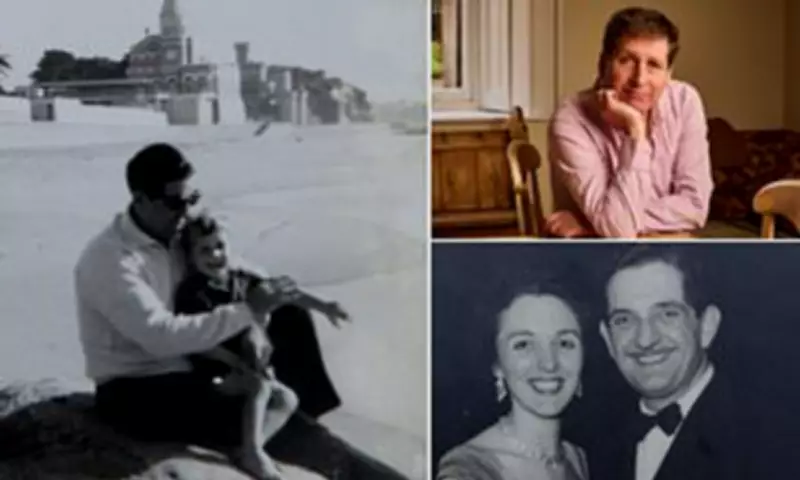
Yet, the death that truly defined my existence was the one I learned about on February 4, 1976, midway through that same television show. Our family unit was small: just my mother, my father, and me. My father, Allen, was primarily in the business of women's underwear. He operated his own enterprise in Liverpool, purchasing end-of-line stock from manufacturers and selling it to department stores and market traders.

His trade was mainly bras and knickers, though he occasionally ventured into other products, not always successfully. I recall a purchase of 10,000 multi-coloured jar lid grips that barely sold. The silver lining was that we never struggled with a stubborn lid at home. My mother, Miriam, also worked in the business, handling secretarial tasks and packing orders in a rented warehouse near the docks.
A Comfortable, If Precarious, Life
It was not a highly profitable venture, and my father's persistent gambling habit did not help matters. Nevertheless, we lived comfortably enough, enjoying holidays in Spain or Portugal when sales were strong. Dad always maintained a respectable car, believing it was good for business; in 1976, it was a bronze Ford Granada.
He was a devoted father—affectionate, involved, humorous, and a superb storyteller with genuine tales from his time as an RAF flying instructor during the war. He was also my steadfast ally in frequent disagreements with my mother, who was elegant and cultured but could be formidably stern.
The Fateful Evening
My father was sixty, considerably older than my friends' fathers, as he was forty-six when he and my mother adopted me as a three-week-old baby. I had known I was adopted since the age of ten but never sought information about my birth parents, feeling it would be disloyal. That story would unfold later.
On that Wednesday evening fifty years ago, my father was not at home. He had travelled by train from Liverpool Lime Street to London to meet a key supplier, Roy Dickens of Triumph International. When the doorbell rang just after 8.15pm, I answered to find two police officers—a young woman and an older man—visible through the frosted glass.
I ushered them into the lounge, and my mother, alarmed, switched off the television. The male officer informed us that my father had suffered a massive heart attack on the train and was believed to have died almost instantly. The sound of my mother's wail is something I will never forget. In her distress, she had to travel to Liverpool to identify the body, while I remained at home.
Navigating Grief and Adolescence
I was absent from school for nearly three weeks, missing double maths but grappling with a grim new reality: now, it was just mother and me. Upon my return, I was met with an awkward silence; our form master had instructed the class not to mention Viner's father. However, my friend Venables, after consulting his own dad, approached me in a corridor to express his condolences, solidifying a friendship that endures to this day.
There is no ideal age for a boy to lose his father, but fourteen is particularly brutal. Compounding the loss of my sole male role model, puberty struck with force, destabilising my already shaky foundations. Caught in a storm of testosterone, I neglected my O-level studies and provoked conflicts that often ended in physical altercations.

A Loss of Status and Identity
In contemporary psychological terms, I believe I suffered a profound loss of status. This was not merely material, though our foreign holidays ceased and the stylish Granada was replaced by a functional Escort once my mother learned to drive. It was familial. All my friends had fathers, and most had siblings. Being an only child, which I had never previously minded, suddenly felt like an embarrassment, a stigma.
I vividly recall a classmate announcing his mother's pregnancy, met with general delight. I felt nauseous, convinced life had cheated me. I could not share these feelings with my mother; our communication dwindled to screaming arguments over social permissions. I am eternally grateful I never shouted, "You're not even my real mother!"—the nuclear option that never crossed my mind. She was my real mother.
Reflections on Rebellion and Resilience
Looking back, I feel a pang of remorse. While managing her own grief and keeping the business afloat, my mother also worried about me—a bright boy seemingly destined to fail his exams and unwilling to discuss his emotions. Today, there would be counselling; then, there was only rebellion. I skipped school and dabbled in shoplifting.
Yet, 1976 was a formative year in positive ways as well. My father's death and the ensuing void taught me to cherish and protect relationships, a lesson that has guided me into adulthood. Male friendships became especially vital, and I maintain regular contact with around fifty friends from school and university days—miraculously, I passed six O-levels and later secured good enough A-levels to attend the University of St Andrews.
Legacy and Unexpected Connections
I often wonder if this would have been the case had my father lived into his nineties, but I am certain that losing him before we could bond as adults explains my deep appreciation for male companionship. Frequently, when attending football matches or playing golf with my two grown sons, I feel I am doing it for my dad. I also have a daughter, a beautiful young woman soon to be married.
I felt a visceral urge to create a large family of my own. It pains me that my children never experienced their grandfather's warmth and that he never witnessed their radiance. Privately, I keep him alive in my thoughts more often than one might expect after five decades.
A Golden Memory and a Remarkable Coincidence
My clearest mental image of him is from autumn 1975: sitting forward in his Parker Knoll armchair, weeping with laughter at the first series of Fawlty Towers. About twenty-five years ago, I interviewed John Cleese and thanked him for his role in that cherished memory. To my surprise, his eyes filled with tears, leading to an awkward, emotional moment between two Englishmen.
Years later, while holidaying annually in Cornwall, my family befriended another family over a decade of reserved, gradual bonding. During a visit to our home, the mother, Angela, asked a personal question: "Is your father still alive?" When I said he had died when I was fourteen, she followed with, "Did he die on a train?"
It was a startling revelation. She explained that her father was Roy Dickens, the supplier my father was travelling to meet. The day Allen Viner died had been a significant event in her household. This story not only exemplifies British reticence—it took Angela eight years to connect the dots—but also illustrates life's extraordinary twists.
I wish my father had enjoyed more of those twists and had at least lived to see the second series of Fawlty Towers.