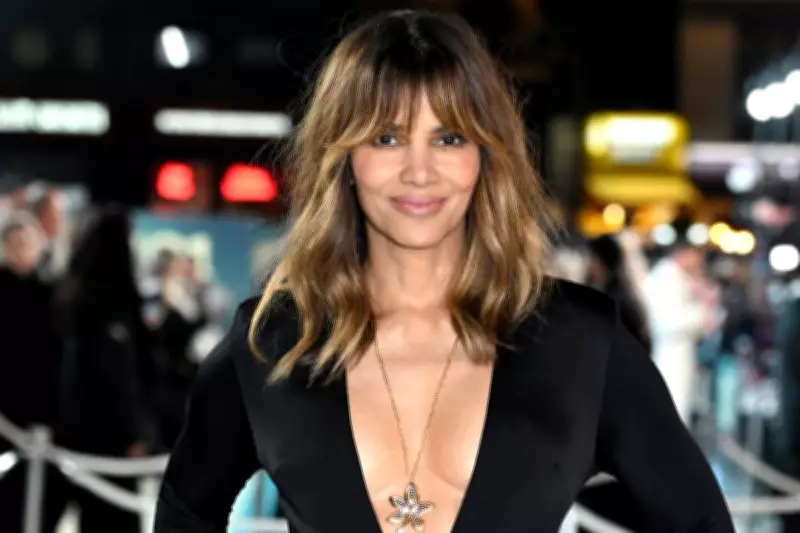
Halle Berry has offered a candid reflection on her historic 2002 Academy Award win, revealing that becoming the first Black woman to secure the Best Actress prize "didn't necessarily change the course of my career" in the ways she anticipated.
A Groundbreaking Victory with Limited Impact
The acclaimed actress, now 59, earned the Oscar for her powerful portrayal of grieving widow Leticia Musgrove in the drama Monster's Ball. More than two decades later, she remains the only Black woman to have triumphed in this prestigious category.
In a revealing new interview with The Cut, Berry confessed: "After I won it, I thought there was going to be, like, a script truck showing up outside my front door."

The Persistent Reality of Racial Barriers
"While I was wildly proud of it, I was still Black that next morning," Berry continued, highlighting the stark reality she faced despite her groundbreaking achievement. She described encountering persistent industry attitudes that limited opportunities for Black performers.
"Directors were still saying, 'If we put a Black woman in this role, what does this mean for the whole story? Do I have to cast a Black man? Then it's a Black movie. Black movies don't sell overseas.'"
This candid admission underscores the systemic challenges that have persisted in Hollywood, even following what many considered a watershed moment for diversity and representation.
Advice to Fellow Nominees
Berry revealed she has shared her perspective with other Black actresses navigating similar territory. She specifically mentioned conversations with Cynthia Erivo, who received Best Actress nominations in 2020 for her portrayal of activist Harriet Tubman and again last year for the first Wicked film.
"I told her, 'You goddamn deserve it, but I don't know that it's going to change your life. It cannot be the validation for what you do, right?'" Berry recounted, emphasising that Oscar recognition doesn't automatically translate to expanded career opportunities for Black performers.
Echoes from Other Black Oscar Winners
Berry's experience finds resonance with other Black Academy Award recipients. Lupita Nyong'o, who won Best Supporting Actress in 2014 for 12 Years a Slave, has previously expressed similar frustrations about the limited range of offers she received following her victory.
"You know what's interesting is that, after I won that Academy Award, you'd think, 'Oh, I'm gonna get lead roles here and there,'" Nyong'o told CNN. Instead, she found herself receiving offers that perpetuated narrow stereotypes: "Oh, Lupita, we'd like you to play another movie where you're a slave, but this time you're on a slave ship."
Nyong'o explained: "Those are the kind of offers I was getting in the months after winning my Academy Award," highlighting how even prestigious recognition fails to dismantle deeply ingrained industry biases.
Current Projects and Personal Resonance
Berry is currently promoting her latest film Crime 101, which features her alongside Chris Hemsworth in a story about an elusive thief and a disillusioned insurance broker. When asked about what attracted her to the role, Berry connected it to her personal experiences.
"I've been fighting in my personal life to be seen and heard and not marginalised at this time, so I relate to it deeply," she told The Independent last week. "These characters had something social to say that I think is very important, especially right now."
Her comments highlight how her professional choices continue to be informed by her ongoing struggle for recognition and meaningful representation within an industry that still grapples with diversity and inclusion challenges.