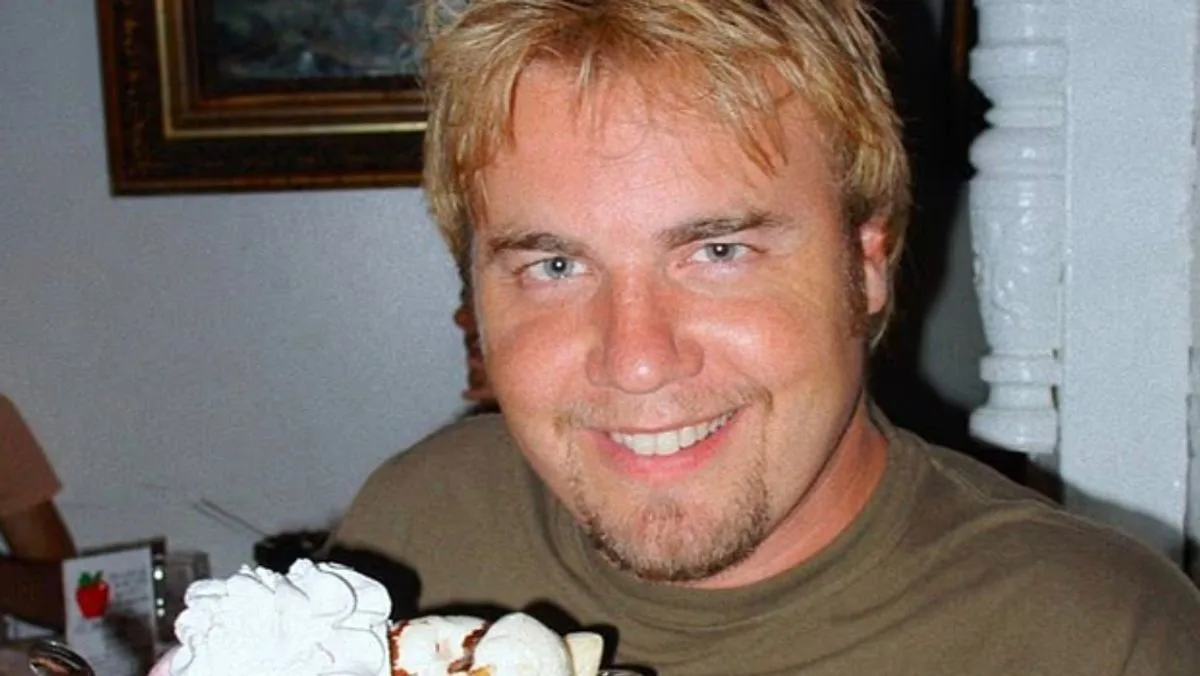
Gary Barlow has shared previously unseen photos of his weight struggle, revealing he wanted to 'crawl into a hole' after feeling unrecognisable from the pop star who soared to fame with Take That. The singer-songwriter was a teenager when he joined the boyband, which alongside Robbie Williams, Jason Orange, Howard Donald, and Mark Owen became one of the best-selling groups of the 1990s.
After the band split in 1995, Barlow struggled with jealousy as Robbie Williams enjoyed major solo success. 'I was incredibly competitive so yeah, I think I was jealous. What am I going to do with the rest of my life? Because that's it with music now,' he said in the band's new Netflix documentary. 'I can't even walk down the street now without someone shouting something about Robbie to me. It was just so excruciating. You just wanted to crawl into a hole.'
Barlow began to put on weight as a way of reverting to anonymity. He said: 'There was a period of about 13 months when I didn't leave the house once. And I also started to put weight on. And the more weight I put on the less people would recognise me. I thought 'This is good, this is what I've been waiting for, living a normal life.' So I went on a mission. If the food passed me, I'd just eat it... and I killed the pop star!'
He then fell into bulimia, binge eating and making himself sick. 'I would have these nights where I'd eat and eat and eat, but however I felt about myself, I felt ten times worse the day after. One day I thought, I've been out, it's 10 o'clock, I've eaten too much, I need to get rid of this food. You just go off to a dark corner of the house and just throw up, just make yourself sick. You think it's only once and all of a sudden you're walking down that corridor again and again - is this it? Is this what I'm going to be doing forever?'
He eventually reached 17 stone before deciding to take back control in 2003. 'It only took a few years to get that low, but it took me years to get back to who I wanted to be - 10 years probably,' he said. The documentary is now available on Netflix.
If you are suffering from an eating disorder, help is available. Contact your GP or call Beat Eating Disorders. The NHS advises seeking help from a GP, who can refer you to a specialist team.