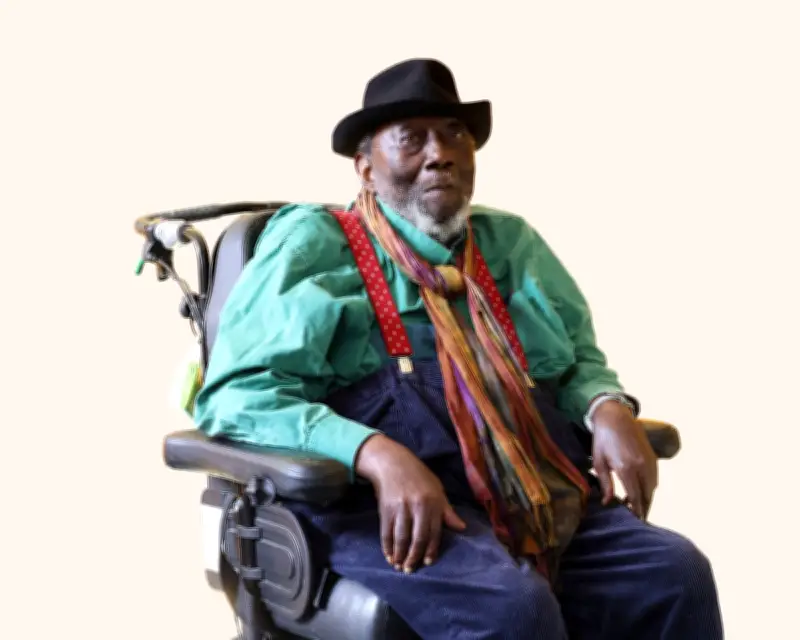
Frank Bowling, the renowned artist born in British Guiana (now Guyana) in 1932, reflects on his life and career at age 92. He moved to the UK at 19, served in the RAF, and graduated from the Royal College of Art in 1962 with a silver medal. After moving to New York in 1966, he received a Guggenheim fellowship and exhibited his "map paintings" at the Whitney Museum in 1971. In 2005, he became the first black artist elected a Royal Academician, and Tate Britain held a retrospective in 2019. His current exhibition, Seeking the Sublime, is at the Fitzwilliam Museum, Cambridge, until January 2027. He lives in London with his wife.
On Happiness and Fear
Bowling says he was happiest recently, as people began to understand his painting. His greatest fear is being poor.
On Personal Traits
He deplores his own boozing, which started with rum as a child, and dislikes others trying to exercise authority over him. His most embarrassing moment was attending the Chelsea Arts Club's New Year's Eve ball at the Royal Albert Hall in the 1950s dressed as a Christmas pudding, with swimming trunks under his costume and holly in his hair.
On Appearance and Fame
He describes himself as "needing order always" and dislikes that he hasn't kept up with fashion, though he dresses in corduroy trousers, colourful shirts, and a hat. He envies his grandson's bright yellow suit and sneakers. He would choose fame over anonymity, as it's hard to be clothes-conscious while anonymous.
On Criticism and Regret
The worst thing said to him was being called a flaneur by a fellow artist. If he could bring something extinct back to life, it would be Billy Eckstine singing Tenderly.
On Childhood and Guilty Pleasures
As a child, he wanted to be a detective, writer, or poet. His guiltiest pleasure is Lagavulin 16-year-old whisky, despite his doctor's advice. He owes his mother for paying his first term's art school fees and inheriting her ambition.
On Dreams and Work
He dreams of making bigger pictures, seeing his paintings as competitive. He overuses the words "the edge," as he's concerned about the edges of his work. The worst job he did was picking up RAF pilots' parachute packs.
On Loss and Achievement
He last cried in 2001 when his eldest son died. His greatest achievement is being able to paint the way he does. His closest brush with the law was his father, a policeman who believed in corporal punishment. His work keeps him awake at night, wondering what shape it will take.
On Legacy and Afterlife
He wants to be remembered as a nice old man. The most important lesson is to keep working and improving. When we die, he hopes to find his mother and father in heaven, though his father might say, "You can't come and live here, boy!"