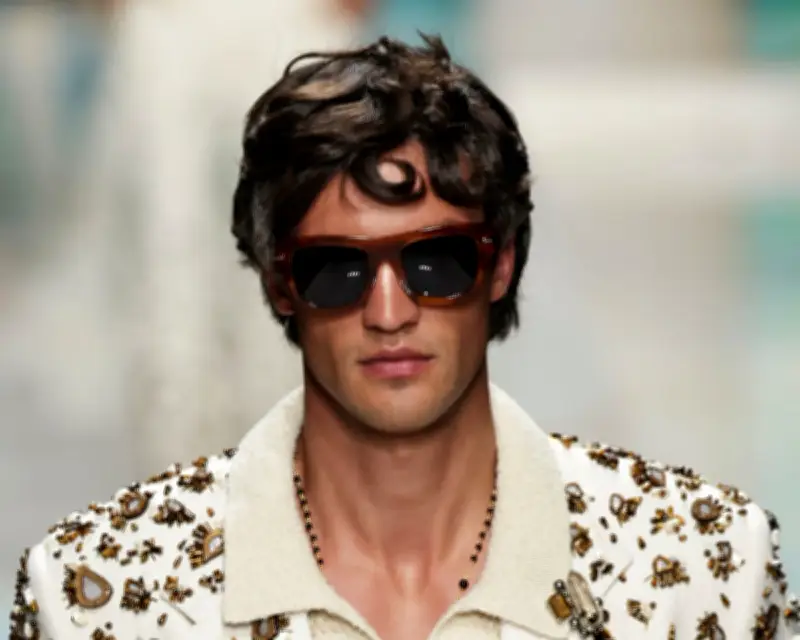
Dolce & Gabbana leaned heavily into theatrical misdirection on the second day of Milan fashion week, aiming to draw attention away from its debt issues, catwalk controversies, and management reshuffles. The Italian house’s SS27 menswear show emphasized its signature “molto sexy” aesthetic, served with a generous scoop of la dolce vita, presenting Euro summer on steroids.
Revealing and Flamboyant Designs
The runway featured clingy muscle vests and micro shorts that made short shorts look modest, while some models went topless. Jeans came ripped, shredded, or smothered in sparkling jewels. T-shirts displayed giant prints of Sicilian lemons, ancient amphitheatres, and a mosaic depiction of Christ.
The SS27 show was the first menswear collection since the brand’s disastrous all-white casting earlier this year, adding to its long list of previous controversies. It also marked the first show since Stefano Gabbana stepped down as chair.
Management Reshuffle and Debt Challenges
In March, it was announced that Gabbana had tendered his resignation last December as chair of the company he co-founded with Domenico Dolce in 1985. In January, as part of the reshuffle, former Gucci chief executive Stefano Cantino was appointed co-chief executive, working alongside Alfonso Dolce, Domenico’s brother. Gabbana’s role as co-creative director remains unaffected.
In a turbulent luxury market, the fashion house has found itself navigating a £391m debt pile. This week, reports indicated that, as part of negotiations with creditors, the brand is considering a potential sale and leaseback of several properties it owns in Milan. While the brand continues to dominate red carpets during award season—with fans like Colman Domingo, Patrick Schwarzenegger, and Ryan Gosling—a wider luxury slump has left the brand struggling. Saturday’s show was a reminder to fans of what it does best: excess.
Paul Smith’s Suiting Resurgence
Later in the day, British menswear leader Paul Smith, who has been showing in Milan since 2025, focused on his speciality: suiting. Backstage, Smith credited the suit’s resurgence to young people not wanting to dress like Gen X. “A lot of our customers grew up with their dads wearing hoodies during the pandemic,” Smith said. “Those kids are now 18-25 years old and don’t want to look like their dad. They want to smarten up.”
The designer pointed to Harry Styles, who has shifted from flamboyant on-stage outfits to pared-back tailoring and ties for his latest Together Together tour, as embodying the trend. Smith, who turns 80 next month, said his younger team had dug out 1980s and late 1990s catwalk tailoring references from his Nottingham-based archive, which houses more than 5,000 of his pieces.
“The suit in many people’s heads means formality or funerals or weddings,” Smith said. “A lot of what we try to do is show how it can be more relaxed so we roll the cuffs up, or pop the collar up or style the shirts untucked.” On the catwalk, there were also unbuttoned waistcoats and, at times, shirts too, offering a glimpse of flesh.
Smith, who still works in his Albemarle Street store in London on Saturday afternoons, described his suits as “being a bit different” and having “perceived value,” pointing to pad stitching that ensures the fabric curves around the body, lightweight fabrics that don’t crease easily, and quirky details such as crocodile eye buttons and lapel pins riffing on everything from teaspoons to sardines.