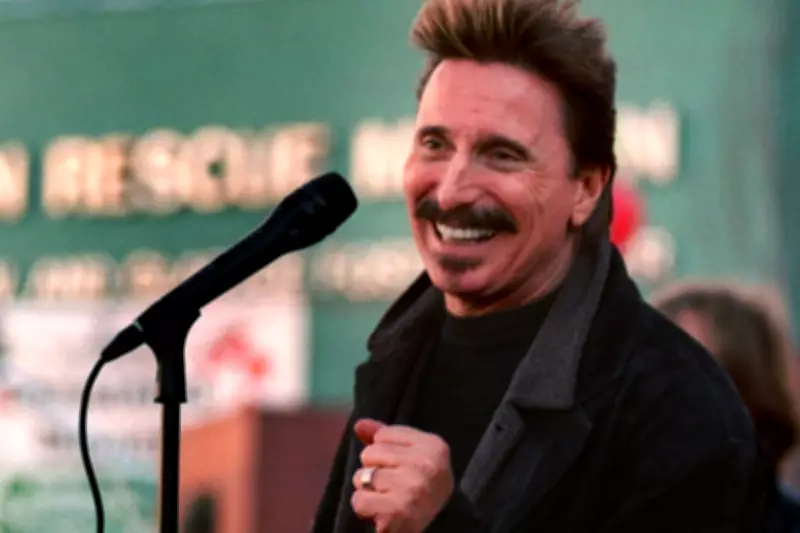
The music world has lost one of its distinctive voices with the passing of Chuck Negron, a founding member of the legendary rock band Three Dog Night. The singer, whose powerful lead vocals defined era-defining hits including "Joy to the World," "One," and "An Old Fashioned Love Song," died on Monday at his home. He was 83 years old.
A Musical Legacy Defined by Iconic Hits
According to his publicist Zach Farnum, Negron's death resulted from complications arising from heart failure and chronic obstructive pulmonary disease. His passing occurred at his residence in the Studio City neighbourhood of Los Angeles, marking the end of a life filled with remarkable musical achievement and personal struggle.
Negron's vocal contributions extended beyond his most famous songs to include lead performances on "Easy To Be Hard" and "The Show Must Go On." Three Dog Night's impressive catalogue of hits also featured "Black and White," "Mama Told Me (Not to Come)," "Never Been to Spain," and the beloved "Shambala." The band's cultural impact was cemented in December 1972 when they hosted and performed on the inaugural edition of Dick Clark's iconic "New Year's Rockin' Eve" television special.

Rise, Fall, and Redemption
The formation of Three Dog Night in 1967 brought together Negron with fellow vocalists Danny Hutton and Cory Wells, creating a unique blend of R&B, rock 'n' roll, and urban doo wop influences. Their breakthrough arrived just two years later with the million-selling single "One," written by the acclaimed Harry Nilsson. This success launched the group to the forefront of the late 1960s and early 1970s rock scene.
However, the band's rapid ascent coincided with Negron's descent into heavy drug use, which consumed his fortune and even led to a period living on Los Angeles' Skid Row. By 1975, declining album sales and internal conflicts began to fracture the group, with their final Billboard Hot 100 hit, "Til the World Ends," signalling the end of their chart dominance. The band dissolved the following year.
Although Three Dog Night reunited in 1981, Negron's ongoing substance abuse issues led to his dismissal in late 1985. His journey toward recovery involved numerous rehabilitation attempts before he achieved sobriety in 1991, a turning point that enabled a successful solo career spanning seven albums released between 1995 and 2017.
Personal History and Later Years
Born Charles Negron II on June 8, 1942, in the Bronx, Negron developed his musical talents early by singing in doo wop groups during his youth. His parents' divorce when he was just two years old marked a challenging childhood. A basketball scholarship brought him to California State University and ultimately to Los Angeles, where he embarked on his music industry career.
Negron documented his turbulent experiences in the 1999 memoir "Three Dog Nightmare," which detailed both his professional triumphs and personal battles. In a poignant development, after decades of estrangement, he reconciled with former bandmate Danny Hutton last year. Hutton and Michael Allsup now remain as the sole surviving original members of Three Dog Night.
Despite being diagnosed with chronic obstructive pulmonary disease, Negron continued touring for three decades until the COVID-19 pandemic forced him to stop permanently. He is survived by his wife, Ami Albea Negron, and five children. This includes Berry Oakley Jr., the son of Allman Brothers Band bassist Berry Oakley, who died in a 1972 motorcycle accident. Negron was previously married to Julia Negron, the younger Oakley's mother, and helped raise Berry Jr. from infancy.