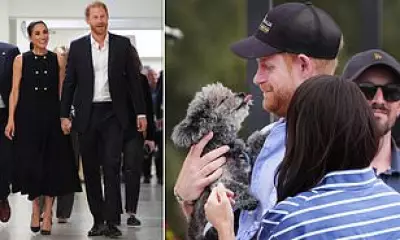
In the whirlwind world of celebrity culture, public feuds between famous figures have become a regular source of fascination and debate. From the ongoing tensions within the Beckham family to the well-documented rift between Princes William and Harry, and even the infamous Wagatha Christie legal battle, these high-profile conflicts naturally prompt observers to take sides.
According to clinical psychologist and author Dr Carmen Harra, these seemingly trivial entertainment stories offer far more than just gossip fodder. They provide a unique window into our own psychological makeup and value systems.
The Psychological Mirror of Celebrity Drama
Dr Harra, author of "Committed: Finding Love and Loyalty Through the Seven Archetypes," suggests that the positions we adopt during celebrity conflicts act as revealing mirrors of our personal virtues, beliefs, and unconscious biases.

'The side we take in celebrity feuds acts as a mirror for our personal virtues, beliefs, and biases,' Dr Harra explained to The Daily Mail. 'It reveals what values we prioritise and disregard, what behaviours we respect or despise in others.'
The psychologist further elaborated that the notoriety of public figures allows ordinary people to project their own desires, dramas, and moral frameworks onto these visible conflicts. As celebrity disagreements appear to become increasingly common in modern media, Dr Harra has explored how individual reactions to such drama can be surprisingly representative of fundamental personality traits.
What Your Celebrity Feud Perspective Reveals
From demonstrating empathy and compassion to showcasing subtle logic and analytical reasoning, your perspective on the greatest celebrity showdowns could help illuminate aspects of your true self that might otherwise remain hidden.
Dr Harra has developed a framework for understanding what different responses to celebrity conflicts might indicate about an individual's character. By considering which side you naturally gravitate toward in famous feuds, you can gain insight into your core values and psychological tendencies.
If You Value Logic and Reason
Individuals who approach celebrity conflicts with analytical detachment typically prioritize logic and reason above emotional reactions.
'As someone who values logic and reason, you trust clarity over chaos,' said Dr Harra. 'You feel most comfortable when things make sense and seek evidence over coherence. Contradictions bother you and your tendency is to solve problems instead of dramatising them.'
This personality type reflects before reacting and would rather analyse a situation than get swept up in impulse or media hype. They try to separate facts from feelings, even when uncomfortable, and value fairness and objectivity above partisan loyalty.
If You Value Independence and Unconventional Thinking
Those who resist taking obvious sides or question the mainstream narrative often demonstrate strong independent thinking.
'You refuse to live in autopilot,' explained Dr Harra. 'You tend to question norms and assumptions because "that's how it's done" has never been a satisfying answer for you. Even when uncomfortable, you still prefer to think for yourself and choose your path, not inherit one.'
This personality values freedom of thought as much as freedom of action and is comfortable standing alone when necessary. While they enjoy connection with others, they don't require external approval to validate their choices or perspectives.
If You Value Morality and Integrity
Individuals who judge celebrity conflicts through an ethical lens typically prioritize morality and integrity in their own lives.
'You care deeply about doing what's right, even when it comes at a cost to you,' said Dr Harra. 'Convenience doesn't outweigh conscience for you. You want alignment between values and actions and deeply dislike hypocrisy, in others and yourself.'
This personality type has a strong inner compass and doesn't require constant approval or external rules to behave ethically. Their choices factor in fairness, potential harm, and long-term consequences rather than immediate gratification or popularity.

If You Value Peace and Harmony
Those who seek reconciliation or feel uncomfortable with public conflict often prioritize peace and harmony in their personal relationships.
'You are emotionally perceptive, picking up on moods, undercurrents, and how your actions affect others,' Dr Harra explained. 'You value balance and stability and want life to feel sustainable, not constantly reactive or chaotic.'
This personality often acts as a mediator or stabilizer, smoothing things over or helping people find common ground. They believe cooperation beats competition and would much rather build something together than "win" at someone else's expense.
The Broader Implications
Dr Harra's analysis suggests that our reactions to celebrity drama extend beyond mere entertainment preferences. They reflect deeper psychological patterns that influence how we navigate conflicts in our own lives, from workplace disagreements to family tensions.
By becoming more aware of these patterns, individuals can gain valuable self-knowledge that might help them understand their relationship styles, conflict resolution approaches, and value hierarchies more clearly.
The next time you find yourself forming an opinion about a celebrity feud, consider what your perspective might reveal about your own personality traits and core values. According to psychological research, even our entertainment choices can serve as meaningful indicators of our psychological makeup.