Five new poetry collections offer diverse explorations of desire, history, identity, and resilience. Holly Pester's 'Cafés' (Fitzcarraldo, £12.99) opens with prose poems chronicling an anti-epic quest to open a cafe, evolving into a meditation on desire and disappointment. Pester's comic timing and linguistic agility shine as she tackles exploitative work, direct debits, and the cost-of-living crisis. The speaker balances caring for an ageing parent, a love affair, and work's 'fudgy ordeal', finding solace in the cafe as a third space. 'Here begins inspiration, here begins drama,' she writes. 'I order another coffee in honour of circumstantial life.' This ambitious collection marks Fitzcarraldo's entry into contemporary poetry.
Wisława Szymborska: Endurance and Astonishment
'The Acrobat' (Faber, £12.99), translated by Stanisław Barańczak and Clare Cavanagh, is a slim selection of Szymborska's work exploring endurance and astonishment. Reflecting 20th-century Poland, she documents war's violence alongside resilience and domesticity. 'After every war / somebody has to tidy up,' she writes. 'Someone has to shove / the rubble to the roadsides / so the carts loaded with corpses / can get by.' Her plainspoken wisdom and deadpan humour celebrate the ordinary in extraordinary times, affirming 'The commonplace miracle: / that so many common miracles take place.' The collection ends with her 1996 Nobel acceptance speech, praising the world's inexhaustible wonder.
Rachael Boast: Body and Repair
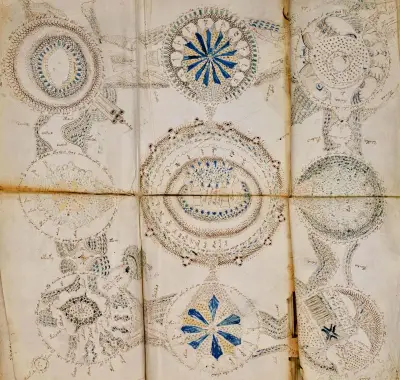
'Volvelle' (Picador, £12.99), named for a rotating paper chart calculating sun and moon cycles, is Boast's fifth collection. It offers varied poems on selfhood and the body's orientation in time and space. Bookended by poems on bodily slippage—'body as climate – the otherness of bodies – / body image – body double – body of water'—the collection speaks to fragmentation and acceleration. Images of 'senseless war' punctuate the poems, lamenting 'buildings that look like bone' and 'crowds / fleeing uncontrolled explosions'. Boast finds reprieve in community, weaving other artists' work through her writing. For Boast, the poet's role is repair: 'things fall softly apart / and have to be mended.' Restoration is achieved through sustained care, 'as a deer in the furrows / might stand to listen // for the world as a whole'.
Victoria Chang: Grief and History
'Tree of Knowledge' (Corsair, £16.99) continues Chang's engagement with visual art, responding to works by Picasso, Mitchell, and af Klint. These poems meditate on language, grief, and history, haunted by a eucalyptus tree cut down on the poet's street. 'I learned that when grief abandons its body, / what's left isn't what was there before,' Chang writes. Her evocative couplets 'balance the living / and the dead'. Archival photographs of 19th- and early 20th-century Chinese American life, stitched with coloured thread, accompany the poems, reflecting 'the desire // to connect dead things to make a new thing'. A central poem recounts the 1885 expulsion of 263 Chinese Americans from Eureka, California, addressing Chang's question: 'What am I to do with // all these seams. History that keeps growing back.'
Lila Matsumoto: Coming of Age in America
'Talk a Blue Streak' (Monitor, £15) is Matsumoto's third collection, a coming-of-age story set in 1990s USA via episodic prose poems. The speaker, a new arrival, finds herself 'living on a movie set called America', surrounded by 'synthetic luxury I didn't get the wow of'. Matsumoto savours off-kilter language, chewing on phrases like 'Riding shotgun, passing the buck, shooting the breeze'. Her musicality and playfulness underpin a meditation on identity and artifice, asking how the self forms in response to culture. 'Around this time I was increasingly experiencing life as a series of point-and-click computer games I played as a child,' she writes, conveying dislocation. The speaker takes a naturalisation test to become a US citizen, offering an outsider's clear vision: 'Now that I had renounced prostitution, communism, and genocide, I was, at last, an American.'