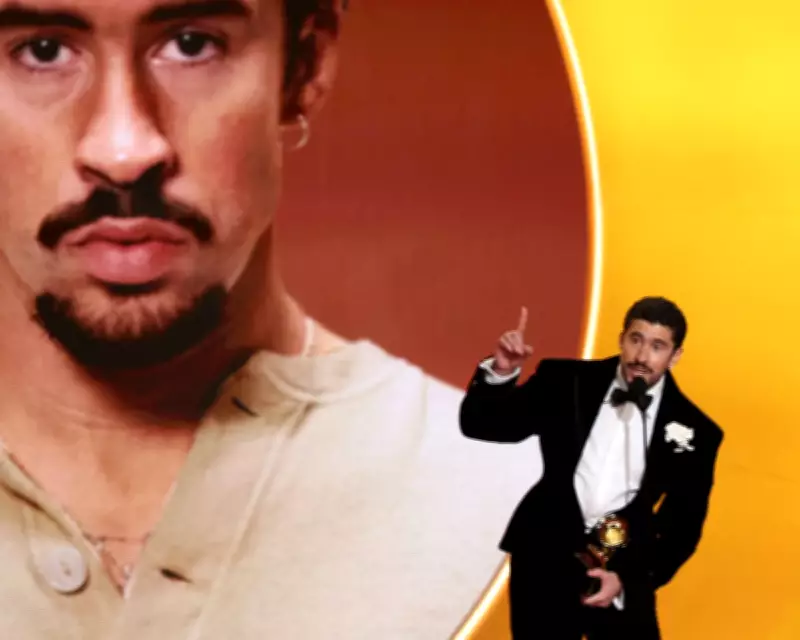
In a striking moment at the 68th Grammy Awards in Los Angeles on 1 February 2026, global superstar Bad Bunny accepted the award for best música urbana album and used his platform to deliver a searing rebuke of US Immigration and Customs Enforcement (ICE) and former President Donald Trump. His speech, captured in a photograph by Valérie Macon, resonated through the Crypto.com Arena as he declared: "ICE out. We're not savages, we're not animals, we are humans and we are Americans ... the only thing that is more powerful than hate is love." This powerful statement was not an isolated incident but part of a broader wave of political activism that defined the evening, raising urgent questions about the significance of celebrity voices in times of national crisis.
The Grammys as a Platform for Protest
The 2026 Grammy ceremony transformed from a typical celebration of musical achievement into a potent forum for political dissent. Against a backdrop of profound social distress in the United States, with ICE's operations increasingly viewed as a paramilitary force, artists chose to break from the usual glamour and address the harsh realities facing many communities. This marked a significant shift from just a month prior, when the Golden Globes were criticised for largely ignoring politics, save for a few symbolic "ICE Out" pins worn by celebrities like Ariana Grande and Mark Ruffalo.
Billie Eilish amplified the message, urging her peers to speak out and asserting that "no one is illegal on stolen land." She emphasised the importance of continuous protest, stating: "I feel that we just need to keep fighting and speaking up and protesting, our voices do matter and the people matter." Meanwhile, Olivia Dean and Shaboozey celebrated immigration in their performances, creating a collective chorus of resistance that underscored the personal stakes for artists from immigrant backgrounds.

The Debate Over Celebrity Activism
The blunt question of how consequential celebrity political activism truly is has long been a subject of debate. On one hand, celebrities speaking on mass platforms can help normalise critical discourse and unveil injustices to audiences whose engagement with news may primarily occur through cultural events. However, this approach has often been viewed as limited or superficial. In 2024, Saturday Night Live famously mocked the "teeny tiny statement pin" trend, skewering it as evidence of a commitment to saying something while saying as little as possible.
Even when statements are loud and unequivocal, as they were at the Grammys, a familiar chorus of cynicism emerges: why should we care what celebrities think? This scepticism is warranted given America's history of using spectacle to redirect attention from atrocity. For instance, two years prior, Rafah airstrikes in Gaza occurred simultaneously with the Super Bowl, which featured advertisements from the Israeli government. Moreover, the failed 2024 campaign of Kamala Harris, despite enthusiastic celebrity endorsements from Taylor Swift to Megan Thee Stallion, highlights the potential disconnect between star power and political efficacy.
Why This Moment Feels Different
Despite these valid criticisms, the anti-ICE protests at the 2026 Grammys carry a unique weight. The terror inflicted by ICE is a visceral, immediate issue that transcends electoral politics. With ICE's expansion outpacing mechanisms to check its power, all forms of resistance have become more urgent. It is not necessarily that anti-ICE activists require Hollywood's seal of approval, but Trump himself recognises art and culture as crucial frontiers in his bid for domination. His reaction on Truth Social after the event was telling: he called the Grammys "the WORST, virtually unwatchable!" and threatened to sue host Trevor Noah over a joke about Trump's interest in Greenland.

For artists like Bad Bunny, whose album NUEVAYoL is a tribute to the Puerto Rican diaspora in New York and critiques anti-immigrant sentiment, or Shaboozey, speaking from a Nigerian perspective, the tyranny of ICE is deeply personal. Reducing their activism to mere "celebrity" commentary misses the point: these individuals are speaking as artists, and art has always had a contested, core function in politics. As Jason Okundaye, assistant opinion editor at the Guardian, notes: "Who wants artists to put up and shut up more than Trump?"
The Broader Implications
The Grammy protests underscore a growing refusal among artists to remain silent in the face of injustice. While celebrity activism may have its limitations, the collective voice emerging from events like the Grammys can amplify marginalized perspectives and apply pressure on political figures. In an era where cultural platforms are increasingly politicised, the actions of figures like Bad Bunny challenge the notion that entertainment and activism are mutually exclusive. As the world watches, these moments remind us that in times of crisis, every platform—including the glittering stage of the Grammys—becomes a potential site of resistance.