In a time defined by online activism rather than street barricades, 2025's most significant history and politics books look back to eras of more tangible conviction. This year's selection offers a powerful lens on revolutionary spirits, the fragility of democracy, and the dramatic unravelling of British politics.
Revolutionary Echoes and Global Upheaval
Jason Burke's The Revolutionists (Bodley Head) transports readers to the 1970s Middle East, a period when communist ideology rivalled Islamism for the region's future. Burke paints a vivid picture of a geopolitical moment filled with radical figures, from corduroy-clad intellectuals to women bearing both theory and weaponry. The book suggests many were drawn less by Marxist doctrine and more by the allure of chaos, making today's forms of protest seem mild in comparison.
Shifting focus to a cultural insurgency, Owen Hatherley's The Alienation Effect (Allen Lane) presents a group biography of Mitteleuropean architects and designers who reached Britain's shores last century. Moving beyond well-known conservative émigrés, Hatherley highlights the radical figures who reshaped the nation's skyline with concrete, provoking public debate and, in the case of architect Ernő Goldfinger, inspiring a James Bond villain.

Lyse Doucet's The Finest Hotel in Kabul (Hutchinson Heinemann) uses the city's Intercontinental Hotel as a poignant vantage point. The BBC correspondent chronicles Afghanistan's capital from the hotel's 1970s heyday of ballrooms to its role as a fortress against Taliban attacks, crafting a tribute to the resilience of its people.
Democracy Under Strain and the Wars of Words
Several authors examine how democratic foundations have cracked under pressure. In Homeland (Verso), Richard Beck argues that the paranoia America exported after 9/11 ultimately boomeranged, mutating into the domestic authoritarianism of Trumpism. Beck provocatively contends that no true liberal has occupied the White House since 2001.
The conflict in Gaza receives harrowing documentation in Jean-Pierre Filiu's A Historian in Gaza (Hurst). This eyewitness account details the destruction wrought with Anglo-American support, portraying a population trapped between Hamas and Israeli policy.
This context gives urgency to Fara Dabhoiwala's exploration in What Is Free Speech? (Allen Lane). Tracing the concept's rise to a civic creed since the 1720s, Dabhoiwala presents a challenging conclusion: in our polarised era, free speech may have gone too far.
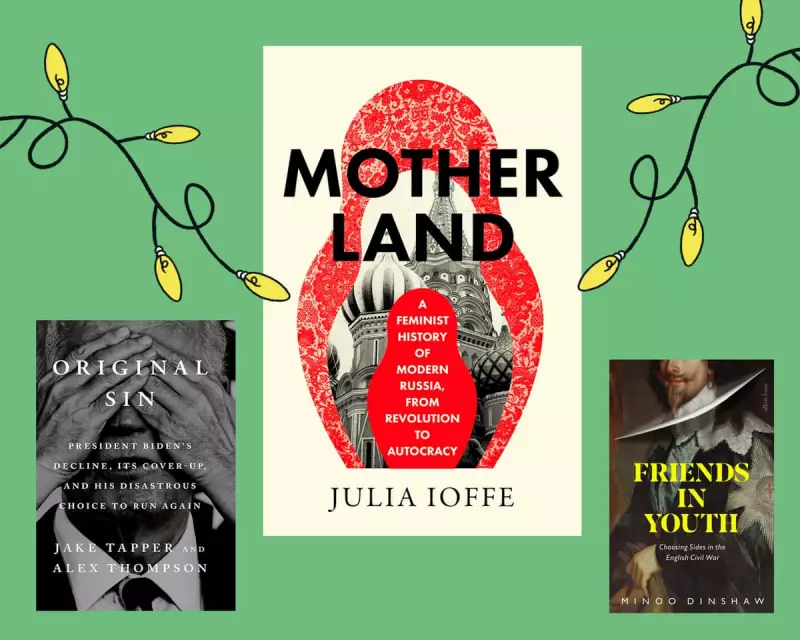
Minoo Dinshaw's Friends in Youth (Allen Lane) revisits the English civil war through a fractured friendship, with one man becoming a royal propagandist and the other a crony of Oliver Cromwell. The book ends with a timely plea for cross-factional friendship, echoing a modern Britain where major parties struggle to secure a fifth of the popular vote.
The British Political Unravelling
The year's most anticipated political reads dissect the recent British turmoil. In Ungovernable (Macmillan), former Tory chief whip Simon Hart publishes diaries from the Johnson-Truss years that expose a ruling class in chaos. The revelations range from the scandalous to the absurd, including an MP's paranoid brothel encounter and Jacob Rees-Mogg's tweed-clad zipline adventure.
Patrick Maguire and Gabriel Pogrund's Get In (Bodley Head) analyses the subsequent hangover and Keir Starmer's rise. The portrait is of a leader propelled more by focus groups and electoral maths than charisma, whose victory owed more to Conservative implosion than public zeal for socialism. The book quotes one insider comparing Starmer's control to being "sat at the front of the DLR" – London's driverless train.
Ash Sarkar's polemic Minority Rule (Bloomsbury) argues centrism's decline stems from both left and right succumbing to identity politics. She calls for workers to unite against elites, moving beyond what she terms the "narcissism of small differences."

From the demand for Wages for Housework, explored by Emily Callaci, to Julia Ioffe's tracing of Russian womanhood in Motherland, these books collectively map a world grappling with its past and navigating an uncertain political future. They serve as essential reading for anyone seeking to understand the forces that have shaped – and continue to shake – our contemporary world.