From Victorian Scandal to Modern Pilgrimage
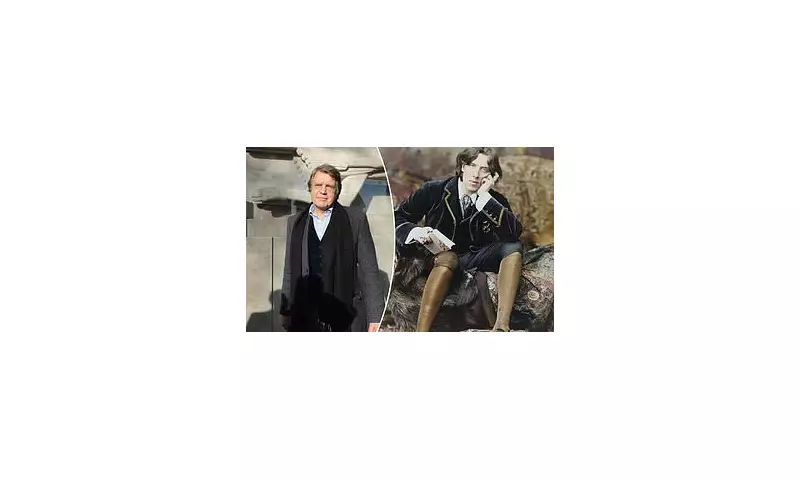
More than a century after the scandal that destroyed him, Oscar Wilde has achieved the ultimate rehabilitation. The writer, once imprisoned for homosexuality, now enjoys commemorative honours across Britain and beyond. A stained-glass window dedicated to Wilde stands in Westminster Abbey, while Maggi Hambling's controversial statue near Charing Cross attracts constant attention, despite souvenir hunters repeatedly damaging it.
His masterpiece, The Importance of Being Earnest, continues to draw West End audiences, with Stephen Fry recently portraying Lady Bracknell. Wilde's plays have been translated worldwide, including into Hindi and Arabic, with numerous unofficial translations appearing across Turkey, Latvia, Greece and Portugal.
The Price of Family Secrecy
Wilde's grandson, Merlin Holland, describes the saga as 'the longest continuous act of hypocrisy in British history', reflecting on generations of 'unwept family grief'. Following Wilde's 1895 conviction for gross indecency, his life unravelled dramatically. The Victorian era's most brilliant dramatist became branded a 'loathsome importer of exotic vice', sentenced to two years' hard labour.

Upon his 1897 release, Wilde was compelled to separate from his wife Constance, and the courts removed his children, Cyril and Vyvyan, from his care. Exiled and broken, Wilde lamented that 'the joy of life is gone', dying in Paris in November 1900 at just 46.
The family repercussions were severe and lasting. The children's surname was changed to Holland, and they faced constant prejudice. Cyril pursued a military career but was denied promotion due to his father's name remaining on his birth certificate. He nevertheless served with distinction in the Royal Field Artillery before being killed in action in 1915.
Vyvyan, Merlin's father, became a wine journalist and author but struggled financially throughout his life, eventually falling into bankruptcy. He survived by selling off Wilde first editions and family heirlooms, including silver wine jugs presented to Oscar's father, Sir William Wilde, which remain lost despite Merlin's efforts to trace them.
Legacy Reclaimed Against All Odds
Wilde's Paris tomb in Père Lachaise cemetery, sculpted by Jacob Epstein, has become a place of international pilgrimage. The monument became so covered in lipstick kisses and graffiti that protective glass screens were necessary to prevent the porous stone from crumbling. The statue's original 'prominent testicles' have long since vanished, likely removed by souvenir hunters.
The path to rehabilitation faced numerous obstacles. In 1953, attempts to place a blue plaque on Wilde's Chelsea home struggled to find supporters. T.S. Eliot, Laurence Olivier, Bertrand Russell and E.M. Forster all declined to participate. Future Poet Laureate Cecil Day-Lewis refused to write a celebratory verse, while Joyce Grenfell avoided the ceremony.
Even Wilde's former lover, Lord Alfred 'Bosie' Douglas, became his most ferocious denier. After initiating Wilde into male brothels, Bosie precipitated the 1895 trials by urging Wilde to sue his father, the Marquess of Queensberry, for libel. Bosie fled to France, never faced charges himself, converted to Catholicism in 1911, and unleashed lawyers on anyone linking him to Wilde. He published a 1914 memoir claiming ignorance of Wilde's 'proclivities', describing him as 'the greatest force for evil that has appeared in Europe during the last 350 years'.
Merlin Holland recalls that at Eton he was told 'Your grandfather was nothing but an old poofter'. Yet today, he notes that such public comments have become 'unthinkable'. Wilde's image now endorses sparkling wine, hotel suites, and even a Norwegian aeroplane, while his aphorisms appear on countless greeting cards.
The rehabilitation has brought new challenges, including a market flooded with forged manuscripts and biographies containing fabricated anecdotes. Particularly egregious was Richard Ellmann's biography falsely claiming Wilde died of syphilis caught from a female prostitute at Oxford.

As Wilde's legacy finds contemporary relevance, questions remain about how future cultural movements might reinterpret his complex story. His journey from Victorian disgrace to modern celebration represents one of the most remarkable transformations in literary history.