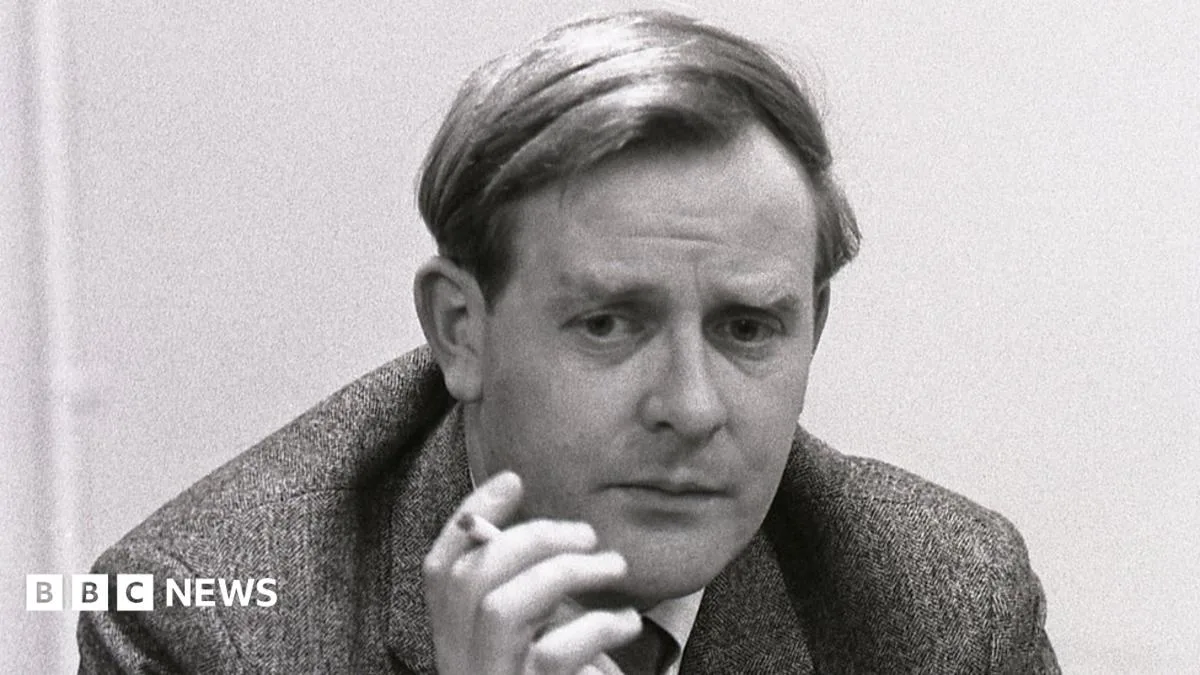
The current head of MI6 recently paid tribute to John le Carré's 'evocative and brilliant' novels, a gesture that would have amused the late author. His relationship with his former colleagues was always complicated, as was their attitude towards him.
Le Carré's career was shaped by his time in intelligence, and his fiction in turn shaped how the world viewed British spies. His experience inside a secret world makes it hard to discern where fact ends and fiction begins, a mystery he understood and valued.
He once said: 'I have such conflicting memories of my former service ... that I am perpetually at a loss to know what I really think.' He added: 'It's a matter of pride to me that nobody who knows the reality has so far accused me of revealing it.'
His time in MI5 and MI6 was bleak, marked by the exposure of spies George Blake and Kim Philby. The latter inspired his Tinker, Tailor, Soldier, Spy trilogy, which combined Cold War treachery with human emotion.
Le Carré popularised the term 'mole' for an enemy agent, though he said it was a genuine KGB term. The CIA's Russia House team is named after his 1989 novel, and some officers refer to a real adversary as 'Karla', after George Smiley's foe.
While some MI6 veterans criticised his cynical portrayal, others appreciated the mystique it created. Former chief Sir Colin McColl said: 'There were those who were furious ... but I thought it was terrific because it gave us another couple of generations of being in some way special.'