Making light of one of the darkest horrors of the 20th century is a risky business – but a new generation is taking ownership of family histories by making space for human foibles, says an award-winning graphic novelist.
My beloved German-Jewish grandmother Gisela was not an affable person. She enjoyed laughing at her own jokes, revelling in the misfortunes of others, and telling people off. If an event combined opportunities for all three activities, so much the better.
When my father was six, he refused to eat the meatloaf that his mother had given him for lunch. Gisela took the piece of meatloaf, now rapidly turning rancid in the Zimbabwe afternoon heat, and served it to him for dinner, and breakfast, and every subsequent meal until he forced himself to eat it. It was the late 1950s – tyrannical parenting was de rigueur, and uneaten meatloaf was the hill that Gisela was willing to die on.
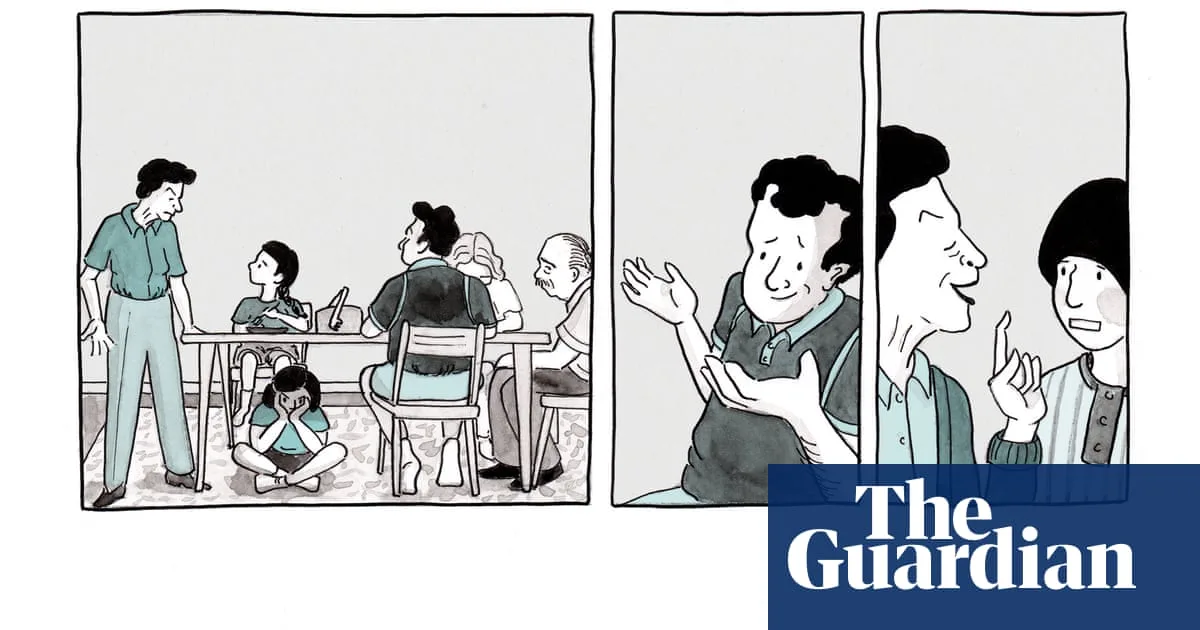
Fast forward 30 years, and I am six years old, surveying the horror-movie tableau of my grandmother’s dinner table in Freiburg: the pungent pink slab of Fleischkäse, the trembling white sausages in a bowl of what appears to be lukewarm dishwater, the slimy cold herrings in pickle juice, the brick of black rye bread that takes 20 minutes to saw through and three days to digest. “I don’t want to eat anything on this table,” I announce to the room, and promptly retreat to the floor, crawling between the table legs to wait out this so-called dinner.
My parents exchange a pained look and shrug in resignation. Gisela is apoplectic, channelling her rage towards my father for being a permissive weakling, but ultimately powerless to exert her will over the next generation. She exacts her revenge for the next two decades: every time we are in company, she recounts this story in detail, my food refusal getting wilder and her reaction more saintly with each retelling, as she works her way up to the punchline. “Then she sat under the table for the whole meal … LIKE A DOG!”
As I spent the last few years researching and drawing Gisela’s life story for my graphic memoir The Crystal Vase, I found these recollections of her gleeful humiliation tactics and self-aggrandising anecdotes slipping in to the gaps between the heavy facts of Holocaust history. Each generation relates to their family history differently, and as the granddaughter of a Holocaust survivor I found I had a certain critical distance from that lived experience that my father did not have.