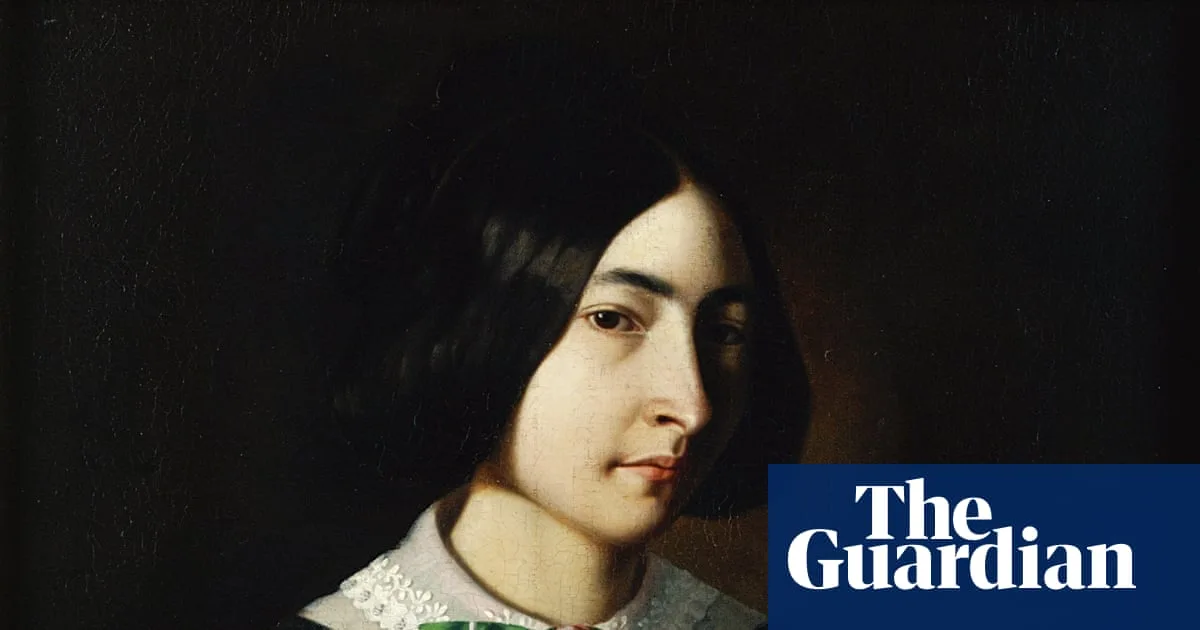
Brave, Visionary, and Queer: The Bohemian Brilliance of Author George Sand
With her radical politics and flamboyant affairs, George Sand was no stranger to controversy, but it is time to debunk the myths surrounding this writer who was profoundly ahead of her time. It would be hard to find a more courageous, perverse, iconic, and controversial figure in European literary history than Sand. As one of the great romantics, she helped transform culture, and her writing shifted social attitudes in ways we still benefit from today.
A Legacy of Immortal Praise
Victor Hugo called her "an immortal," while Gustave Flaubert described her as "one of the great figures of France." Matthew Arnold said she was "the greatest spirit in our European world since Goethe." The 150th anniversary of her death this year provides a timely opportunity to revisit her extraordinary achievements and lasting legacy. However, to fully appreciate her impact, we must first dismantle some of the misconceptions that have clouded her reputation as a pioneering ecological, feminist, and republican writer.
A Prolific Polymath and Social Reformer
A prolific polymath, Sand published 70 novels, along with travel writing, criticism, autobiography, political polemics, and visionary essays on the interconnectedness of the natural world. She founded several politically progressive periodicals and became a highly successful playwright. Yet, none of this came easily. When she burst onto the Paris scene in 1831 at age 27, writing for Le Figaro, she immediately became notorious as a woman operating in a man's world.
Contemporary gossip columns and male critics portrayed her as both a man-hater and a man-eater. Charles Baudelaire labeled her "a latrine," and Friedrich Nietzsche called her "a dairy cow." Despite facing pandemics, riots, typhoid, divorce and custody battles, bereavements, and war, Sand never abandoned her vocation. Her writing is beautiful, expressive, and easy to read, yet her technique was radical. She introduced emotional, idealistic narratives about social injustice, focusing intimately on lived experiences rather than the broad panoramas of authors like Balzac or Dickens.
Centering Women and the Rural Poor
Starting with her bestselling 1832 debut, Indiana, which critiqued the cruelty of arranged marriages, Sand placed women and children at the center of their own stories. This approach is now taken for granted, a testament to her legacy; the Brontë sisters, for example, imitated and admired her work. In her 40s, she turned her attention to the rural poor, producing novels such as The Devil's Pool, Little Fadette, and François le Champi decades before Thomas Hardy explored similar themes in Wessex.
From Convent Girl to Literary Icon
Born Amantine Lucile Aurore Dupin de Francueil in 1804 to a Paris sex worker and an aristocratic cavalry officer, Sand's legitimacy and a life-changing inheritance were secured by their shotgun marriage just a month before her birth. Her own marriage at 18 to an alcoholic boor failed within a decade, resulting in two children, though her daughter may have been from an affair. When she left her family home in Indre for literary Paris, she did so with a lover, Jules Sandeau, with whom she co-wrote commercial fiction.
She did not abandon her children and was eventually awarded custody, a rare achievement for the time. She quickly outstripped Sandeau but adapted his name into the nom de plume she would make famous. While male pen names were common, as seen with the Brontë "Bell brothers" and George Eliot, Sand's choice of "George"—a shortening of "Georges" and not a real French name—seemed a gleeful act of subversion.
Flamboyant Promiscuity and Cross-Dressing
Over the years, Sand's flamboyant promiscuity made her notorious. She was often portrayed wearing men's clothes, a habit she adopted as a teenager for better horseback riding. In Paris, this became a costume proclaiming her status as one of the literary "boys" and enabling her to move freely around the city. This practice was not unique; so many women were cross-dressing for freedom of movement that Paris issued a bylaw prohibiting it in 1800.
Sand also wore dresses and had mostly heterosexual flings, including a one-night stand with Prosper Mérimée, an affair with a leading actor, and relationships with younger, financially dependent male partners. These adventures largely ceased in 1838 when she became involved with Frédéric Chopin.
Relationship with Chopin and Financial Support
Their relationship was not a happy period. They spent two months in a Carthusian monastery on Mallorca for Chopin's health, but freak bad weather worsened his tuberculosis, from which he would eventually die. Tradition often casts Sand as the villain, but in reality, for nine years, she tended to Chopin with care, worked a traditional female domestic double shift, and assumed financial responsibility so he could focus on composing. Thus, his oeuvre from the Preludes onwards is another part of her legacy.
Letters reveal that Chopin had little desire for Sand, while his affection for male friends was explicitly sexual. Genius fascinates us by being made, not born, and the additional obstacles women historically overcame make their processes of self-invention particularly clear. Sand is not just a history lesson; everything that made her a pioneering exception in her lifetime makes her astonishingly relevant today.
Refusing Expectations and Blazing Trails
She simply refused to do what was expected of her. Storming the male bastions of literary Europe, she blazed a trail for future female artists from Elizabeth Gaskell to Louise Bourgeois to Taylor Swift. Her subversive adoption of the male writer's uniform—from cigar and top hat to spats and riding coat—is both brave and funny, queering the notion of authority.
This shapeshifting refusal to be pigeonholed extended to all aspects of her life. Whether as a consummate professional turning in copy to editors who relied on her or as a loving grandmother tutoring two generations of her family, she did it all. She campaigned for causes including an end to arranged marriage, the Revolutionary progressives of 1848, and the rights of a young rape victim with mental disabilities. She gave her earliest heroine, Indiana, global majority heritage, and in the Val de Loire region, she was known as the Good Lady of Nohant for helping the local poor.
Pioneering Feminist and Ecologist
Perhaps most remarkably, this pioneering feminist was also a pioneering ecologist. In her country novels and essays written for Le Temps in 1871-72, she presented the natural world as independent and interdependent, an insight that prefigured James Lovelock's Gaia hypothesis by a century. Typically, she personified nature as Corambé, a non-binary divinity of her own invention.
Integrating Everything Through Storytelling
How did Sand bring it all together? Her old friend Gustave Flaubert understood that it was her storytelling that integrated everything. At her funeral in 1876, he reported that celebrities and villagers mingled "up to our ankles in mud and a gentle rain," noting that this was "like a chapter in one of her books." Her ability to weave diverse elements into cohesive narratives remains a testament to her enduring brilliance and relevance in today's world.