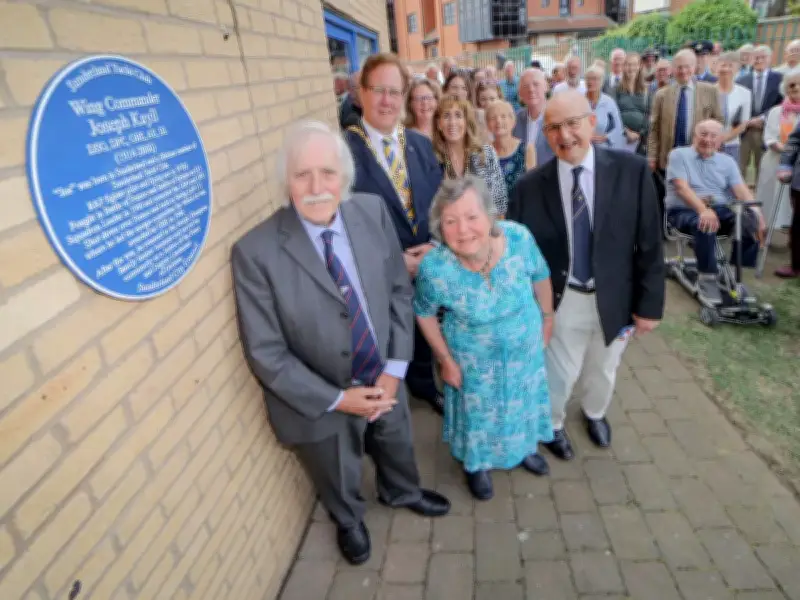
A blue plaque has been unveiled at Sunderland Yacht Club to honour Wing Commander Joseph Robert 'Joe' Kayll, a Battle of Britain pilot, prisoner of war and one of the founders of the club. The plaque recognises his wartime service and his contribution to Sunderland's maritime community.
Funding and ceremony
The plaque was funded with help from Sunderland City Council's North Area Committee, which awarded a £500 grant from its community chest scheme towards the overall costs of £810. The ceremony was attended by The Mayor of Sunderland, Councillor Robert Hutchinson, Mayoress Councillor Glenda Hall, Admiral David Wheldon of Sunderland Yacht Club, and Joe's son David Kayll, who unveiled the plaque.
Wartime achievements
During the Battle of Britain, Joe commanded No. 615 Squadron and was credited with shooting down seven German aircraft. His bravery earned him the Distinguished Service Order (DSO) and the Distinguished Flying Cross (DFC), both presented by King George VI. In 1941, he was promoted to Wing Commander and took charge of the Hornchurch Wing. Months later, his Spitfire was shot down over northern France, and he was captured and became a prisoner of war.
Throughout his captivity, Joe took part in escape activities and helped fellow prisoners plan escape attempts. In 1942, he escaped during a mass breakout and spent seven days on the run before being recaptured. Later, he was transferred to Stalag Luft III, where he led the East Compound Escape Committee. One of the committee's greatest successes was the famous "Wooden Horse" escape, which enabled three Allied prisoners to return to Britain.
Following his liberation in 1945, Joe was awarded an OBE and mentioned in dispatches. He later returned to the Royal Auxiliary Air Force and commanded No. 607 (County of Durham) Squadron.
Local tributes and legacy
The Mayor of Sunderland, Councillor Robert Hutchinson, said: "Wing Commander Joe Kayll's story is one of extraordinary courage, leadership and resilience. As a Battle of Britain hero, a decorated fighter ace and a prisoner of war who helped fellow airmen escape captivity, he made an exceptional contribution to his country during one of the most challenging periods in our history."
He added: "It is equally fitting that we recognise his legacy here in Sunderland as one of the founders of Sunderland Yacht Club. His commitment to both national service and community life leaves a lasting example for future generations. This plaque ensures that his remarkable achievements will never be forgotten."
After the war, Joe returned to the family timber business and continued his public service as a Deputy Lieutenant of Durham and a Justice of the Peace. He became President of the Wear Boating Association and was one of the founders of Sunderland Yacht Club.
Joe's son, David Kayll, said: "My father lived an extraordinary life. During the war he defended Britain in the skies, became a flying ace and, after being shot down, spent years as a prisoner of war where he continued to show great courage and leadership."
He added: "While his military achievements were remarkable, Sunderland was always home. He was passionate about sailing and played an important role in establishing Sunderland Yacht Club. We are delighted that this plaque will help tell the full story of his life and ensure future generations understand both his wartime service and his contribution to the city."