
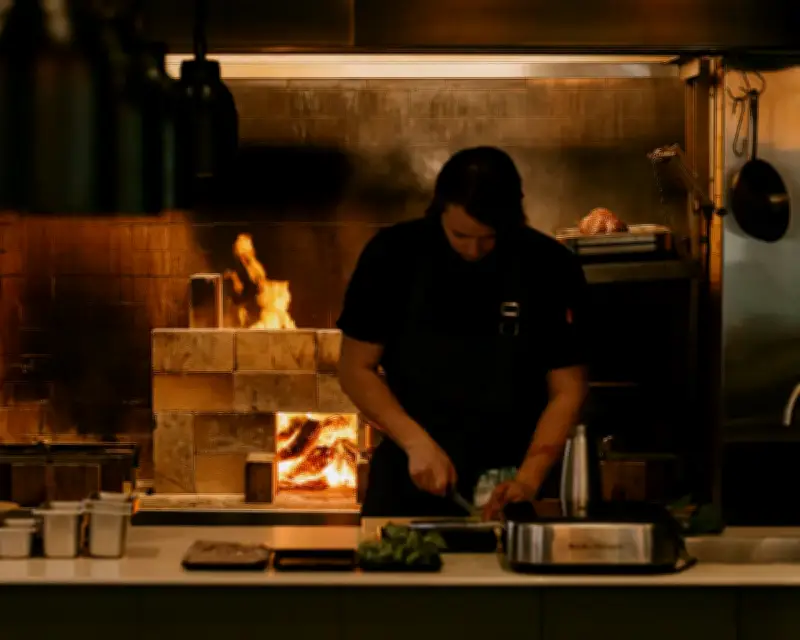
Ten South Australian restaurants have each been awarded one Michelin star, while Magill Estate Restaurant at the Penfolds winery has won two, marking the first Michelin stars ever given in Australia.
The awards were presented at a ceremony at the Adelaide Convention Centre on Wednesday evening, with more than 70 restaurants selected for inclusion in the guide.
Magill Estate leads with two stars
Magill Estate Restaurant, located at the renowned Penfolds winery in the Adelaide foothills, is one of the state's most revered institutions. Its executive chef, Scott Huggins, said he dreamed of working in Michelin-starred restaurants as "a youngster", which he did overseas, before achieving two of his own.
South Australia's premier, Peter Malinauskas, said the state had some of the world's best experiences, produce, wine, and people to bring it all together on a plate. "There is no more intimate and human experience than sharing a meal," he said. "Sharing a meal and a nice glass of wine opens up a world of possibility."
Single-star winners announced
The restaurants taking one star apiece were: Anvers restaurant, attached to Anvers Wines in Kangarilla in the Adelaide Hills; Maxwell Restaurant, above a McLaren Vale vineyard; Arkhé in suburban Norwood; Esmay in the converted Hackney Hotel in North Adelaide; Aurora at ILA in Adelaide; Hentley Farm in the Barossa Valley; LVN restaurant at Bird in Hand in the Adelaide Hills; Skillogalee Barrel House in the Clare Valley; and Botanic, set within the Adelaide Botanic Gardens, which was started by chef Justin James and is now run by Jamie Musgrave.
James' latest venture, Aptos, in the Adelaide Hills, also took one star - the state's most expensive degustation was widely speculated to be in the mix for a Michelin, with its opening almost coinciding with the announcement of the awards coming to the state.
Bib gourmand and recommended lists
The famed Michelin Man – Bibendum, Bib for short – put in an appearance on the red carpet alongside gastronomic legends such as Maggie Beer, Simon Bryant and the winning chefs and hospitality staff.
Restaurants awarded the Bib gourmand, for more moderately priced restaurants, included Parwana Afghan Kitchen, Africola, Bar Torino, Fino Seppeltsfield, Golden Boy, Part-time Lover, and the Salopian Inn. Michelin's selected restaurants – recommended in the guide – include stalwarts like Chianti, Coriole Vineyards, Star of Greece, and Darry's Verandah Restaurant, as well as newer popular options such as Patch Kitchen, Ong Vietnamese Kitchen, Shobosho, Osteria Oggi, Fermentasian, Fino Vino, Fugazzi, Hardy's Verandah, Herringbone, Huami, Kiin, Latteria, Yakisan and Magill Estate Kitchen.
Michelin Guide international director, Gwendal Poullennec, reminded the audience that the story of food in Australia stretched back tens of thousands of years. He said the Michelin inspectors found a dining scene in SA of "remarkable diversity" and that many SA restaurants wove European influences together with an "open, expressive style". "Perhaps what sets SA most apart is freedom from rigid tradition," he said, describing it as contemporary, confident, technically defined, "and yet relaxed in spirit and filled with creativity, craftsmanship and deep respect for the many hours that brings each dish to the table".
Funding and judging process
While the "red book" is self-funded in some countries, it has increasingly inked paid partnerships as it ventures further afield. The state government is likely to have paid millions to have the Michelin Guide in the state for five years – it says the process of restaurant selection was "entirely independent" while the figure remains commercial-in-confidence. Restaurants cannot pay to be included, and the aim is for the state to boost its tourism overall. Tourism Australia reportedly turned down a $40m, five-year deal with the French company for a national approach.
Anonymous, independent inspectors then trawled through SA restaurants, judging them on five criteria: "Ingredient quality, harmony of flavours, the mastery of culinary techniques, how the chef's personality shines through their cuisine and, crucially, consistency across the entire menu and over time." Michelin also goes to pains to point out that the relatively formality, the style of service, and the decor and style of a restaurant are not factored in, and any restaurant can qualify.
A green star for eco-friendly practices was removed earlier this year without a full explanation, meaning about 40 restaurants will lose the accolade. On Wednesday Poullennec said instead, the Mindful Voices program for those who are "rewriting the rules" would have a role in SA through Penobscot Farm in Clare Valley.
History and impact
In France, in 1900, the famous tyre company launched the guide to encourage people to get on the road – and wear out their tyres more quickly at the same time. In 1920 it was relaunched and included hotels and restaurants. The first mystery diners were recruited, and in 1926, the first stars were awarded.
One star is for "restaurants that use top-quality ingredients and prepare dishes with distinct flavors to a consistently high standard". Two stars are for "restaurants where the team's personalities and talents shine through in expertly crafted dishes, with food that is both refined and inspired". And three-star restaurants "tend to have chefs at the peak of their profession, where the cooking elevates the craft to an art form, with some dishes destined to become classics".
Some chefs and hospitality insiders fear the "red book" has "lost its credibility" because there are now almost 20,000 entries, and they question how the inspectors can keep up. Stars can be taken away if inspectors feel the restaurant is no longer up to scratch, which has led to reports the prize can be "a curse". Chefs have even asked for stars to be removed, or barred reviewers because of disagreements with their assessments or because of the crushing pressure.
From Thursday, any SA restaurants that have made the grade will be able to display their Michelin Guide plaques. State tourism minister Emily Bourke said the recognition would see "foodies from across the world flock to check out the hottest culinary destination, with the benefits anticipated to not only reach our hospitality and tourism sectors, but our regions and producers as well". When the successful bid for the guide to visit was announced in May, Restaurant and Catering Association chief executive Wes Lambert predicted it would send the other states scrambling to get onboard a program that could lure hundreds of thousands of tourists, and billions of dollars.




