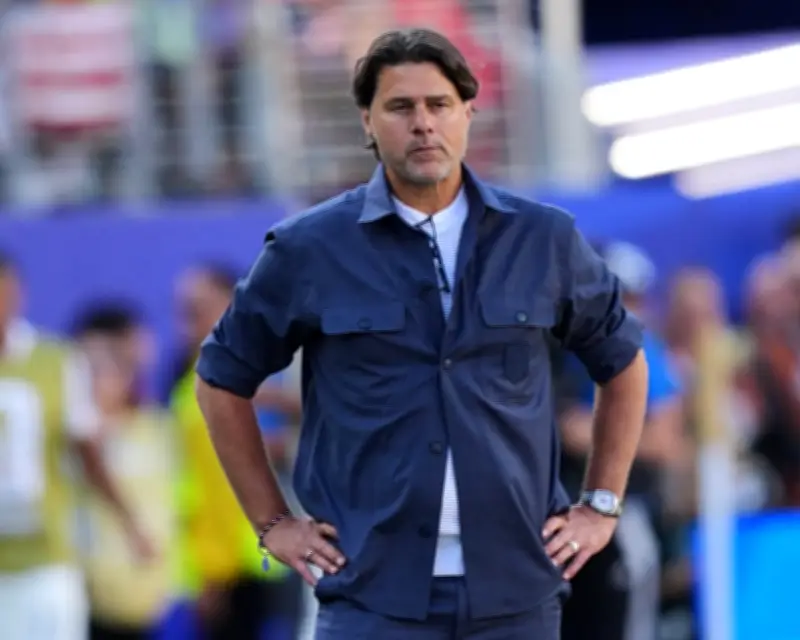
Mauricio Pochettino's return as US men's national team head coach through the 2030 World Cup is risky, expensive, and probably unnecessary, according to a new analysis.
Success in first cycle
Pochettino was appointed on 10 September 2024 and led the US to the last 16 at the 2026 World Cup, where they lost 4-1 to Belgium on 6 July. He energized a team that had grown stale, found a system that suited a generation of unprecedented talent, and delivered two excellent performances, including a 4-1 hammering of Paraguay, considered the best US World Cup showing ever.
Gamble of a second cycle
His new deal runs through the 2030 World Cup, but the inclination to see what he can build is understandable. However, it assumes he stays for the full four years. Pochettino might leave early for a top club job, as he was reportedly in talks with Milan before the World Cup.
The job he returns to is very different. World Cup qualifiers for 2030 don't start until November 2027, with Nations League and Gold Cup games before then. Concacaf will have six places at the next World Cup, plus a possible playoff spot, lowering the stakes.
History of second cycles
USMNT managers staying for a second cycle have failed: Bruce Arena's team got grouped in 2006, Bob Bradley was sacked after 2011, Jürgen Klinsmann's second cycle was a debacle, and Gregg Berhalter's return ended in humiliation at the 2024 Copa América.
The team is young but injury-prone, with only Weston McKennie spared major injuries among the core. Christian Pulisic was pulled at half-time against Paraguay and didn't play a full 90 minutes all tournament.
Cost concerns
Tax filings show Pochettino made more than $5m in his first seven months, with billionaire Ken Griffin as a primary funder of the new deal. Paying top dollar for early qualifiers against weaker teams may not make sense.
As one commentator put it, you wouldn't buy a supercar just to drive to the grocery store. In the next few years, the USMNT will mostly be making school runs without ever hitting the highway.