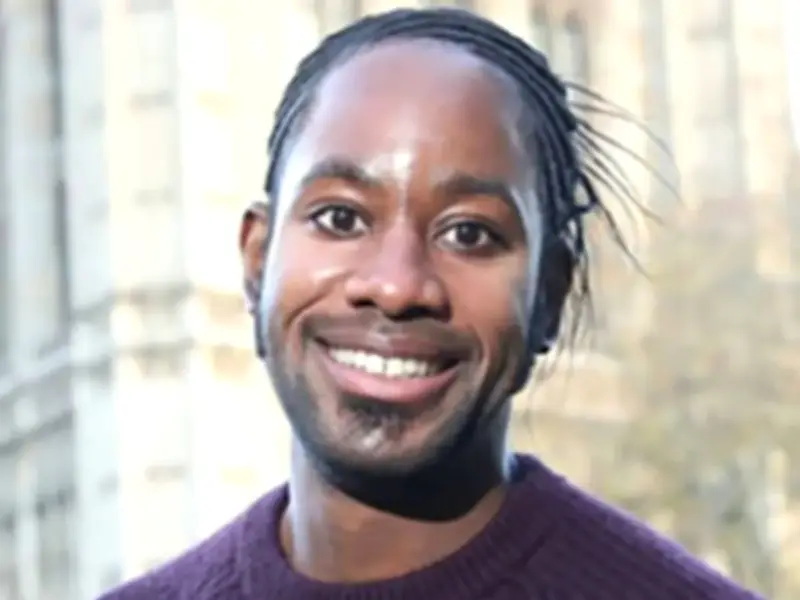
Prime Minister Andy Burnham said the death of former Cambridge professor Jason Arday was “a tragedy”. Prof Arday, who resigned after a plagiarism row, was pronounced dead after emergency services were called to Daley Thompson Way, in Battersea, just after 3pm on Friday to reports that a man had been found unresponsive inside a property. The Metropolitan Police said his death is being treated as unexpected, but is not believed to be suspicious.
Background and Resignation
Prof Arday, a professor of sociology of education who became Cambridge’s youngest black professor in 2023, quit following a series of media reports alleging he plagiarised his PhD thesis – completed at Liverpool John Moores University – and other research. Further questions were asked in the press about the truth of other claims he made, including saying he ran 600 miles in six days and that he had raised £5.5 million for charity. An investigation at Liverpool John Moores University cleared Prof Arday of wrongdoing.
Prime Minister's Response
Speaking after his death, the Prime Minister told broadcasters during a visit to Cornwall on Saturday morning: “It’s a tragedy on so many levels, but particularly just for everybody who knew Jason, his family obviously, his friends. We think of think of them today. “It’s not a moment for any rushing to judgment. It’s a moment for reflection, I would say, reflecting on how how things came to this. A really sad, sad and sorry state of affairs and I think we all today think of Jason, his contribution, and his family and friends.”
Tributes and Family Statement
University of Cambridge professor, and director of the Autism Research Centre, Sir Simon Baron-Cohen told the BBC he spoke to Prof Arday on Friday morning. Sir Simon told Radio 4’s Today programme: “He was being subjected to relentless scrutiny, including ridicule, discrediting absolutely every detail of his life, and he wasn’t coping with the loss of his career, the loss of his reputation, and he felt he couldn’t go on.” “He used those words in voice notes,” he added. Sir Simon said: “At the heart of all of this was a man who’d been diagnosed in childhood with disabilities that included autism and language delay and learning differences. “He was a vulnerable child, a vulnerable teenager, and a vulnerable adult, so he needed and deserved safeguarding and support and reasonable adjustment every step of the way.”
Sir Simon said Prof Arday was a “kind and gentle” man who had been “bombarded by every media outlet” and used as a “lightning rod” to examine diversity, equity and inclusion (DEI) policies. In a statement issued by his publisher Simon & Schuster UK, Prof Arday’s family said: “Jason was subjected to a campaign of sustained abuse for the more than three years since he accepted the role of professor at Cambridge University by those who would leave no stone unturned in their quest to undermine him. “The campaign of misinformation was too much for Jason, who was a gentle man and who always wanted to see the best in everyone. We are in shock to have lost this amazing father, partner, brother, uncle and son. “We won’t comment further at this point beyond asking the press to leave us alone now, and to stop the campaign of harassment which has been waged against Jason and his family for too long.”
University of Cambridge vice-chancellor Professor Deborah Prentice said: “We are desperately saddened to hear this tragic news. Our heartfelt sympathies go to Jason Arday’s family and friends at this incredibly difficult time.” In a statement on Saturday, National Education Union (NEU) general secretary Daniel Kebede said Prof Arday had been subjected to “a public and brutal takedown that unleashed a tirade of racism”. He added: “I don’t believe this was ever simply about ‘professional conduct’ or ‘plagiarism’. There is a profound difference between scrutiny and a sustained public campaign that turns an individual into a symbol of everything the right believes is wrong with DEI. “The effect has been chilling. It tells black people and others from underrepresented backgrounds that entering prominent public positions will make you a target. “A target not only for criticism of your work, but for a much broader political and cultural backlash.”