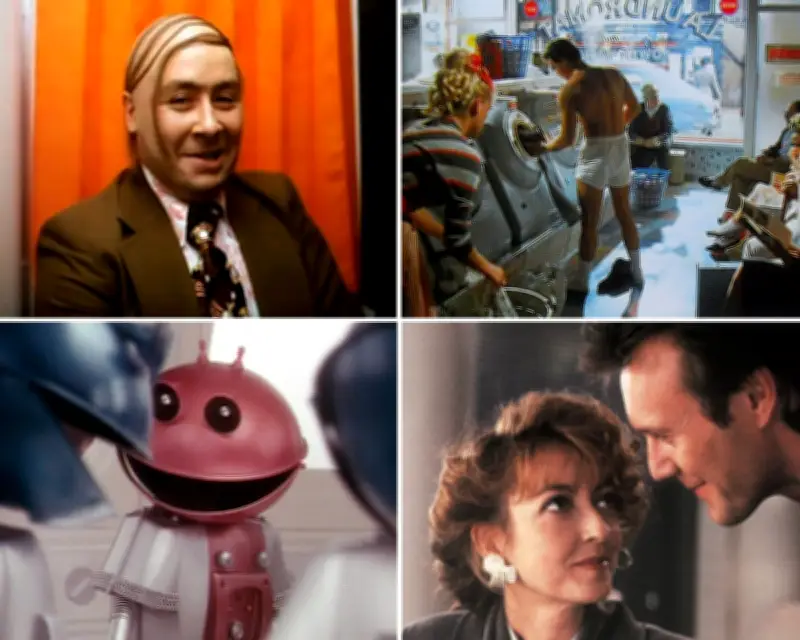
The History of Advertising Trust (HAT), now celebrating its 50th anniversary, houses over 10 million items and 50,000 commercials, offering a nostalgic trip through Britain's advertising golden age. From the Hamlet cigar-smoking Ian Botham to the Smash martians, these ads reflect changing social norms and creativity.
From Botham to Baldy Man: Iconic Campaigns
In the gents' loos at HAT's Norfolk archive hangs a 1986 photo of Ian Botham smoking a cigar, captioned: 'Happiness is a cigar called Hamlet.' This ad exemplifies an era when sports stars promoted cigarettes. Other classics include the Gold Blend couple (Anthony Head and Sharon Maughan), whose 1993 climactic kiss drew 30 million viewers, and Ridley Scott's 1973 Hovis ad featuring a boy biking over cobbles to Dvořák's New World Symphony.
Gregor Fisher's Baldy Man (1986) offered solace on a bad hair day with a Hamlet cigar after a photobooth mishap. Meanwhile, Smash's metallic martians urged viewers to 'For mash get Smash,' and PG Tips' chimpanzees dressed as removal men promoted tea.

Regulation and Creativity
Deputy director Alistair Moir notes how regulations spurred creativity. After the 1962 Royal College of Physicians report linking smoking to cancer, TV cigarette ads were banned in 1964. Ads then used suggestion, like Benson & Hedges boxes next to mouseholes or Silk Cut's purple slash. 'These ads treated the consumer with more intelligence,' Moir says.
HAT's collection also includes wartime public service ads, like the Squanderbug, a Hitlerite figure urging savings to fund the war. 'Copywriting can be used for public good,' Moir adds.
Enduring Brands and Social History
The archive's oldest item is a 1680 London Gazette ad for an atlas. Heinz baked beans' logo remains unchanged since the 1920s, and Ed Sheeran's Heinz ketchup tattoo inspired a special edition bottle. HAT's executive director John Gordon-Saker admits to still drinking PG Tips out of loyalty to the chimps, despite knowing they don't improve flavour.
Modern Challenges
Moir laments that today's data-driven advertising has lost emotional storytelling. 'Brands are obsessed with ROI rather than big campaigns that connect with emotion,' he says. His favourite ad is a 2008 Hovis remake tracing British history from 1886 to the millennium, reinvigorating the brand.
HAT's archive remains vital for social history and industry learning, preserving ephemera that illuminate modernity and consumer behaviour.