It is one of art history's most tantalising puzzles, stretching from the Louvre to the Loire and even to a stately home in Norfolk. Now, a compelling new theory suggests the mystery of a nude version of the world's most famous painting may finally be solved.
The Georgian 'Joconda' and the Houghton Hall Connection
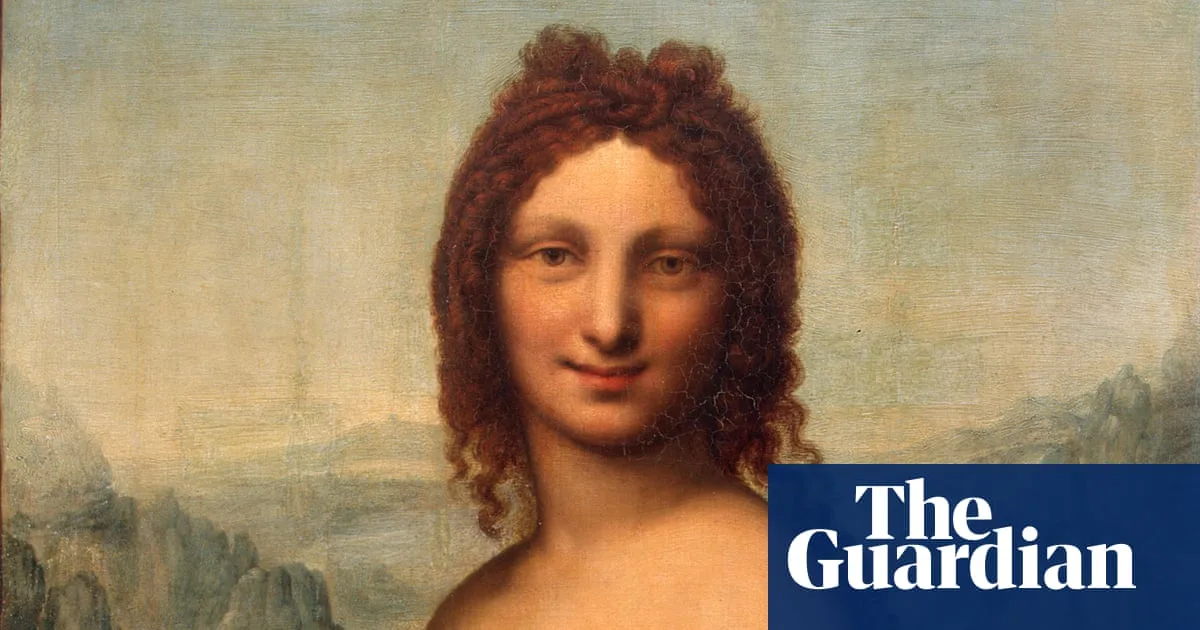
In 18th-century Britain, a very different Mona Lisa captivated libertine Georgian society. An engraving published by John Boydell presented 'Joconda', a woman naked from the waist up, sitting in the same enigmatic pose as Leonardo da Vinci's masterpiece. The print's caption claimed it reproduced a painting by 'Lionardo da Vinci' hanging 'in the Gallery at Houghton'.
Houghton Hall in Norfolk was then the home of Sir Robert Walpole, Britain's first and notoriously corrupt Prime Minister. His son, Horace Walpole, catalogued the collection at age 26, describing the painting as: 'The Joconda, a Smith's Wife, reckon'd the handsomest Woman of her Time... by Lionardo da Vinci. She would often sit half naked, with Musick, for several Hours together, to be drawn by him.'
That collection was sold to Catherine the Great in 1779. Today, the nude Mona Lisa hangs in the State Hermitage Museum in St Petersburg, attributed not to Leonardo but to an unnamed 16th-century follower. This attribution raises the central question: if it's by an imitator, was there an original nude version by the master to copy?
A Crucial Clue in Chantilly and a Roman Revolution
The trail leads to the Loire Valley, where Leonardo spent his final years. In October 1517, he showed visitors three paintings, including 'a certain Florentine woman portrayed from life at the request of the late Magnificent Giuliano de' Medici'. This is widely accepted to be the clothed Mona Lisa, though a document proves it was begun in 1503 for Florentine merchant Francesco del Giocondo.
So why mention Giuliano de' Medici? The critic proposes Leonardo may have painted a nude version for the nobleman. Supporting evidence exists at the Domaine de Chantilly, north of Paris: a full-scale preparatory 'cartoon' dated 1514-16. It depicts a nude woman in the exact pose of the Mona Lisa, with identical hand positioning. In 2017, the Louvre announced strong evidence it was at least partly drawn by Leonardo's left hand.
The creator of the Houghton painting likely worked from this sketch or a painting based on it. This makes it highly probable Leonardo, perhaps with pupils, created a nude Mona Lisa.
Raphael's 'La Fornarina' and the Erotic Legacy
Further evidence hangs in Rome's Barberini Palace. Raphael's 'La Fornarina' (c.1520) portrays a topless young woman with a sideways smile, holding translucent silk. The critic argues this is essentially a nude Mona Lisa, its similarities too close for coincidence. The gregarious Raphael would have visited Leonardo's studio in the Vatican's Belvedere and seen his stunning new idea.
This nude version acted like a grenade in High Renaissance Rome, radicalising how artists painted bodies. Raphael's bold work spread the revolution. His assistant, Giulio Romano, later created an explicit visual sex guide, 'I Modi'. Masters like Titian and Correggio took up the challenge of sensual nudes.
Leonardo's notebooks support this erotic inclination. He boasted a painter could bring a patron's lover to life for a 'lovestruck judge'. He even recounted a man returning a painting of the Virgin Mary because it provoked improper thoughts.
The Final Hypothesis: A Gift for Giuliano de' Medici
The critic's hypothesis centres on Giuliano de' Medici's marriage in early 1515. As a memento, Leonardo may have painted a nude portrait of a mistress Giuliano had to give up, using the Mona Lisa's exact pose. As Leonardo wrote, a painter 'can place before the lover a true likeness of the beloved, often making him kiss and speak to it'.
This theory reveals something extraordinary about the Mona Lisa and its creator. Its iconic status is not a modern phenomenon but was immediate. Leonardo was so confident in its uniqueness he felt able to parody it with a nude version. He understood it was the ultimate painting—a vision of artistic perfection, whether clothed or not.
The mystery, stretching from a Norfolk hall to a Russian museum, underscores Leonardo's enduring genius and his playful, profound understanding of art's power.