What does it mean to pass time? For Taiwanese-American artist Tehching Hsieh, this fundamental question became the driving force behind some of the most extreme performance art ever created. Over two decades, he voluntarily subjected himself to a series of gruelling, year-long 'actions' that tested the limits of mind, body, and freedom.
The Master of Durational Art
Marina Abramović, the grande dame of performance art herself, has labelled Hsieh the 'master' of the form. His practice, documented in a major retrospective, Lifeworks: 1978-1999, at New York's Dia Beacon, is built on monumental commitment. It began in earnest with Cage Piece (1978-1979), where for one full year he lived in a wooden cell measuring just 11.5 by 9 feet. He did not speak, read, write, or listen to media. A friend delivered food and removed waste, but otherwise, Hsieh was alone with time.
This was followed by the Time Clock Piece (1980-1981), a year of punching a worker's time clock in his studio every single hour, 24 hours a day. The physical and mental toll is almost unimaginable, yet Hsieh dismisses notions of masochism. "The kind of art I make is about how I understand the world," he explains. "It's how I mark the passing of time. That's all life is... we're all just passing time."
A Life of Radical Actions
Born in 1950 in Taiwan, Hsieh arrived in New York as an undocumented migrant in 1974. Working menial jobs and speaking no English, he existed on society's fringes. This outsider status, however, fuelled a fierce independence. He cites existentialist writers like Kafka and Dostoevsky as influences, but his medium became his own body and lived experience.
His most physically punishing work was arguably Outdoor Piece (1981-1982). For a year, he did not enter any building, vehicle, or tent. He survived the 20th century's worst winter in New York, sleeping rough and washing in the Hudson River. On one occasion, captured on film, he was arrested for vagrancy, shouting at police, "I cannot go inside!"—a literal and profound refusal to break the rules of his own art.
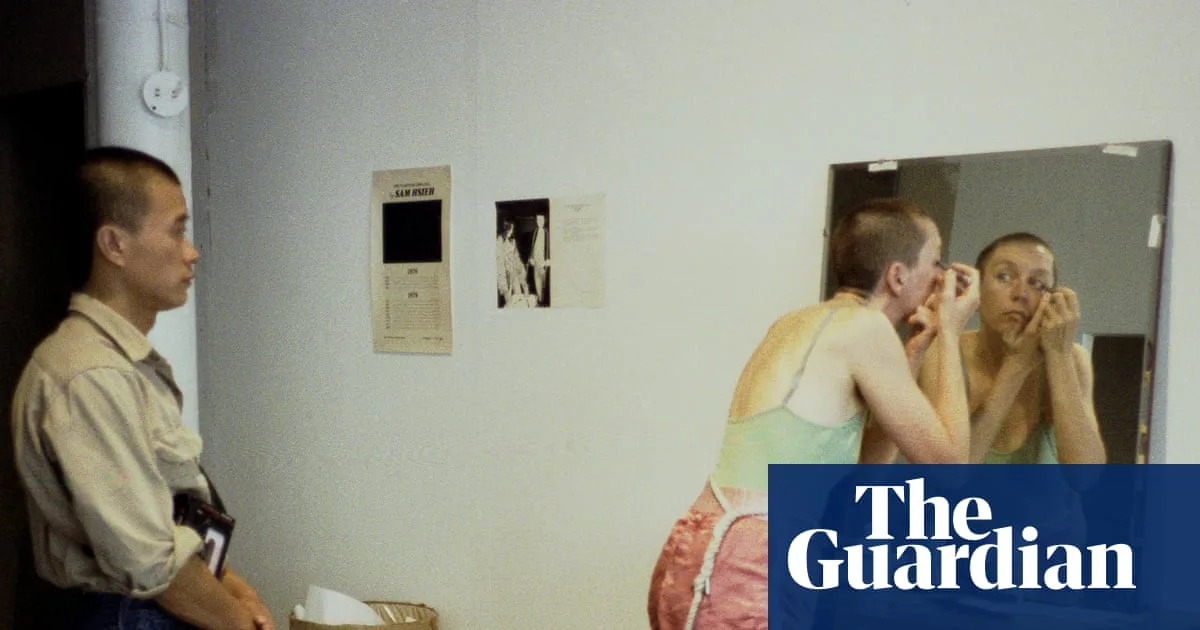
In 1983, his focus shifted to connection with Rope Piece, where he spent a year tied by an eight-foot rope to fellow artist Linda Montano. They were never allowed to touch, yet were perpetually bound, exploring themes of intimacy, tension, and coexistence.
Legacy of a Stubborn Visionary
Hsieh's work is meticulously documented. At Dia Beacon, visitors confront 8,760 photographs from the time-clock piece, the reconstructed cage, and maps charting his nomadic year outdoors. This fastidious record-keeping contrasts with the ephemeral nature of the acts themselves.
In 1986, he began his final, monumental work: the Thirteen Year Plan. He vowed to make art but not show it publicly until the project concluded on 31 December 1999—his 49th birthday. His final statement was simple: "I kept myself alive. I passed the Dec 31, 1999."
He has not made art since. "I never finished or retired, I just don't do it any more," he clarifies with characteristic modesty. His work, once on the radical fringe, now seems prophetic, speaking to modern anxieties about surveillance, connectivity, and the relentless passage of time. Tehching Hsieh didn't just make art about life; for over two decades, his life was the art.