Nude 'Last Supper' Painting Removed from Indian Biennale After Protests
Nude 'Last Supper' Art Removed After Protests

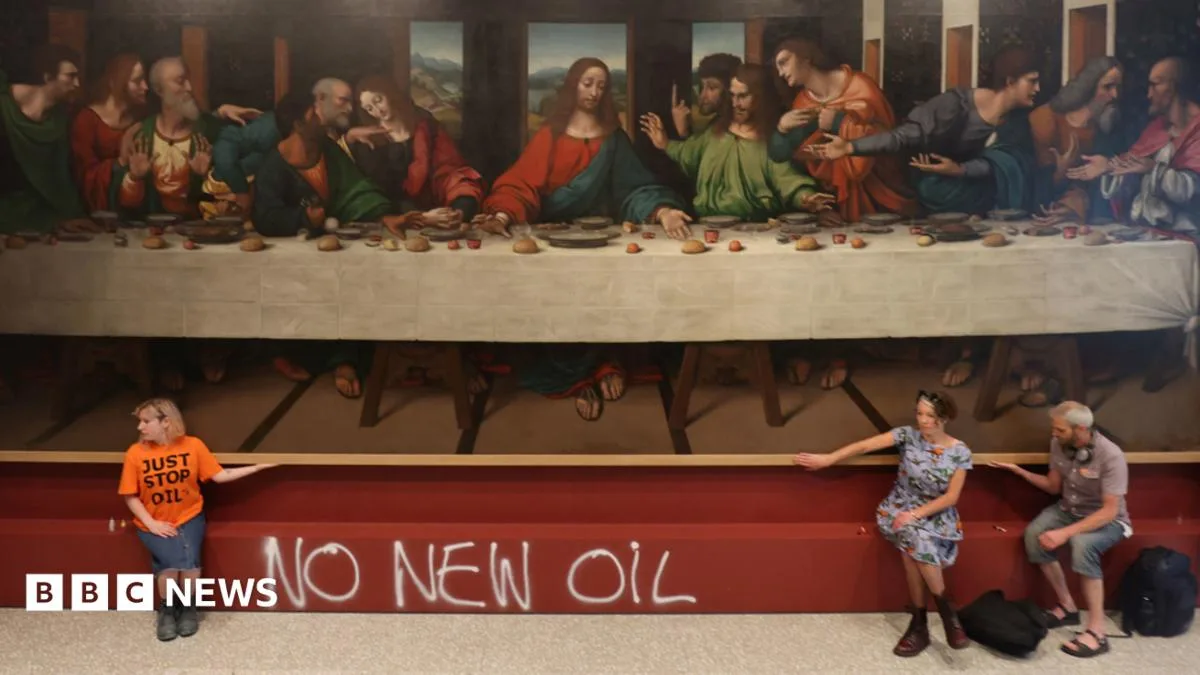
A controversial artwork reimagining Leonardo da Vinci's The Last Supper with a nude female figure has been removed from a prestigious Indian art exhibition after protests from Christian groups. The painting, titled Supper at a Nunnery by artist Tom Vattakuzhy, sparked a significant dispute over artistic expression and religious sensitivity.

Artwork Sparks Outcry at Premier Festival

The incident occurred at the Kochi-Muziris Biennale, India's largest international contemporary art exhibition, founded in 2012. Vattakuzhy's work was displayed as part of Edam, a parallel exhibition involving 36 artists, which aimed to showcase diverse art practices from Kerala. The painting depicts the Dutch exotic dancer and executed World War I spy Mata Hari seated nude at the centre of a long table, surrounded by nuns, in a composition that directly echoes the traditional Last Supper arrangement.

Christian groups, including the Syro-Malabar Church and the Kerala Region Latin Catholic Council, objected vehemently. They argued that placing a nude woman in the position traditionally associated with Jesus Christ was a profound insult to their faith. Tom Olikkarott, a spokesperson for the Syro-Malabar Church, condemned it as a "distorted depiction" and a "violation of basic respect towards religious faith".

Artist's Intent and Historical Context

In response, Tom Vattakuzhy defended his work, stating it was not intended as a religious provocation. He explained that the painting was conceived as a visual response to a Malayalam play, The Unnatural Death of a Soft-Bodied Soul by C Gopan, which dramatises Mata Hari's final night in a nunnery before her execution. "The germination of the painting comes from the corresponding story," Vattakuzhy told The Independent.

The artist, who was raised in a Christian family, said he was deeply moved by Mata Hari's composure before her firing squad. "To stand in front of death with a smiling face is something that really touched me," he said. He described his work as exploring themes of vulnerability and suffering, with an "umbilical connection" to the literary source material.

Withdrawal and Aftermath

The venue displaying the artwork was temporarily closed on 30 December 2025 due to security concerns. Following meetings with local officials, the Kochi Biennale Foundation announced that the artist and curators had jointly decided to withdraw the painting "respecting public sentiments and in the interest of the common good". The exhibition space reopened on 5 January 2026 without the controversial piece.

This was not the painting's first controversy. It initially appeared in the Malayalam literary magazine Bhashaposhini in 2016, triggering similar protests which led to the magazine's withdrawal and a public apology. Vattakuzhy expressed feeling "demoralised and dispirited" by the latest episode, noting he had cautioned curators about the work's history but that neither expected such a reaction at a premier international art venue.

The curators of Edam had initially stood by the artwork, arguing that removal would amount to censorship and restrict artistic expression. However, the pressure from religious groups in Kerala—where Christians constitute roughly 18% of the population—proved decisive. Vattakuzhy lamented what he saw as a rigid interpretation of religious imagery, stating, "They see Christ only in the outer appearance... For me, Christ isn't about outward appearance. It is about compassion, love and empathy." The 2025-26 Biennale continues until 31 March 2026.