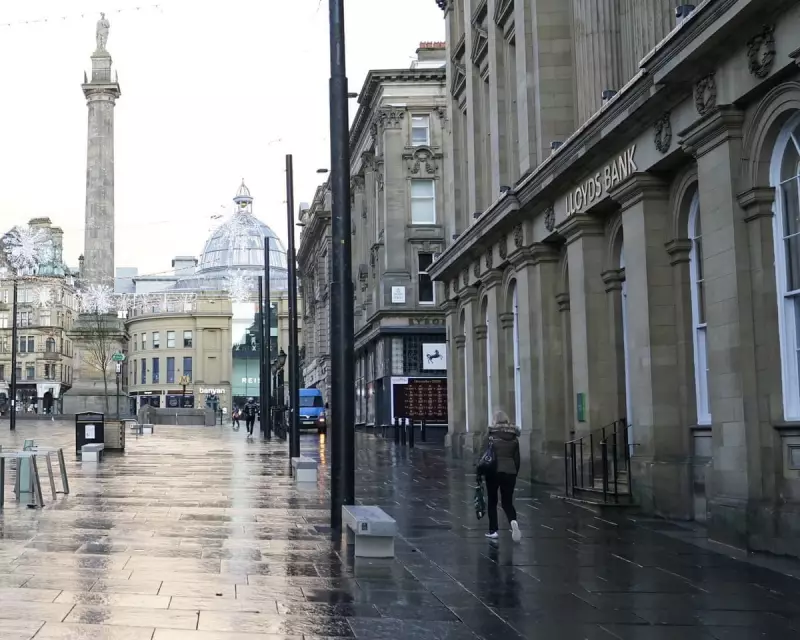
In a charming corner of Newcastle upon Tyne, a unique form of public art celebrates the quiet, often overlooked moments of daily life. Four brass plaques embedded in the pavements of Grainger Town pay tribute not to famous historical figures, but to entirely fictitious everyday heroes and their mundane, yet poignant, experiences.
Art in the Pavement: Celebrating the Ordinary
Designed by the local artist Rupert Clamp, these thought-provoking installations invite passers-by to pause and reflect. One plaque, noted by letter-writer Fred Robinson from Durham, commemorates a simple, personal act: “Mrs Mary Howard adjusted her hat in the reflection in this window, 3rd June 1921”. Another marks a moment of disappointment, stating: “Anne Huxtable waited for a friend who did not arrive, 8th December 1952”.
This clever project blurs the line between history and fiction, encouraging people to find narrative and humanity in the very streets they walk. The plaques have become a subtle but beloved feature of the city's historic Grainger Town district.

A Broader Conversation: From NATO to Duvet Covers
The discussion of Newcastle's artistic plaques formed part of a wider collection of reader letters published by the Guardian, showcasing the breadth of public opinion on current affairs.
On matters of international defence, Chris Ainsworth from Rossendale, Lancashire, challenged Donald Trump's recent comments on NATO. Ainsworth pointed out that Article 5 of the NATO treaty, which states that an attack on one member is an attack on all, has been invoked only once—in defence of the United States following the September 11 attacks.
From Cambridge, Dr Piers Brendon offered a satirical suggestion regarding Trump's cultural influence, proposing an exhibition of “degenerate art” at the Smithsonian, akin to the infamous 1937 show in Munich.
Domestic Concerns: Robots and Political Relief
Shifting from global politics to domestic practicality, Rosamund Aubrey from St Ishmaels questioned the priorities of tech innovation. After reading a report on the annual CES tech show featuring fridges that write shopping lists and laundry-folding robots, Aubrey posed a more pressing question: “When are we going to get a robot that can change a double duvet cover?”
Finally, in a succinct defence of the Labour leader, Steve Lupton from Prestwich simply listed the five Conservative Prime Ministers since 2010—David Cameron, Theresa May, Boris Johnson, Liz Truss, and Rishi Sunak—as his explanation for being able to “stand Keir Starmer.”
Together, these letters paint a picture of a engaged readership, oscillating between appreciation for local artistry, concern over global security, wry commentary on political trends, and the universal longing for simpler solutions to life's daily irritations.