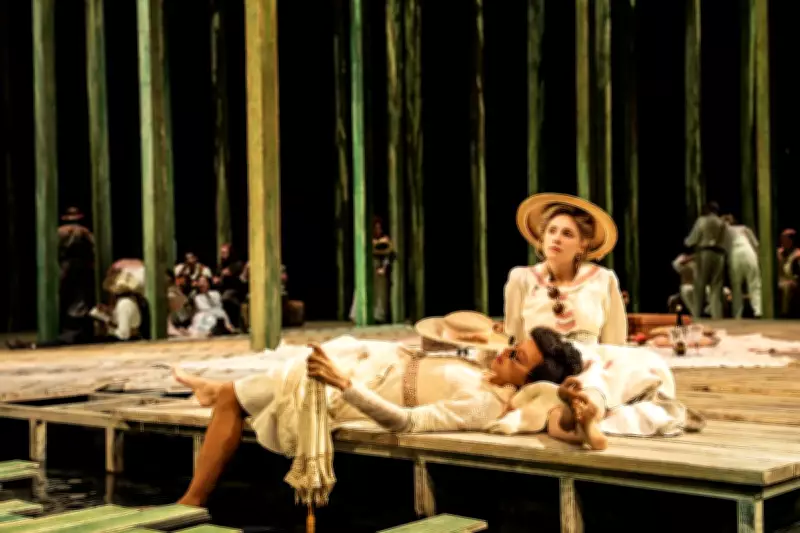
National Theatre's 'Summerfolk' Revival: A Modern Take on Gorky's Satire
The National Theatre's new revival of Maxim Gorky's 1904 play Summerfolk presents a bold and unsubtle satire that feels strikingly relevant in today's world. Updated by Nina and Moses Raine, this production delves into the lives of wealthy layabouts bludgeoning each other with uncomfortable truths during a summer in the Russian countryside.
A Messy Riposte to Chekhov
Set against the backdrop of a fabled rural idyll, the play captures a bourgeoisie too hot, too cross, and too self-absorbed to enjoy their holiday. Unlike Chekhov's elegant The Cherry Orchard, Summerfolk is full of rage rather than nostalgia, critiquing a way of life on the brink of collapse. The Raines' adaptation modernises the dialogue, making the characters speak like the audience in the stalls, thereby bridging the gap between 1904 and the present.
Characters and Themes
With 18 named characters, the play's broad focus sometimes makes it challenging to deeply connect with any individual. Key figures include Varvara, played by Sophie Rundle, who struggles with the fake nature of her privileged existence, and wealthy Semyon, portrayed by Peter Forbes, who mocks the awkward arrivistes around him. The ensemble also features pantalooned peasants offering pithy commentary, highlighting the wastefulness of this elite coterie.

Themes of social discomfort are central, as characters educated out of working-class backgrounds grapple with their place in the intelligentsia. Marital difficulties, such as Varvara's weariness with her oafish husband Bassov, are overshadowed by a constant influx of visitors, including florid poet Kaleria and stern idealist doctor Maria. The play questions whether art or social causes can alleviate their ennui.
Production and Performance
Robert Hastie's production relies on broad performances and an open, cluttered set that sometimes hinders intimate moments between the warring characters. The structure feels uneven, with a tighter first half followed by a ballooning second part that lacks catharsis. However, standout moments shine through, such as Kaleria's admission of rage, which breaks through her sentimental facade and resonates with modern audiences.
Modern Relevance
Despite its lack of subtlety, Summerfolk feels strikingly modern, with characters that are rougher and more honest than those in Chekhov's works. The play's exploration of uncomfortable truths and social breakdown remains poignant, offering a cathartic yet awful experience for viewers. As the world of these characters disintegrates, Gorky's satire reminds us that some endings are not meant to be mourned.
Summerfolk runs at the National Theatre until 29 April, providing a thought-provoking look at class, identity, and discontent.