England is gearing up to take on Norway in their pivotal World Cup quarter-final showdown on Saturday (July 11). But before the Three Lions meet their opponents on the pitch, the ECHO has looked at Liverpool’s own Norwegian connections that stretch back more than a millennium.
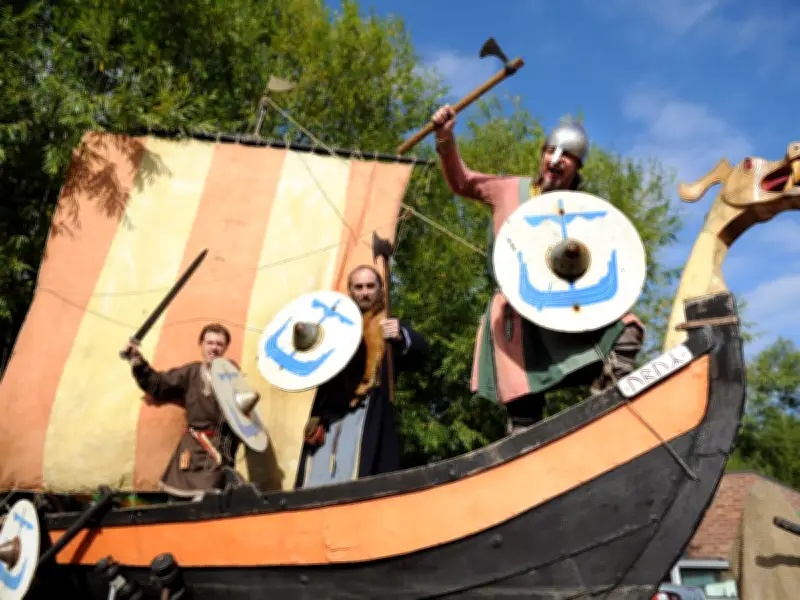
Viking Settlers and Old Norse Place Names
For centuries, the relationship between Liverpool and Norway has been shaped by the movement of people across the sea. While Liverpool’s modern identity is often linked to Irish migration, the city’s history is a much broader story of different communities arriving, settling and leaving their mark. For Clare Downham, Professor of Medieval History at the University of Liverpool, the Scandinavian influence can still be found across the region.
She told the ECHO: “We just have to look at place names in the Liverpool region to see the impact of settlers from Scandinavia into our region over a thousand years ago. The roots go back a long way. We know that Vikings settled in the region at the beginning of the 10th century.”

Places including Aigburth and Toxteth have roots in Old Norse, with Scandinavian settlers arriving in the area during the early 10th century. One figure who appears in the historical record is Viking leader Ingimund, who was expelled from Ireland before settling on the Wirral.
Timber Trade and the Baltic Triangle
But the Liverpool-Norway connection did not end with the Viking Age. As Liverpool grew into one of the world’s busiest ports, new links with Scandinavia developed through trade and migration. During the Victorian era, Norway became an important source of timber for Liverpool, with huge quantities of wood arriving through the docks to support Britain’s building boom. The area now known as the Baltic Triangle takes its name from that maritime history, once home to timber warehouses connected to the Baltic and Scandinavian trade routes.
Norwegian sailors and traders also became part of the city’s port communities, with places such as the Norwegian church on Park Lane providing a focal point for Scandinavian visitors and residents.
The Dish That Gave Scousers Their Name
Perhaps the most famous Liverpool-Norway link can be found on the dinner table. The word "Scouse" is widely associated with "lobscouse", a Scandinavian mariners’ stew that was adopted by local people and, over time, became a dish associated with Liverpool. Prof Downham explained that the dish reflects the way cultures mixed in a busy port city.
She said: “We had mariners coming in, and it was a challenge to supply food onboard a ship without modern refrigeration. So the way we tend to have pickled cabbage with Scouse is quite a Germanic North Sea thing because you had to pickle vegetables if you were going to have vegetables on a long voyage. They had to make the most of what little they had. The thing with Scouse is that it's always seen as a very economical dish because you can make it with any leftover meat and vegetables.”
“So, mariners were making this stew, and people were realising it was good, which meant it then got adopted into local cuisine and hybridised a little bit with Lancashire hotpot or Irish stew. Then, apparently, by the 1940s, it was just seen as such a kind of local dish that people from Liverpool started to be called Scousers. So it’s there in the DNA of the city. It shows Norwegian mariners were sitting down and having dinner with local people and were mixing and sharing stories together over a table. Which is a nice part of the history.”
Liverpool's Magpie Culture
Scouse became a symbol of Liverpool’s identity and eventually gave its people their nickname. But the story is not simply one of a single influence. Professor Downham said Liverpool’s character comes from generations of different communities contributing to the city, including Scandinavian communities who arrived through the port, settled locally, and became part of Liverpool’s wider cultural landscape.

She said: “The city itself was always part of a bigger kind of process of immigration of people from all over, so we have these little pockets. We tend to think mainly, when we talk about Liverpool and its migratory history, we talk a lot about the Irish community and Chinese community, but there were many different groups that have been through the city of Liverpool through the years.
“If you were a Scandinavian mariner coming into port and you wanted to find your fellow Norwegians, you would head to these places like the Baltic. So it’s a long and fascinating history of connections with Scandinavia.”
Lasting Linguistic Legacy
The influence of Old Norse can also be seen more widely in northern England, with words entering local dialects and even standard English. Terms such as “fell” for a mountain, “dale” for a valley, and “beck” for a stream all have Old Norse origins, which Prof Downham said reflects the lasting impact of Scandinavian settlement in the north of England and how the Liverpool region is part of a much bigger story of connections across the Irish Sea.
She said: “The Irish Sea is much more of a hub. From the 11th century, after the Norman Conquest, the geopolitical shift in Britain very much moved towards the south west and looked to the continent. So the Irish Sea, which had been a hub of connections in the north, sort of became less significant. So, what we now almost see as a bit marginal in our geography, would have been much more central in the Viking Age.”
During the Viking Age, Scandinavian networks stretched between Britain, Ireland, and the Isle of Man, which itself remained under Norwegian rule for centuries after the traditional Viking Age ended. But today, the relationship between Liverpool and Norway is still evident in travel and football connections, as well as in the shared maritime histories that shaped both places.
Prof Downham said: “Liverpool’s unique heritage and identity is because it’s like this Magpie culture that’s taken a little bit from everywhere and made something really unique. I think as Vikings have become a bit more popular through TV, games, and history, I think there's been growing interest for people in the area to find out about their Scandinavian roots.”