LA's $724m Concrete Colossus: Lacma's New Gallery Sparks Carbon Debate
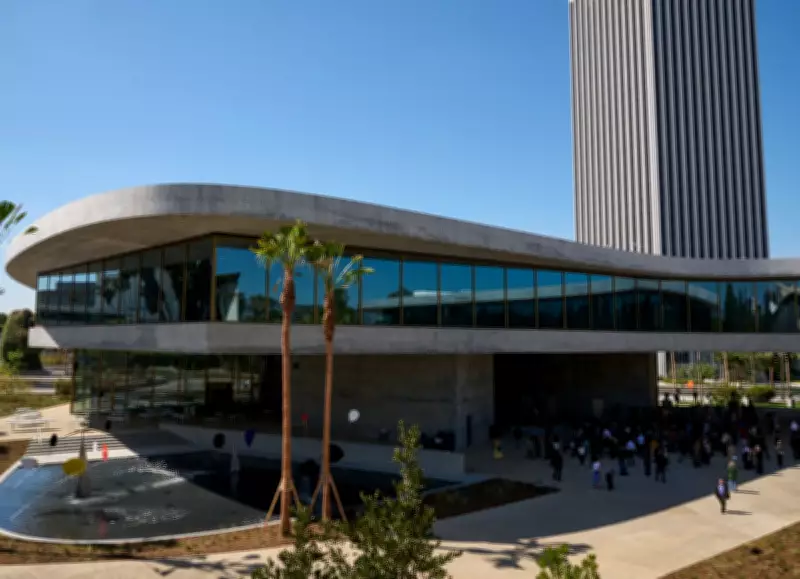
Rising above Wilshire Boulevard in Los Angeles, a striking new architectural marvel commands attention. The David Geffen Galleries at the Los Angeles County Museum of Art (Lacma), designed by revered Swiss architect Peter Zumthor, opened this weekend after two decades of planning and construction. With a price tag of $724 million, this concrete and glass structure spans the road like a futuristic bridge, evoking comparisons to retro-futuristic designs and California's iconic Googie style.
A Monumental Feat of Engineering and Ambition
Michael Govan, Lacma's director since 2006, envisioned a museum unlike any other, aiming to attract donations through dazzling architecture. Inspired by his experiences at the Guggenheim and Frank Gehry's Bilbao project, Govan bypassed design competitions and directly commissioned Zumthor, known for his sculptural use of concrete. The result is a 110,000-square-foot warehouse-cum-bridge, elevated nine meters above ground, resembling a concrete aircraft carrier in scale and heft.
Built on tar swamps in a seismic zone, the project faced delays, controversies, and cost escalations. Govan's brief emphasized a single-floor layout, transparency, and extensive use of concrete, which he defends for its longevity. "If it lasts 500 years, it's very friendly!" he remarked, showcasing the charisma that helped secure funding, including $125 million from LA county and private donations.

Architectural Experience and Environmental Costs
Inside, the galleries offer a varied experience, from intimate chapel-like spaces to larger rooms with moody lighting and rusty-red walls. Panoramic views and shimmering metallic curtains by Reiko Sudo provide sunny respites, creating a domestic feel reminiscent of Hollywood Hills villas. However, the design has drawn criticism for its dark, sepulchral atmosphere and disorienting layout, akin to walking through a forest maze.
The environmental impact is staggering. The structure required 15,000 tonnes of steel reinforcement—twice the metal in the Eiffel Tower—and 65,000 cubic meters of concrete, nearly double that of LA's Sixth Street Viaduct. This raises questions about carbon emissions, especially given donor David Geffen's high-pollution profile. When asked, Zumthor dismissed concerns, stating, "This building will still be there when people are talking about other things."
Cultural Context and Legacy
The museum replaces older buildings, described by Govan as beyond repair and nicknamed "Leakma." The thematic display clusters artworks from diverse cultures, reflecting LA's multicultural sprawl. Yet, the project's carbon footprint and reduced gallery space compared to its predecessors fuel debate over whether such architectural audacity justifies its environmental toll.
As visitors explore this concrete Goliath, they are reminded of what was lost, with postcards of Ed Ruscha's painting depicting the original complex. The David Geffen Galleries stand as a testament to ambition and philanthropy, but also as a controversial symbol in an era increasingly focused on sustainability.