In an era where art is increasingly judged by its adherence to a strict moral code, a growing chorus of voices warns that we risk losing the very essence of what makes great art transformative. Critics and curators are reframing historical artists, from the brutal tenderness of Chaïm Soutine to the amoral pop of Andy Warhol, to align with contemporary narratives of social justice. This trend, dubbed the 'moral turn', is sparking a fierce debate about whether we are sanitising art's glorious and necessary ambivalence.
The Sanitised Gaze: From Soutine's Sadism to Warhol's Safe Space
The issue came into sharp focus for many with the modern reception of Chaïm Soutine's 1920s portraits of French Riviera hotel staff. These works, pulsating with a mixture of raw affection and visceral debasement, have recently been reinterpreted. Critics now often describe the artist as having a 'profoundly compassionate and humane eye' that sympathetically focused on the underclass. This sanitised reading erases the tangled emotions and moral complexity that make his paintings, like Still Life With Rayfish (1923), so powerfully intoxicating.
This revisionism extends far beyond Soutine. In 2020, Tate Modern's Andy Warhol exhibition described the famously ambivalent icon, who fetishised electric chairs and tragedy, as an artist who 'provided a safe-space for queer culture'. Similarly, the Baroque painter Artemisia Gentileschi is now frequently framed primarily through the lens of her rape by Agostino Tassi. Her powerful work Judith Slaying Holofernes (c. 1620) is often presented as direct autobiography, with trial documents placed prominently in exhibitions like the National Gallery's 2020 show.

Postponements and Panic: The Intolerance for Ambivalence
The drive for moral clarity has tangible consequences for what the public gets to see. A prime example is the postponement in 2020 of a major touring exhibition of Philip Guston's work across the US and UK. Following the Black Lives Matter protests, organisers delayed the show until Guston's 'message of social and racial justice' could be 'more clearly interpreted'.
Guston's late 1960s paintings of cartoonish Ku Klux Klansmen, however, offer no simple moral lesson. Instead, they immerse the viewer in the deeply uncomfortable reality that racism is mundane. As his daughter noted, the hooded figures 'are us. Our denial, our concealment.' When the show finally reached Tate Modern in 2023, efforts were made to position his work within a social justice lineage, a move some see as symptomatic of an era where 'paintings and the public can no longer be left alone in a room together'.
Why Ambivalence Matters: The Risk of Forfeiting Cultural Intelligence
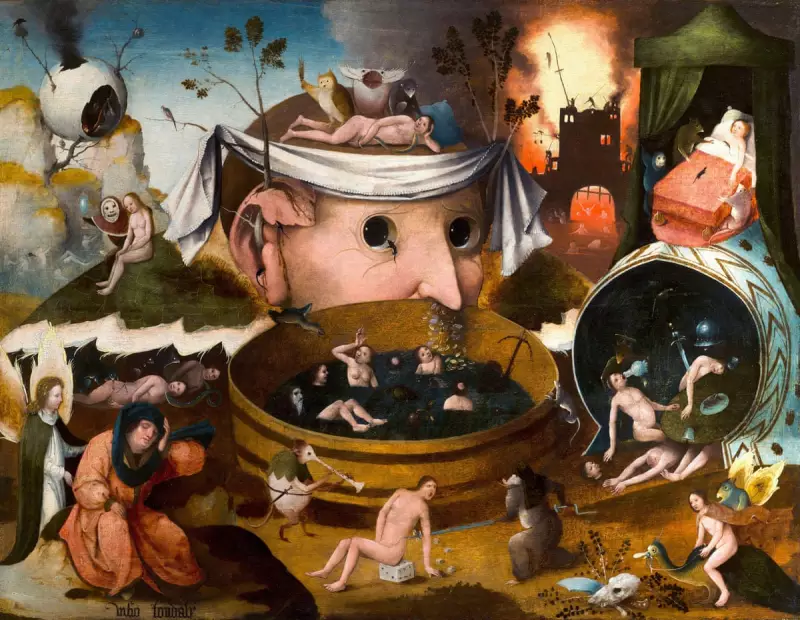
Proponents of the moral turn argue for art that promotes worthy principles: feminism, anti-racism, and inclusion. However, critics contend that applying a rigid ethical checklist to all art compromises our critical thinking. Art's unique power lies in its ability to channel ambivalent emotions, from Hieronymus Bosch's holy perversions to Paula Rego's psychological dramas, forcing us to confront the complicated nature of being human.
There is also a strategic risk. If we insist art must function as a tool for promoting a limited set of principles, what happens when an opposing ideology gains power? With right-wing figures like Giorgia Meloni appointing leaders to institutions like the Venice Biennale, and the Trump administration targeting grants, the weaponisation of art is a two-way street.
Ultimately, reducing art to moralistic soundbites strips it of its capacity to challenge and transform. True engagement with art requires sitting with fundamental ambivalences and conflicting emotions. It is in the psychological chiaroscuro of Gentileschi, the profound voyeurism of Warhol, and the tender brutality of Soutine that we find a mirror to our own complexities. To lose that is to forfeit a vital part of our cultural intelligence.