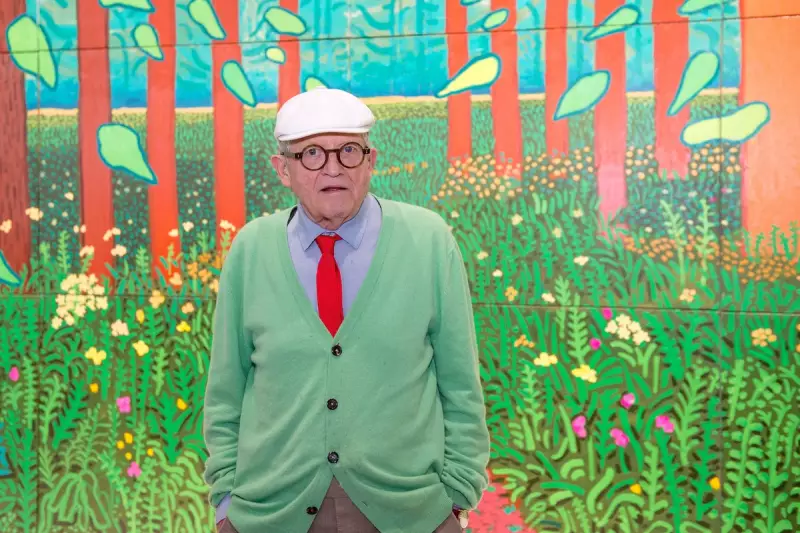
David Hockney, Britain's greatest living artist, has dramatically reaffirmed his status as an intellectual revolutionary. His impassioned protest against moving the historic Bayeux Tapestry from Normandy to the British Museum, which he labelled "madness," is far from an isolated incident. It is the latest act in a lifelong commitment to using his voice and platform for causes he believes in, proving that art can elevate protest to a sphere politicians seldom reach.
A Lifelong History of Artistic Protest
While celebrated for his vibrant and life-affirming paintings, David Hockney has never shied away from controversy. His journey as a campaigner began in the early 1960s with intimate depictions of gay life, contributing to the long fight for legalisation. In the seventies, he advocated for relaxed pub hours, and in the noughties, he fiercely defended artistic freedom against government interference regarding the portrayal of children in art. Hockney has consistently proven himself willing to stand against the prevailing spirit of the times.
This tradition of artist-as-campaigner has powerful precedents. John Lennon's "Give Peace a Chance" remains a defining anti-war anthem, while Bob Dylan's early songs became the soundtrack for the American civil rights movement. Even Paul McCartney faced a BBC ban for his protest song "Give Ireland Back to the Irish." The power of the creative mind to inspire millions to a cause is undeniable.

Protest Across the Artistic Spectrum
The fusion of art and protest long predates the 1960s. Pablo Picasso's "Guernica" stands as a monumental condemnation of the brutality of the Spanish Civil War. The harrowing poetry of Rupert Brooke and Siegfried Sassoon brought the visceral horrors of the First World War to a public without newsreel footage, their work still taught in schools today.
Every medium has its dissidents. In cinema, films like Z, Missing, and Hotel Rwanda endure because they are profoundly moving works of art first, not mere propaganda. Under Stalin's tyranny, composers like Dmitri Shostakovich encoded narratives of hardship and suffering into his symphonies, directly contradicting the state's demand for triumphalist music.
Theatre has consistently served as a key arena for dissent. Bertolt Brecht's Mother Courage and Her Children and The Threepenny Opera were vehicles for anti-war and anti-capitalist sentiment. In Britain, the "Angry Young Men" playwrights of the late 1950s, like John Osborne, used the stage to channel the disaffection of a post-war generation.
The Unique Power of the Artist-Protestor
Figures like David Hockney perform a dual service. They leverage their fame to spotlight urgent issues, but they also perform a more profound function. They remind society that great artists hold an essential place—often above that of politicians—in the realm of protest. Their unique ability is to elevate a cause beyond the immediate political fray, making us question our place in the world and the kind of society we wish to inhabit.
Hockney's latest Bayeux Tapestry protest, reported in The Independent on Thursday 15 January 2026, is not an outburst from a placid painter. It is the calculated action of a seasoned intellectual revolutionary. It underscores a vital truth: when the art is powerful and the artist's conviction is genuine, protest can become a timeless, inspiring force for change.