The world of architecture has lost one of its most audacious visionaries. Frank Gehry, the Canadian-American architect famed for his sculptural, unconventional buildings, has died at his Los Angeles home at the age of 96. His career was built on defying the predictable, transforming American architecture with a unique language of bold shapes and unexpected materials.
The Masterpieces That Defined a Career
Gehry's work, particularly across his adopted home state of California, stands as a testament to his philosophy. He refused to leave a building untilted, unexposed, or untouched by unconventional material. By pulling in relatively inexpensive, uncommon materials, he created a stunning portfolio that wrapped around and reshaped neighbourhoods and urban centres.
Walt Disney Concert Hall, Los Angeles
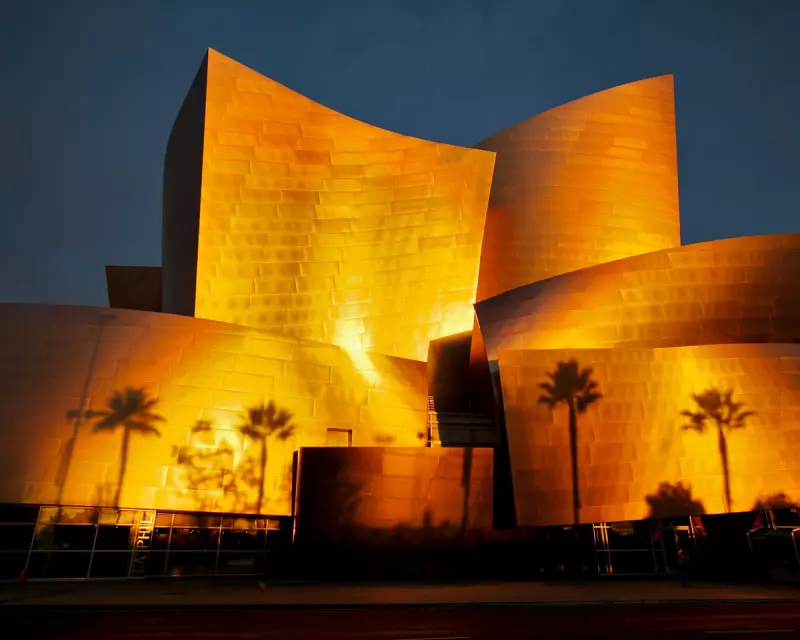
Perhaps his most famous Californian work, the Walt Disney Concert Hall in downtown Los Angeles, is an integral part of the city's landscape. Gifted to the city by Lillian Disney in tribute to her late husband, the hall was designed from the inside out. Gehry collaborated with acousticians, shaping the building around how music should be heard within its walls.

Its exterior is a cascade of free-forming stainless steel waves, a signature of Gehry's unconventional geometry. Yet, in a deliberate contrast, the interior is surprisingly symmetrical. Gehry later explained this was to provide a "comfort zone" for a public wary of his avant-garde reputation.
The Gehry Residence, Santa Monica
Considered a seminal early work of deconstructivist architecture, Gehry's own Santa Monica home, pruned in 1978, began as a Dutch colonial bungalow. He stripped it to its wooden bones and built around it with layers of glass, exposed plywood, corrugated metal, and chain-link fencing. With large, tilting windows, the design allows the outside to peer into the home's seemingly unfinished internal structure. Gehry continued to modify this radical residence until 1992.
The Binoculars Building, Venice
This commercial campus in Venice, originally for the Chiat/Day advertising agency, features one of Gehry's most recognisable entryways: a 44-foot pair of giant binoculars. This striking feature was created by his collaborators, artists Claes Oldenburg and Coosje van Bruggen. The 79,000 sq ft campus combines a tree-like metal canopy with a bright-white, ship-like exterior. Now occupied by Google, the building is currently on sale for the first time in 30 years.
Norton Residence, Venice Beach
When artist Lynn Norton and writer William Norton hired Gehry in the 1980s, they wanted a unique beachfront home on Ocean Front Walk. The result is an eclectic deconstructivist play of contrasting stucco and concrete boxes, heights, and shapes. At the forefront stands Gehry's version of a lifeguard tower—a one-room studio on a single pillar, a nod to William Norton's past as a lifeguard.
Loyola Marymount University Law School
Chosen for the redesign in 1979, Gehry stood apart by proposing a collection of smaller buildings around a plaza, rather than one large structure. The committee reportedly "squabbled" with him over his signature material choices, including sheet metal-wrapped Roman columns and chain-link fences. Gehry won most debates, resulting in a village-like complex of contemporary buildings, bold shapes, and bright yellows.
A Lasting Architectural Legacy
Frank Gehry's work was more than just buildings; it was a continuous dialogue with form, function, and the urban environment. From transforming a humble bungalow to creating a world-class concert hall, he proved that architecture could be both profoundly artistic and deeply connected to its community. His Californian landmarks remain enduring symbols of creativity, challenging all who see them to imagine what a building can be.