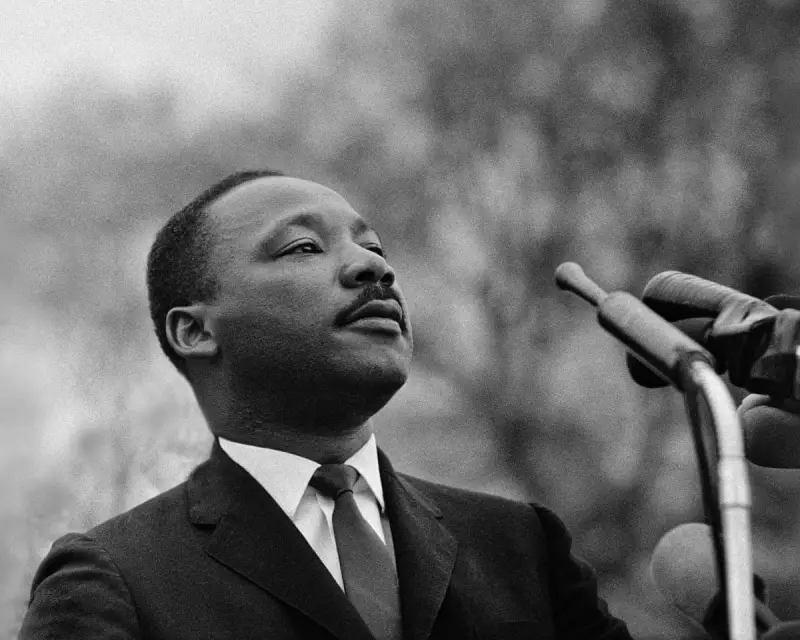
A remarkable piece of history has surfaced from a collection of old family films, offering the world the earliest known moving images of a young Martin Luther King Jr. The 13-minute colour home movie, shot in May 1950, provides a rare, intimate glimpse into the life of the future civil rights icon before his rise to global prominence.
A Family Heirloom Reveals a Historic Secret
The discovery began several years ago in Chester, Pennsylvania. Jason Ipock's aunt, looking to downsize in retirement, had a collection of ageing film canisters. Worried the footage would degrade, Jason decided to have them digitised. One canister was labelled simply "Martin Luther King." The family had spoken of this film for years, and Jason prioritised its preservation, taking it to a Philadelphia film store.
The resulting digital file revealed a family trip to the Philadelphia Zoo in May 1950, followed by footage from a graduation ceremony at Crozer Theological Seminary in Upland, Pennsylvania, on 9 May 1950. The cinematographer was Jason's grandfather, Garrison Durham Ipock, a 32-year-old divinity student and US Navy veteran who was one year ahead of King at the seminary. Known for his interest in new technology, Garrison's camera captured a pivotal moment.

A Three-Second Glimpse of Young Love and Future Legacy
Amid scenes of professors and seminarians in black robes on the seminary lawn, the camera finds a 21-year-old King. For just three seconds, he appears in a white coat, standing beside a young white woman named Betty Moitz, his girlfriend at the time. They notice the camera and turn towards it; Betty smiles while King looks content. Also in the frame are fellow seminarian Cyril Pyle and Betty's mother, Hannah.
This brief clip is now considered the earliest film recording of Martin Luther King Jr in motion. Crucially, it visually corroborates his serious relationship with Betty Moitz, a story first detailed in historian David Garrow's 1986 biography, Bearing the Cross. Betty later recalled the spring of 1950 as a time when they were "madly, madly in love."
The film also features many of King's influential Crozer professors, including Dr Morton Scott Enslin, music instructor Ruth Grooters, and Dean Charles Batten. King was at the event in his capacity as the newly elected student body president and to assist Hannah Moitz in the kitchen, where he had worked since arriving on campus in 1948.
Context and Significance of the Discovery
The footage captures King at a critical juncture. His years at Crozer (1948-1951) were vital for his intellectual development, away from his father's shadow in Atlanta. In May 1950, he had not yet committed to doctoral studies at Boston University and was considering Yale and the University of Edinburgh—the latter partly due to a desire to continue his relationship with Betty away from American societal pressures.
Historian David Garrow notes the film shows "what a genuinely happy/privileged life MLK had up until the Montgomery bus boycott in December 1955." However, the relationship faced immense external pressure. Fellow seminarian Cyril Pyle admitted to monitoring it, fearing a scandal that would "smear King" in an era where 29 states banned interracial marriage and public approval was a mere 4%.
The couple ultimately parted, a decision that, according to King's mentor Rev J Pius Barbour, left him "a man with a broken heart. He never recovered." Just one month after this footage was shot, King was involved in his first civil rights incident after being refused service at a New Jersey bar.
Pulitzer-winning biographer Jonathan Eig called the film "a thrill... a new window on one of our most important lives." For Jason Ipock, the film transformed from a family footnote into a vital piece of history meant to be shared. For author Patrick Parr, who wrote The Seminarian: Martin Luther King Jr Comes of Age, seeing the footage brought his biographical research vividly to life.
This extraordinary discovery serves as a powerful reminder to re-examine old personal archives, as they may hold unseen chapters of our collective history.