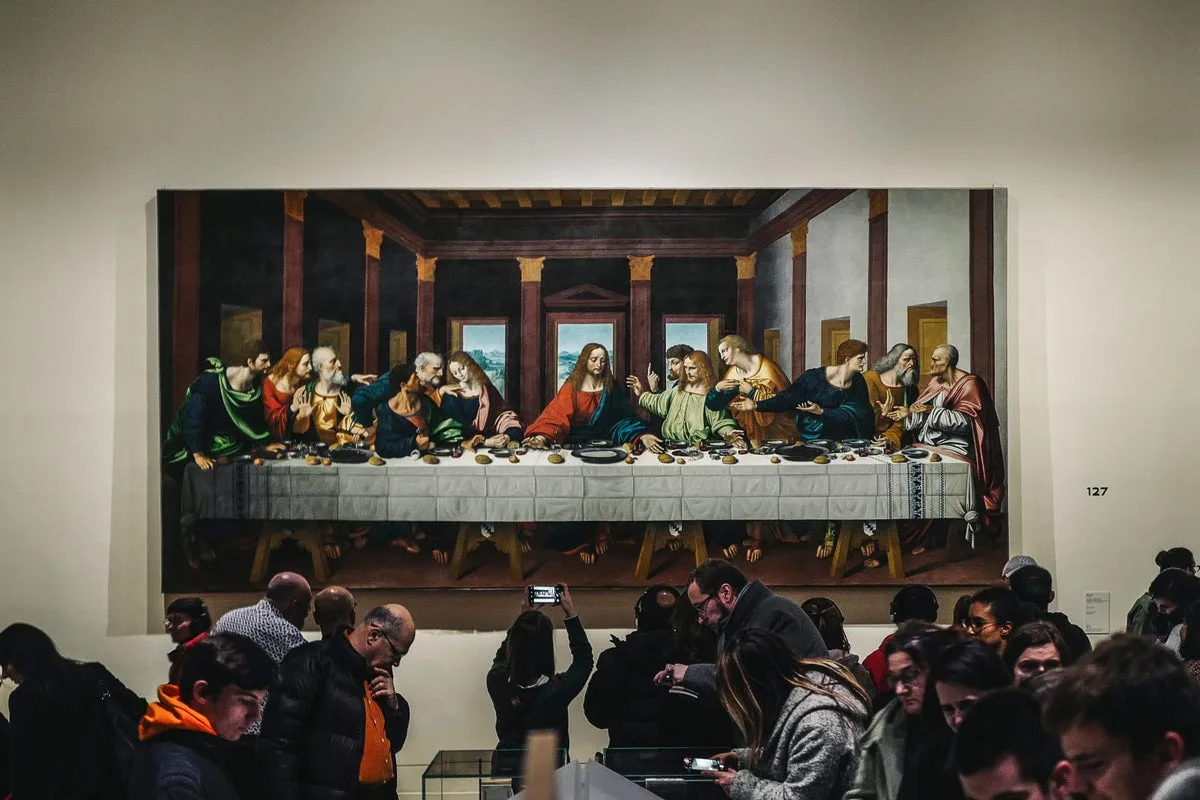
In a landmark scientific endeavour, researchers believe they may have successfully extracted trace amounts of DNA belonging to the legendary Renaissance polymath, Leonardo da Vinci, from precious historical artefacts.
A Minimally Invasive Breakthrough
The pioneering study, reported on Wednesday 07 January 2026, utilised a specially developed "minimally invasive" swabbing method to collect biological material from delicate items without causing damage. The artefacts examined included a red chalk drawing known as Holy Child, which is attributed to da Vinci, and letters written by one of his ancestors.
This careful approach allowed scientists to recover trace DNA sequences, offering a tantalising glimpse into the past. Most of the genetic material recovered was non-human, originating from the artwork's materials, its storage environment, and centuries of handling and conservation treatments.
Matching Tuscan Ancestry
The crucial human component of the find involves Y-chromosome DNA sequences. Researchers discovered that some sequences from the artefacts match a specific genetic grouping of individuals who share ancestry in Tuscany, Italy – the region where Leonardo da Vinci was born in 1452.
This geographical correlation provides compelling, though not definitive, evidence that the DNA could belong to the master artist, sculptor, architect, and engineer himself. The analysis of these biological signatures opens a new window into the life and environment of one of history's greatest minds.
Complexities and Cautions
Despite the exciting potential, the research team has urged caution. They emphasise that conclusive proof is extremely complex to establish. Two significant historical hurdles stand in the way: the absence of any known direct descendants of Leonardo da Vinci and the fact that his original burial site was disturbed.
Without a verifiable living relative or an uncontested biological sample from da Vinci's remains, making an irrefutable match remains a formidable challenge. The study, therefore, represents a powerful proof of concept and a significant step forward in the field of forensic art history, rather than a final confirmation.
The implications of this work are profound. If validated, the technique could revolutionise how we study historical figures and authenticate artworks, moving beyond stylistic analysis to tangible biological evidence. It bridges the gap between science and humanities, offering a new tool to unravel the mysteries held within our cultural heritage.