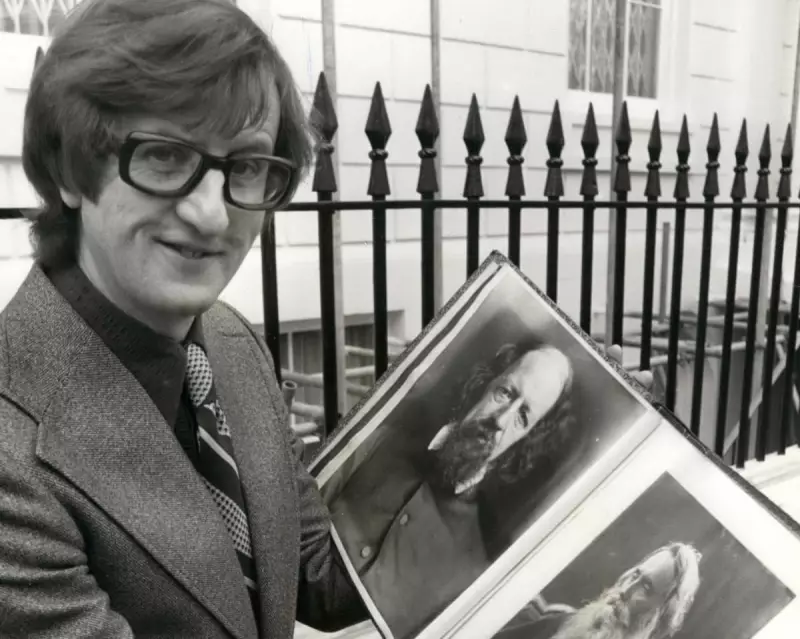
The UK's cultural and museum world is mourning the loss of Colin Ford, a pioneering historian and director who was fundamental in establishing photography as a serious art form in national collections. Ford, who has died at the age of 91, was best known as the founding head of the National Museum of Photography, Film and Television in Bradford, a visionary institution he led from 1982 to 1993.
A Champion for Photography in National Institutions
Ford's groundbreaking career in preserving visual media began long before his move to Bradford. In 1972, he was appointed as the inaugural keeper of photography and film at the National Portrait Gallery in London, a first-of-its-kind role in a British national museum. This appointment was a bold step for an institution that, at the time, held just one photograph in its primary collection: a portrait of the Victorian cookbook writer, Mrs Beeton.
Despite arriving at the NPG with no formal photographic training, Ford immediately became a powerful advocate. Within weeks, he gave an interview to Amateur Photographer calling for a dedicated national museum of photography. He swiftly moved from words to action, leading a successful campaign to prevent the Royal Academy from auctioning three vital volumes of 1840s photographs by the pioneering Scottish duo David Octavius Hill and Robert Adamson. He secured £32,000 from an anonymous donor to purchase them for the nation.

Historic Interventions and the Birth of a Museum
Ford's most significant early coup came in 1975, setting a vital legal precedent for photographic heritage. When an album assembled by the celebrated portraitist Julia Margaret Cameron for the astronomer Sir John Herschel was sold at Sotheby's to an American collector, Ford intervened. He successfully got the export licence stopped, marking the first time the designation of 'outstanding cultural significance' was applied to a photographic work.
A public appeal raised £52,000 to purchase the Herschel Album for the NPG. It later became the first set of photographs accessioned by the new national museum in Bradford. Ford held a particular affection for one image in the album: a strikingly modern-looking portrait titled Iago – Study from an Italian, which he considered his favourite Cameron photograph.
His vision for a national museum dedicated to photography and film found a powerful ally in Dame Margaret Weston, director of the Science Museum. Together, they secured a site in Bradford. The museum, with the UK's first IMAX cinema, became an instant public success, attracting 3.5 million visitors by 1988 and hosting major commissions from artists like David Hockney.
A Lifelong Legacy of Scholarship and Advocacy
After a decade in Bradford, Ford was recruited to direct the National Museums and Galleries of Wales in 1993, consolidating ten institutions into seven during his five-year tenure. His passion for Julia Margaret Cameron's work never waned, culminating in the co-authorship of the definitive Julia Margaret Cameron: The Complete Photographs catalogue raisonné in 2003.
Ford was also a key figure in saving Cameron's Isle of Wight home, Dimbola, from destruction in 1993, later serving as vice-president of the Julia Margaret Cameron Trust. His personal archive, focused largely on Cameron, is now held at the Bodleian Library in Oxford.
Born in Battersea, London, in 1934, Ford's early career was in theatre and film before he joined the National Film Archive (now the BFI National Archive) in 1965. A charismatic communicator, he was a regular presenter on BBC Radio 4's Kaleidoscope and an arts commentator. He was appointed CBE in 1993 and made an honorary fellow of the Royal Photographic Society in 1999.
Colin Ford is survived by his second wife, Sue Grayson Ford, his children from his first marriage, Richard and Clare, his son Tom, his brother Martyn, and his grandchildren. His legacy is the elevated status of photography within the UK's cultural landscape and the millions of visitors who have engaged with the medium through the institutions he shaped.