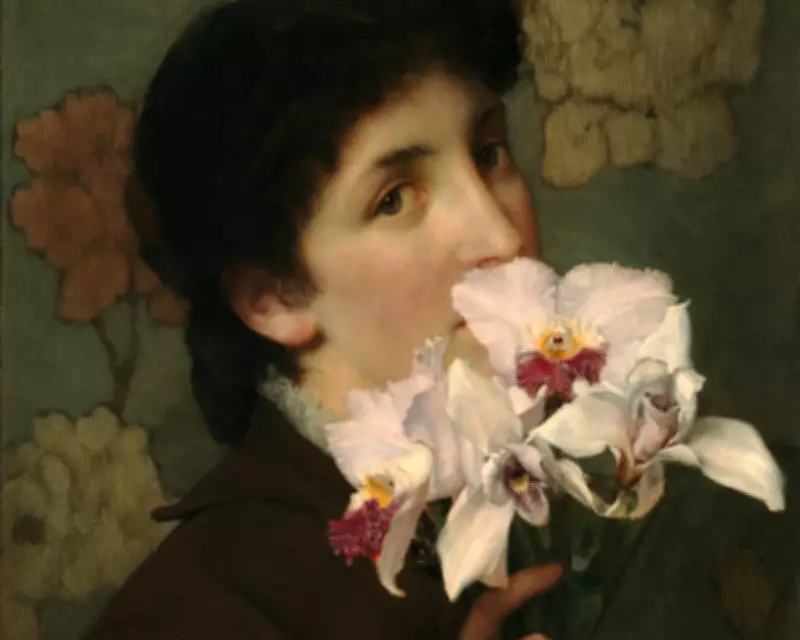
In Bloom Exhibition: Botanical History Where Science Meets Obsession
The Ashmolean Museum in Oxford presents "In Bloom," a captivating exhibition that delves into the rip-roaring history of botanical adventurers whose pursuits blended scientific rigor with deep obsession. From the 1600s onward, European botany made significant intellectual strides, transforming gardens with new colours and aromas sourced from across the globe.
The Pioneers and Their Floral Passions
Mary Somerset, Duchess of Beaufort, stands as a key figure, having spent her life until her death in 1715 procuring plants from Africa, India, China, Japan, and South America for her vast formal garden in Gloucestershire. A print in the exhibition showcases her disciplined parkland, reflecting the Age of Reason, while a commissioned painting of a sunflower reveals a yellow ecstasy—a blazing cosmic eye that stares wildly, hinting at the sensual allure that often overshadowed pure analysis.
Science and obsession, as the show reveals, have always been intertwined in human interactions with plants. The growing commercial, naval, and military might of Europe facilitated the collection and classification of global flora, yet the sheer beauty and sensuality of flowers frequently turned scientific inquiry into beauty-addled reverie.

Art and Artifacts: From Linnaeus to Hooker
A portrait of Swedish naturalist Carl Linnaeus, dressed in traditional Sámi costume with a shaman's drum, illustrates this duality. Linnaeus, who invented the orderly classification of flora and fauna, here aligns himself with magical communion with nature, commemorating his expedition to the far north and his book Flora Lapponica. This raises questions about whether his attire acknowledged the Sámi assistance in identifying subarctic flowers.
Another adventurer featured is Joseph Hooker, responsible for the omnipresence of rhododendrons in the British Isles. His illustration commemorates his 1848-49 journey to the Himalayas, where he sought mountain flowers and brought seeds back to Kew Gardens in London. By this era, botany was inherently linked to far-off places, with Kew Gardens depicted as a multicultural paradise in etchings showing visitors admiring replicas of a mosque, the Alhambra, and a Chinese pagoda—though only the Great Pagoda remains today.
The Dark Side of Botanical Beauty
The exhibition's subtitle, "How Plants Changed our World," gains profound meaning in sections exploring the poppy. Visitors can sniff burnt poppy seeds next to a 19th-century opium pipe, highlighting how the gentle poppy wrecks lives while beauty itself acts as a drug. A painting by 17th-century Dutch artist Rachel Ruysch depicts poppies with long, bloody petals in a fictional forest setting, revealing that this variant was bred by Dutch flower-fanciers as a novelty, not evolved naturally.
This marks where botany shifts from science to sensuality, from interest to addiction. The Dutch, at their commercial peak in the 1600s, became obsessed with tulips from the Islamic world, particularly cultivated at the Ottoman court. Tulipomania's disturbing beauty is evident in Dutch flower paintings like Ambrosius Bosschaert's A Vase of Flowers from around 1609, where spiky, curvaceous tulips are portrayed as alluring fleurs du mal, perfect yet already dying.
Melancholy and Mystery in Botanical Exploration
Beneath the derring-do of these adventures lies an unavoidable melancholy. The exhibition features botanical drawings and pressed flowers, some with petals over 400 years old, alongside 19th-century "teaching models" made of painted wood and papier-mâché. These models, meticulously simulating orchids and other flora lifesize, appear as grotesque as anatomical waxworks, blurring the lines between science and art.
Ultimately, "In Bloom" suggests that all of art and science are helpless before the mystery and beauty of a single living daisy. The exhibition runs at the Ashmolean Museum in Oxford from 19 March until 16 August, offering a unique exploration of how plants have shaped human history through both rational inquiry and emotional obsession.