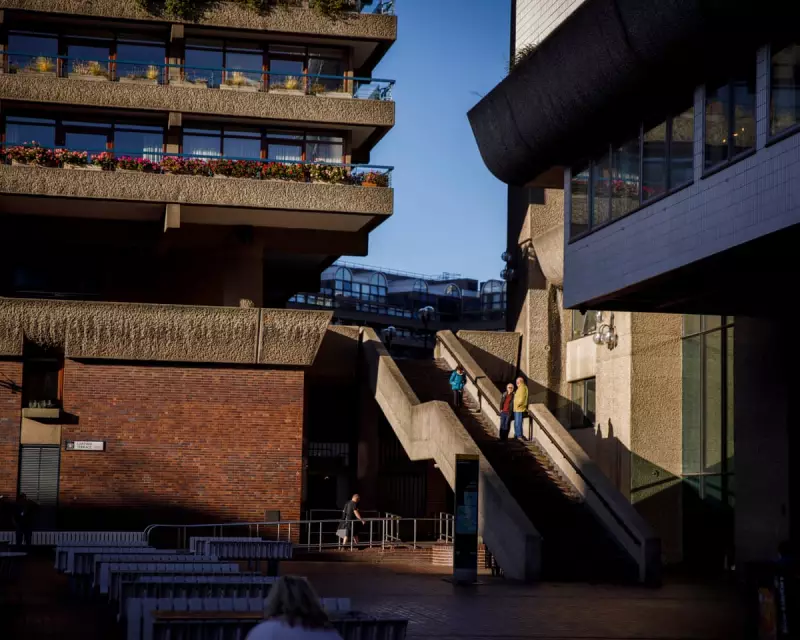
London's iconic Barbican Centre, a mainstay of the capital's cultural skyline for over four decades, is embarking on a monumental transformation. A comprehensive renewal project, estimated to cost £451m, aims to finally address the complex's notoriously confusing layout and improve accessibility, giving the arts hub a new lease of life for the 21st century.
A Building Showing Its Age
Philippa Simpson, the Barbican's director of buildings and renewal, points to the worn, leaky tiles by the lakeside as a symbol of the task ahead. "Everything leaks," she states, highlighting how water ingress is just one symptom of a 43-year-old building in need of major attention. Unlike historic venues that have undergone multiple refits, the Barbican has never had a significant overhaul since it opened in 1982.
The first phase of work carries a price tag of £231m, with Simpson targeting completion for the centre's 50th anniversary in 2032. The scale is immense. Behind the scenes lies a central plant room, a concrete maze of green pipework a third the size of Wembley Stadium. Here, five enormous tanks, including one holding 250,000 litres, sit obsolete. Because the building was constructed around them, engineers face the "messy, risky job" of cutting them up for removal, according to head of engineering Richard McQuilliam.

Tackling the Notorious 'Bewildering' Layout
While now celebrated as an architectural icon, the Barbican was famously described by the Guardian at its opening as "the world's most bewildering arts centre." This reputation has persisted. The centre's labyrinthine design, built around a lake and residential towers, features about 40 different entrances and disorientating walkways that loom over spaces.
Jaymi Sudra, a partner at the Turner Prize-winning architecture collective Assemble, is part of the team redesigning the wayfinding. "People coming in and out of the main lakeside doors often miss the lifts. They completely walk past them," she explains. The Silk Street entrance, commonly seen as the front, is technically the back, while the grand lakeside doors are the true front. This confusion has ensnared celebrities and performers alike, from Stanley Tucci and David Dimbleby to Brian Eno, who was once found wandering the fourth floor looking for the ground-level Fountain Room. Actress Fiona Shaw complained of actors getting "lost on the staircases."
Creating an Inclusive, Welcoming Space
The renewal aims to move beyond the centre's in-joke about being hard to find—once promoted with T-shirts reading "I found the Barbican Centre"—and create a genuinely accessible venue. Key improvements include making the beautiful conservatory, currently only open for limited weekend hours, accessible to wheelchair users. Drab carpets and clashing signage systems will be replaced, and new lighting will brighten gloomy foyers.
"We have these extraordinary civic spaces in the heart of the Square Mile," says Simpson. "But how do you make them usable for everybody? How do you make them fully permissive, fully open, fully inclusive?" With construction set to begin in 2027, the goal is to preserve the Barbican's unique brutalist character while ensuring its doors are open, both literally and figuratively, to all of its 1.5 million annual visitors.