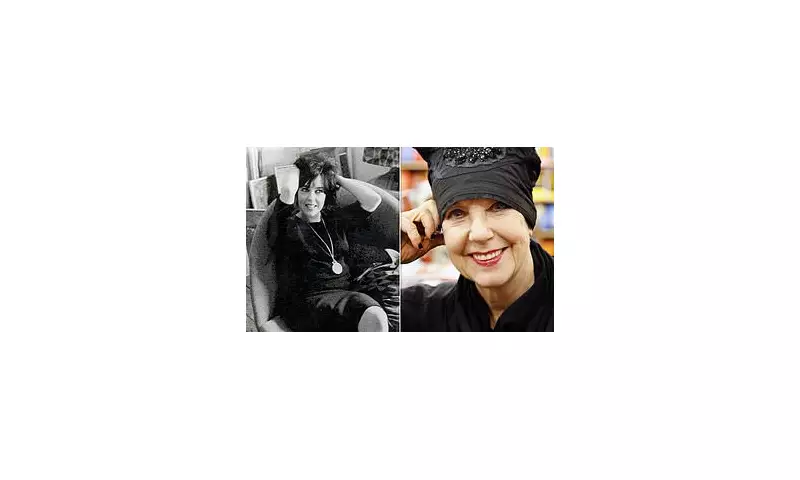
The British cultural landscape has lost one of its most vibrant and unapologetic characters with the death of Molly Parkin at the age of 93. The celebrated artist, fashion editor, designer, erotic novelist, and renowned provocateur led a life of extraordinary breadth, packed with creative achievement, legendary hedonism, and formidable personal resilience.
A Life Unconventionally Lived: From Wales to the World
Born in 1932 in Pontycymer in the Garw Valley, Wales, Molly Parkin's childhood was a difficult prelude to her later flamboyance. Her parents were religious, depressive alcoholics, and she lived in fear of her father, who was both violent and inappropriately affectionate. Despite being a disruptive pupil, her brilliance in art shone through, earning her scholarships to Goldsmiths College in London and Brighton School of Art at age 17.
Her adult life truly began in 1954 when, aged 22 and teaching art in Elephant & Castle, she met the actor James Robertson Justice. He provided a thorough, if abrupt, introduction to sex, beginning an affair that lasted several years. This overlapped with another relationship with former Tory MP Lennie Plugge, before she met art dealer Michael Parkin in 1957, marrying him on their second date.

For a time, life in Chelsea's King's Road set was glamorous. Her paintings sold for thousands, she drove a yellow Rolls-Royce, and they raised two daughters, Sarah and Sophie. However, the marriage collapsed in 1964 due to infidelity and her drinking, taking her creative urge to paint with it.
Reinvention and Revelry: Fashion, Fiction and Famed Affairs
Undaunted, Parkin pivoted with spectacular success. With no prior experience, she became an award-winning fashion editor for The Sunday Times. She wrote successful erotic novels, started a restaurant and a shop, and designed hats for the iconic Biba.
This period also saw her embrace her sexuality with famous enthusiasm. She maintained a trio of regular lovers: writer Anthony Shaffer (of The Wicker Man fame), celebrated architect Cedric Price, and a discreet publishing figure. Her liaisons were numerous and famously detailed, involving figures from musician Bo Diddley to actor John Thaw, whom she found lacklustre, and the late author Sir John Mortimer, with whom she shared 'spanking years' she found tedious.
In 1968, she married her second husband, painter Patrick Hughes. In 1979, they moved to Manhattan, attempting to reinvigorate their marriage by hosting energetic orgies at the Chelsea Hotel. As the events grew, she participated less, preferring to observe with friend Anita Pallenberg. The marriage ultimately foundered amid alleged threats.
Resilience and Redemption: Sobriety and a Late Renaissance
Back in London, Parkin's legendary lifestyle—drinking with Francis Bacon in Soho, smoking 100 cigarettes a day, and prolific sexual encounters—became unsustainable. In 1987, after passing out in a gutter following a binge, she had a vision of her grandmother, slept for two days, and joined Alcoholics Anonymous upon waking. She never drank or smoked again.
Financial reckoning followed; she was declared bankrupt and homeless until 1998, when she was given a tiny council flat in World's End, Chelsea, which she transformed into a blood-red artistic haven.
Sober, she had only three more lovers, including a 23-year-old Australian surfer in a Las Vegas toilet when she was 73, whom she declared 'the best I've ever had'. She threw herself back into painting, becoming an adored grandmother and great-grandmother. In a crowning honour, she was awarded a Civil List Pension by Queen Elizabeth II in 2012.
Molly Parkin's life was a masterclass in reinvention and resilience. Behind the glamour, kohled eyes, and colourful turbans lay a woman who battled abuse, addiction, and bankruptcy yet never succumbed to self-pity. Her method was simple: make a joke and push on. The world is undoubtedly a paler, less colourful place without her.