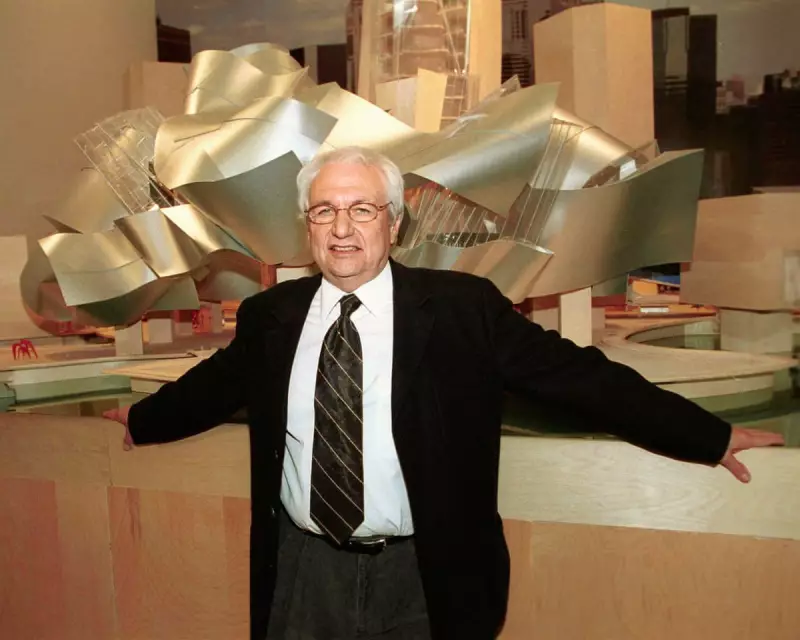
The world of architecture has lost one of its most revolutionary figures. Frank Gehry, the American architect whose sculptural, titanium-clad buildings redefined city skylines, died on Friday at his home in Los Angeles. He was 96 years old.
His passing was confirmed to the New York Times by his chief of staff, following a brief respiratory illness. Gehry's death marks the end of an era for a designer whose playful, powerful forms made him the most recognisable American architect since Frank Lloyd Wright.
The Legacy of a Titan: From Bilbao to Los Angeles
Gehry's career was defined by a fearless embrace of computer-aided design, which allowed him to realise structures of breathtaking complexity and emotion. His most celebrated project remains the Guggenheim Museum in Bilbao, Spain. Opened in 1997, its swirling, metallic forms on the banks of the Nervión River drew international acclaim and transformed the city's fortunes.

This transformative power coined the term 'the Bilbao effect'—a phenomenon where a single piece of spectacular architecture can spur the revival of a declining urban area. As Guardian critic Rowan Moore noted, it became "the icon of what would be called iconic architecture."
A Portfolio of Pioneering Work
Beyond Bilbao, Gehry's portfolio is a global tour of architectural marvels. In his home city of Los Angeles, the stainless steel sails of the Walt Disney Concert Hall, completed in 2003, became an instant landmark. Other major works include the New World Center concert hall in Miami (2011) and the ethereal, glass-panelled Fondation Louis Vuitton in Paris (2014).
Each structure shared Gehry's signature: a sense of movement, a collision of forms, and an unwavering commitment to creating emotional, experiential spaces for the public.
An Enduring Influence on Modern Design
Frank Gehry's influence extends far beyond his built works. He pioneered the use of digital tools in architectural design, proving that software could be used for artistic expression as much as engineering. His style demonstrated that buildings could be both monumental and whimsical, challenging conventional notions of what architecture should be.
His passing leaves a monumental void, but his structures stand as permanent, dynamic testaments to a visionary mind that forever changed the fabric of our cities. The legacy of the Bilbao effect continues to inspire urban planners and architects worldwide, ensuring his impact will be felt for generations to come.