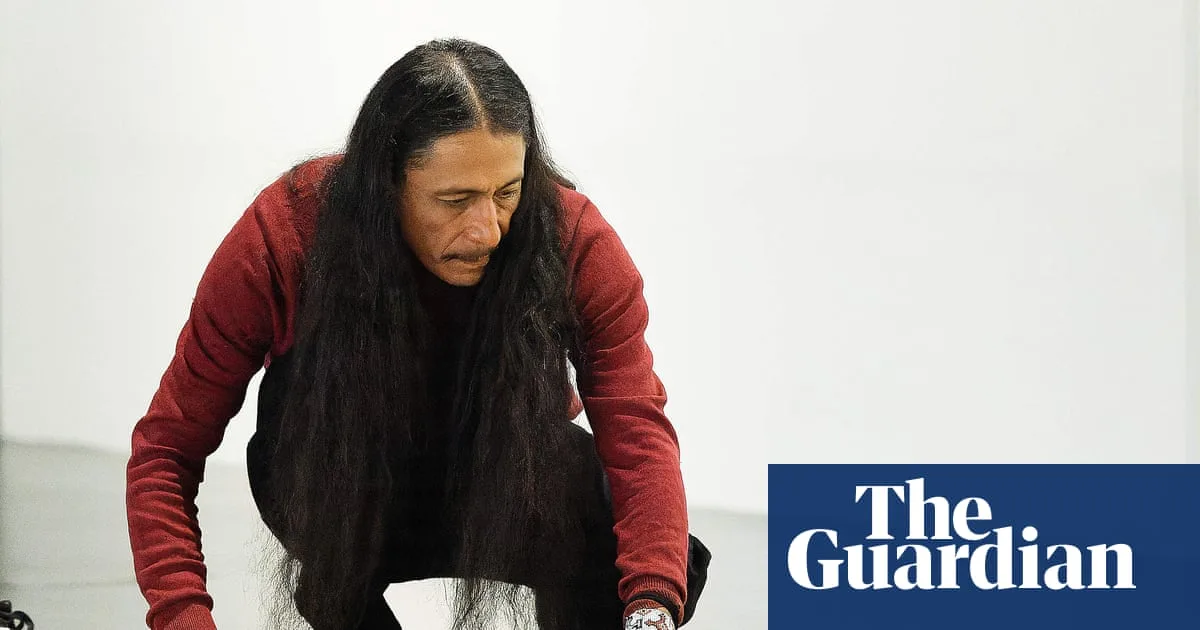
Peruvian artist and beekeeper Antonio Paucar wins £40,000 Artes Mundi prize
Andean artist wins major UK art prize for eco-focused work

An artist and beekeeper from a remote Andean region of Peru has been awarded one of the United Kingdom's most significant contemporary art honours. Antonio Paucar is the winner of the biennial Artes Mundi prize, which is based in Wales.

From the Andes to Wales: A Journey of Recognition

Paucar, who hails from the village of Aza in central Peru's Junín region, expressed surprise and gratitude upon receiving the award. The £40,000 prize money will be used to fund the construction of a cultural centre in the Peruvian mountains, a project close to his heart. Speaking in Cardiff before the ceremony, Paucar highlighted the importance of the recognition for his community, culture, and country, stating it gives him strength to pursue new artistic endeavours.

His journey to this point is unique. Before travelling to Berlin to study art, Paucar worked as a beekeeper in the Peruvian highlands. He now balances his artistic practice, which focuses on environmental issues and cultural preservation, with maintaining a rural life that includes beekeeping, keeping hens, and growing vegetables.

Artworks Exploring Connection and Crisis

Paucar's winning exhibition features a range of compelling works. A central piece is La Energía Espiral del Ayni, a large-scale sculpture hand-woven from black and white alpaca wool. Paucar explains that 'Ayni' is a Quechua word representing an Andean concept of reciprocity and interconnectedness. "It represents an Andean concept, a way of thinking, the idea that everything is linked," he said. This worldview, he contrasts with a linear European perspective, describing Andean life as circular.

The creation of this piece revealed an ecological detail: black alpaca wool was surprisingly difficult to source, as the textile industry predominantly demands white wool for dyeing, leading to a decline in black-fleeced animals.

Another powerful work, El Corazón de la Montaña, features a video of Paucar writing a poem in his own blood while seated at a desk high in the mountains. The verse laments the environmental crisis: "The glaciers in the Andes are crying/With their mournful cry they melt forever."

His installation extends across Wales, with a piece at Mostyn in Llandudno featuring ghostly footprints on a wall. These were created after Paucar walked barefoot over the Great Orme headland and performed a handstand in the gallery.

Cultural Parallels and Critical Reception

Paucar has observed meaningful parallels between his native culture and that of Wales, noting both Celtic and Andean cultures' deep connections to nature and the importance of language preservation. Nigel Prince, Director of Artes Mundi, welcomed this dialogue, emphasising the prize's focus on shared human experiences in a world often divided by difference.

Not all critical reception has been uniformly positive. Guardian art writer Jonathan Jones criticised a video piece in which Paucar buries and burns a replica of Marcel Duchamp's Bicycle Wheel, suggesting the critique of Western art would only resonate with a niche audience. Paucar responded that he respects Duchamp and that the work referenced a childhood memory of playing with a wheel.

The Artes Mundi exhibition, showcasing Paucar and five other international artists, is on display at five venues across Wales: National Museum Cardiff, Mostyn, Aberystwyth Arts Centre, Chapter, and the Glynn Vivian Art Gallery. The exhibition runs until 1 March 2026, with an estimated 150,000 visitors expected to view the works.