For decades, acclaimed writer Robert Dessaix felt profoundly disconnected from the Australian landscape. Raised on a literary diet of Enid Blyton and Shakespeare, with later infusions of Sartre and Tolstoy, he found the gum trees and wide brown land alien, yearning instead for the ordered woods, green lanes, and ancient villages of Europe.
A Lifelong Search for Roots
Dessaix's childhood imagination was filled with visions of English villages like Grasmere or Bourton-on-the-Water, places he felt had deep historical roots. To him, Australia offered only scattered clumps of dwellings, often with a pub and rusted car chassis, a far cry from the picturesque communities he dreamed of. As soon as he was able, he left for Europe, returning repeatedly, until a visit back to Australia left him unexpectedly stranded.
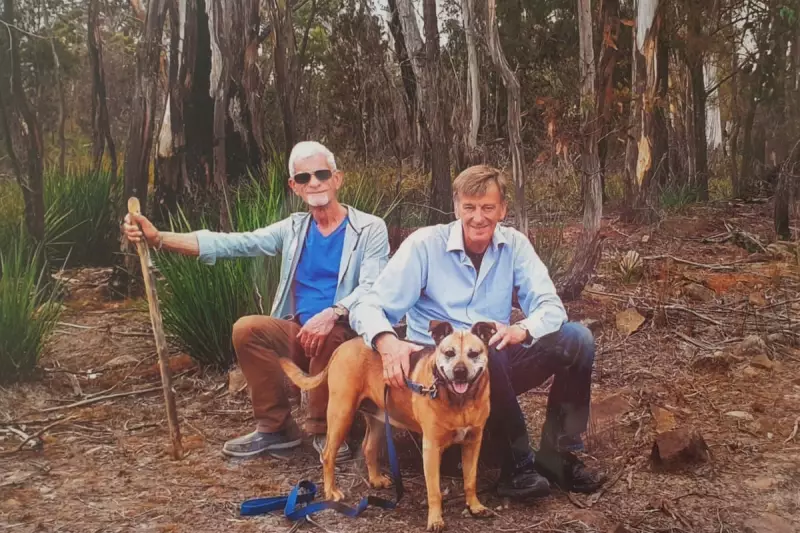
His perspective remained unchanged until a pivotal day some fifteen years ago, on Tasmania's east coast. Then approaching an age where one might consider a retirement 'village', everything shifted during a simple afternoon outing with his partner, Peter, and their dog.

The Transformative Afternoon in Orford
The pair had been picnicking on the beach at Orford, looking out to Maria Island, before taking a drive into the hills behind the town. There, they stumbled upon a bushy block of land for sale at what Dessaix describes as a 'ludicrously low price'. Characteristically decisive on major matters, they purchased the property immediately.
It was at 2.15 pm on that summery afternoon that a profound change occurred. Amid the blue gums, blue-tongue lizards, and dianellas, Dessaix felt he became somebody else entirely. The block was sizable—larger than Vatican City—and from the ridge where they later built a shack, the view stretched south across untouched hills, mountains, and forests.
Becoming Part of the Profusion
The vista contained no houses, roads, or human signs, just countless trees, ravens, eagles, parrots, and the occasional sociable black cockatoo. Nights revealed an indigo sky ablaze with stars. This was not the ordered, storied landscape of Europe, but something vibrantly and independently alive.
'For the first time in my life I felt oddly at home among them,' Dessaix writes of the local wildlife, which included leeches and tiger snakes. He adopted a new, unsentimental respect for the natural world, seeing himself as an 'infinitesimal, heedful, part of it.' This moment marked the first time he felt he belonged to the Australian environment.
Time itself seemed different there, devoid of the railway-station rhythm of cities or European villages. Walking tracks he built through the trees, he felt history was merely an echo. The Australian bush, he concludes, exists 'beyond time,' yet joyfully dances through the seasons.
In what he terms a rebirth in advanced old age, Robert Dessaix found his long-sought sense of place not in a European village, but on a wild, beautiful ridge overlooking the Tasmanian bush.