The Moment That Rewrote History: George Smith's 1872 Revelation
In the year 1872, within the hallowed halls of the British Museum, a young assistant named George Smith sat intently studying a recently excavated clay tablet. This artifact originated from the ancient city of Nineveh, located in what is now modern-day Iraq. As Smith meticulously examined the intricate markings, a wave of exhilaration began to build within him.
The squiggles before him narrated the epic tale of Noah's Flood, complete with vivid details of a massive ship resting upon a mountain peak and a dove dispatched in search of dry land. The profound significance of this discovery lay in its antiquity; this account preceded the biblical version found in the Book of Genesis by an entire millennium. In that electrifying instant, Smith comprehended that he was gazing upon the oldest piece of recorded history ever uncovered.
An Ecstatic Reaction and Scholarly Legacy
Overwhelmed by the magnitude of his find, Smith reportedly erupted into shouts, dashed around the room, and even tore off his garments in a fit of joy. While the precise reactions of his fellow scholars remain unrecorded, news of Smith's groundbreaking discovery swiftly captured global headlines, stunning the academic world and the public alike.

George Smith was a largely self-taught translator, building upon foundational work conducted by earlier 19th-century scholars. These pioneers had painstakingly cross-referenced Assyrian clay tablets with bilingual dictionaries and various relics unearthed across the ancient Middle East. Deciphering these texts was akin to solving an immense three-dimensional crossword puzzle, a challenge so complex that numerous tablets remain only partially decoded to this very day.
The Enduring Art of Cuneiform and Ashurbanipal's Vast Library
Selena Wisnom stands among a rare cadre of contemporary scholars proficient in reading cuneiform. This ancient script involves impressing wedge-shaped marks into damp clay tablets—a medium both more economical and durable than parchment. Dr. Wisnom's expertise focuses on the colossal library amassed by Ashurbanipal, the formidable king of the Neo-Assyrian Empire who reigned from 669 to 631 BC.
This immense collection comprises approximately 30,000 tablets, offering a treasure trove of eclectic knowledge. The contents range from pragmatic warnings—such as distrusting a man with uneven hair on the left side of his parting, as he might steal from the king—to curious superstitions, like interpreting being urinated on by an animal as an omen of good fortune. The tablets also provide guidance on encountering bizarre phenomena, including dancing pigs, talking cats, and, most peculiarly, bundles of reeds wandering the countryside.
Bronze Age Innovations and Everyday Human Concerns
What rapidly becomes apparent is the immense debt modern civilization owes to the Bronze Age Mesopotamians. These tablets document advanced agricultural irrigation techniques that remain effective today. They also established the division of an hour into 60 minutes and recorded geometric principles, notably a theorem attributed to Pythagoras, a full millennium before his birth.
Beyond these lofty intellectual achievements, the tablets reveal the Assyrians as deeply relatable figures. They grappled with anxieties over job security, experienced familial conflicts, cherished profound friendships, and perpetually pondered life's greater meaning. A particularly telling example involves a tablet from King Ashurbanipal's sister, Sherua-etirat, chastising his young wife, Libbali-sharrat, for her substandard cuneiform handwriting—deemed too large, unsteady, and unbecoming of her royal status.
In defense of Libbali-sharrat, evidence suggests that many ordinary Assyrians found the meticulous craft of cuneiform inscription rather tedious. The signs are minuscule, typically only 3mm in height, and densely packed without spaces between words. Dr. Wisnom has even encountered tablets from schoolchildren who abandoned their lessons to play with the clay, essentially engaging in Mesopotamian-style doodling.

Omens, Divination, and the Cultural Chasm
However, before concluding that the Assyrians were entirely akin to modern people, albeit with peculiar beliefs about animal urine, it is crucial to acknowledge the vast cultural divide separating their world from ours. The tablets are replete with stories and spells regarded with absolute seriousness by ancient societies but which may seem unconvincing today.
For instance, spotting a snake on the first day of the year was believed to foretell death by year's end. A prescribed remedy involved the individual gashing their head and shaving their cheeks, leading to three months of misery but ultimately ensuring survival. Many such omens and their corresponding cures revolved around food and agriculture, reflecting the agrarian foundation of Ancient Assyria. A man with numerous facial moles was promised abundance even during famine, whereas a ruler whose wife bore triplets faced an ominous prediction of harvest failure.
War, Extispicy, and Ancient Peer Review
Warfare was a constant concern, with omens interpreted through the practice of 'extispicy'. This involved priests examining the entrails of slaughtered animals, typically sheep livers, to divine the gods' will and predict future events. Up to eleven diviners would scrutinize these organs for specific notches, blotches, and ridges.
To prevent collusion, a second or even third team of experts would conduct independent reviews without knowledge of the initial findings. Dr. Wisnom notes that this system of rigorous 'peer review' mirrors the gold standard upheld in contemporary scientific research. Historical records show Ashurbanipal once consulted diviners to predict whether the neighboring Elamites would rebel—a query that yielded ambiguous results, perhaps influenced by the diviners' intuition of the king's desires.
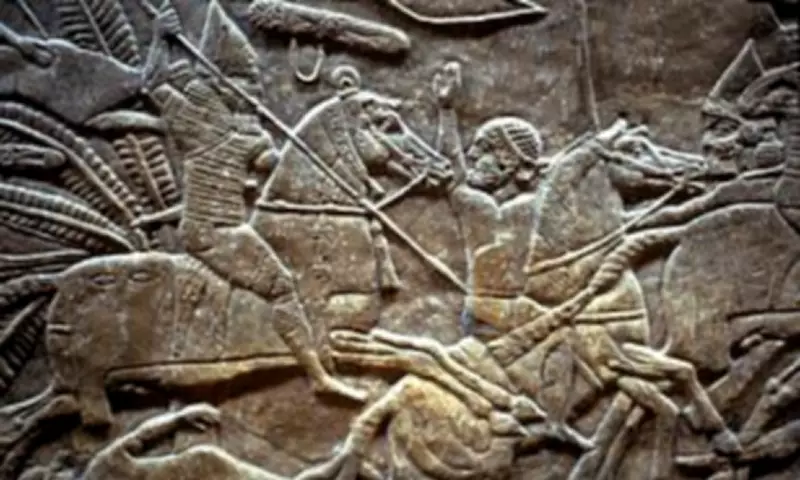
The Elamites did eventually wage war against Assyria, a decision they swiftly regretted. Despite his profound appreciation for the knowledge within his library, Ashurbanipal was foremost a military leader. Wall carvings from his palace, now housed alongside the tablets in the British Museum, depict him relaxing in a garden post-victory, attended by servants with music and food—a scene marred by the severed head of the Elamite king hanging from a nearby tree like a macabre ornament.
It is in such stark moments that we are reminded the past is indeed a foreign land, one whose inhabitants also gifted the world astrology. The legacy of these ancient tablets continues to illuminate the sophisticated, complex, and often startlingly human story of our earliest recorded civilizations.