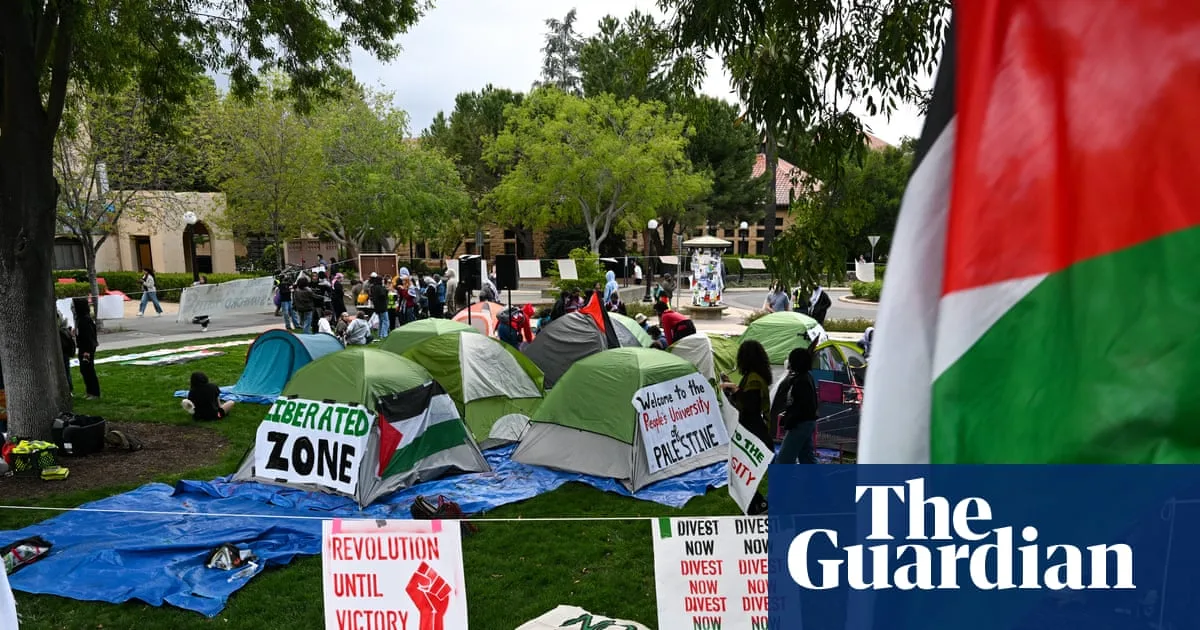
Stanford Students Face Felony Charges Over Pro-Palestinian Sit-In
Stanford Students Charged with Felony Over Protest

Two students at the prestigious Stanford University in California are confronting serious criminal charges following their involvement in a pro-Palestinian demonstration on campus. The case, which has ignited fierce debate about the limits of protest and free speech, centres on a sit-in that took place last year.

The Sit-In and Subsequent Charges

The incident unfolded on the 15th of May, 2025, when a group of students organised a sit-in inside the office of the university president. The protest was a direct action calling for Stanford to divest from companies with ties to Israel. According to court documents, the demonstration remained peaceful, but the students refused to leave when instructed by university officials.

As a result, two students, identified as 20-year-old Benji S. and 21-year-old A.J., were arrested. The Santa Clara County district attorney's office subsequently filed charges, but not for simple trespass. In a move that shocked many observers, the students were each charged with a single felony count of 'burglary for entering a building with intent to commit a misdemeanour'.

This legal strategy is highly unusual for a campus protest scenario. The prosecution's argument hinges on the claim that the students intended to commit the misdemeanour of trespass from the moment they entered the office. If convicted, the felony charge carries a potential sentence of probation or even state prison time, a severe consequence for an act of political sit-in.

University Response and Legal Backlash

Stanford University's administration has found itself in a difficult position. While the university initially pursued student conduct charges against the protesters, it has not publicly endorsed the criminal felony charges. A spokesperson stated the institution respects the independence of the district attorney's office but emphasised its commitment to free expression within the bounds of university policy.

The decision by District Attorney Jeff Rosen to pursue felony charges has been met with significant criticism. Defence lawyers and civil liberties groups have condemned the action as a gross overreach. They argue it criminalises standard protest tactics and creates a dangerous precedent that could chill political speech on campus and beyond.

The students' legal team has filed a motion to dismiss the felony charges, contending they are legally unsound and disproportionately severe. A hearing on this motion is scheduled for later this month. The case has drawn national attention, becoming a flashpoint in the ongoing debate about how universities and the legal system handle pro-Palestinian activism, which has surged across US campuses since the outbreak of the war in Gaza.

A Broader Context for Campus Activism

This case at Stanford does not exist in a vacuum. It reflects heightened tensions at universities across the United States, where administrations are grappling with how to balance free speech, student safety, and institutional policy. Pro-Palestinian protests, including encampments and building occupations, have led to hundreds of arrests at other elite institutions, though felony charges of this nature remain rare.

The outcome of the Stanford case could have far-reaching implications. A conviction could empower other prosecutors to treat similar protests as serious felonies, fundamentally altering the risk calculus for student activists. Conversely, a dismissal of the charges would be seen as a victory for protest rights and a rejection of what critics call the criminalisation of dissent.

As the legal process continues, the two Stanford students await a decision that will not only determine their own futures but could also help define the legal landscape for campus protest in America for years to come.