Women Dominate UK's Most Prestigious Science Awards with Pioneering Discoveries
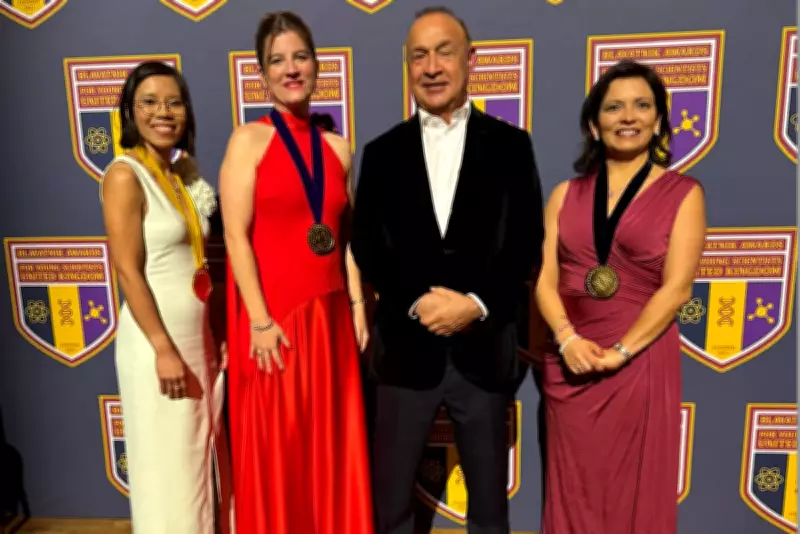
In a landmark achievement for gender representation in STEM fields, three women have been crowned Britain's brightest young scientists, each securing £100,000—the nation's largest unrestricted scientific prize. The 2026 Blavatnik Awards for Young Scientists, now in their ninth year, celebrated the exceptional contributions of Dr Maxie Roessler, Dr Thi Hoang Duong (Kelly) Nguyen, and Dr Paola Pinilla at a ceremony held at London's historic Banqueting House.
Recognising Transformative Early-Career Breakthroughs
The awards specifically honour UK researchers under the age of forty-two whose work demonstrates potential to revolutionise scientific understanding and tackle global challenges. Selected from ninety-one nominees across forty-six institutions, this year's laureates represent only the second occasion where all three top prizes have been awarded exclusively to women, marking a significant milestone in the scientific community.
Groundbreaking Research Across Scientific Disciplines
Dr Paola Pinilla from University College London received the physical sciences and engineering prize for her innovative research into planet formation. By integrating telescope observations with advanced modelling techniques, she has identified critical pressure points that enable planets to emerge within swirling dust clouds in young solar systems. Her work provides crucial insights into how water and life-forming molecules develop during planetary genesis.

Dr Kelly Nguyen of the MRC Laboratory of Molecular Biology was honoured in the life sciences category for her revolutionary work on telomerase, the enzyme that safeguards chromosome ends during cell division. Her team created the first atomic-level model of this enzyme, offering new understanding of ageing processes, cancer mechanisms, and potential therapeutic approaches.
Professor Maxie Roessler from Imperial College London secured the chemical sciences award for developing pioneering techniques that capture fleeting electron states fundamental to cellular energy generation. Her methodologies have opened new pathways for catalyst design and functional materials development, with tools now accessible to researchers worldwide.
Celebrating Scientific Excellence and Collaboration
During the awards ceremony, University of Cambridge Vice-Chancellor Deborah Prentice emphasised how these achievements provide "grounds for optimism about the future of this country," noting that UK economic growth strategies heavily depend on scientific and technological advancement. Sir Leonard Blavatnik, founder of the Blavatnik Family Foundation, praised the winners' "creativity and ambition," while Professor Nicholas B Dirks of the New York Academy of Sciences highlighted the importance of supporting young scientists to address societal challenges.
Alongside the three main winners, six additional finalists each received £30,000 in recognition of their scientific contributions. Since its UK inception in 2017, the Blavatnik Awards programme has distributed nearly £3.3 million to seventy-three emerging scientists, supporting high-risk, high-reward research initiatives. Globally, the programme will have allocated over $20 million to more than five hundred scientists and engineers by the end of 2026.
The awards form part of the Blavatnik Family Foundation's extensive philanthropic efforts, which have contributed more than $1.3 billion to over two hundred and fifty institutions and charitable organisations during the past decade, including substantial donations to Oxford University, national libraries, and cultural institutions.