Southeast Schools Face Second Week of Closures After Winter Storms
School systems across the Southeastern United States are grappling with weather-related closures for the second consecutive week, as a series of severe winter storms continues to disrupt normal operations. This prolonged interruption has led many districts to experiment with remote learning solutions while simultaneously preparing to extend the academic calendar to compensate for lost instructional time.
Widespread Power Outages and Travel Hazards
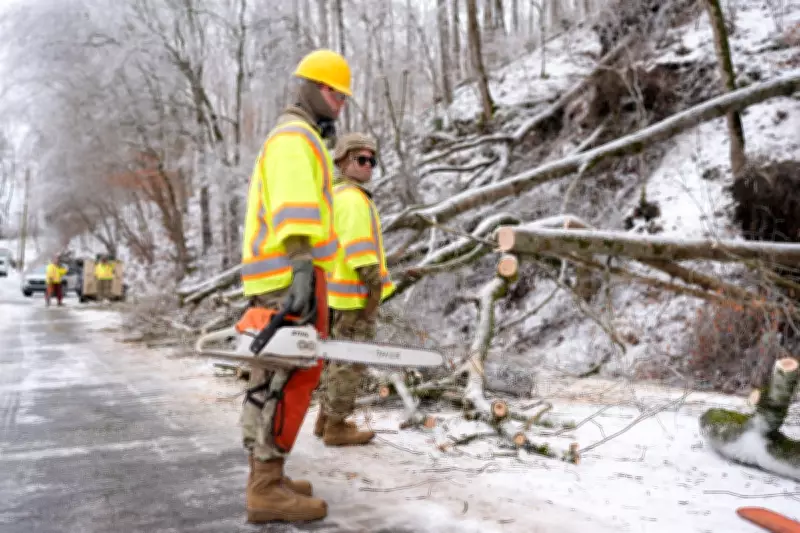
The latest winter storm has compounded existing problems, leaving tens of thousands without electricity and rendering numerous roads impassable due to icy conditions. These infrastructure challenges have significantly complicated efforts to reopen educational institutions safely.
In cities like Nashville, Tennessee, unresolved power outages from the previous week's storm were exacerbated when another system arrived over the weekend, bringing frigid temperatures. According to data from poweroutage.us, approximately 75,000 customers remained without power in Mississippi and Tennessee as of Monday afternoon.

The human impact of these disruptions is profound. In Belzoni, Mississippi, Chiquitta Fields has been staying in a hotel with her four children and one-year-old granddaughter for the past week after losing power during the initial storm. The financial burden has been substantial, with Fields spending around $700 on accommodation alone. This expense is particularly necessary as her granddaughter requires oxygen support.
The situation has created additional stress because Fields, a 41-year-old assistant elementary teacher, has been unable to work during the closures. She notes that the constant displacement has been difficult for her children, stating, "It's been stressful for them, with the moving back and forth from one place to another. Children don't adjust well when you do all that."
Educational Consequences of Extended Closures
Research from the Northwest Evaluation Association, a not-for-profit education research firm, indicates that absenteeism due to severe weather can have significant consequences for student learning. Their report suggests that missing a single day from a weather-related closure can equate to nearly four days of lost learning time when considering compounding factors in students' personal lives.
These additional challenges may include housing disruptions, mental health issues, and other stressors that accompany extended school closures, highlighting the complex ripple effects of weather-related educational interruptions.
Geographic Scope of Current Closures
Public school systems serving major Southeastern metropolitan areas—including Atlanta, Charlotte, Memphis, and Raleigh—are among those affected by this week's closures. Other significant Southern cities like Louisville implemented two-hour delays on Monday following missed instructional days last week.
In North Carolina, numerous public school districts remained closed on Monday, with some extending their closures through at least Tuesday. Mississippi, one of the states most severely impacted by the recent storm, has seen several northern districts cancel classes for the remainder of the week.
Power outages have been a primary factor in school closures in multiple locations. In Nashville, 71 schools experienced either complete or partial power loss at the peak of outages, though all facilities had their electricity restored by Monday afternoon according to Metro Nashville Public Schools.
Higher education institutions have not been immune to these disruptions. Several major Southeastern universities, including the University of Mississippi, the University of North Carolina at Chapel Hill, North Carolina State University, the University of South Carolina, and the University of Tennessee, Knoxville, were forced to close campuses or cancel classes at least through Monday.
Adapting to Extended Disruptions
Some school districts have attempted to implement remote learning strategies, though these efforts have been hampered by widespread power outages that affect students' ability to participate from home. In Memphis-Shelby County Schools, Tennessee's largest public school system, closures extended to a sixth consecutive day on Monday.

Despite the challenges, the district has been providing daily instructional resources and learning packets for students to access while away from the classroom. These materials cover various subjects including language arts, literacy, mathematics, and social studies, tailored to different grade levels.
Recognizing the psychological impact of extended disruptions, the at-home resources also incorporate mental health activities designed for specific age groups. These range from coloring exercises for preschoolers to journal writing prompts for high school students, addressing potential distress during this challenging period.
Other school systems have opted for traditional snow days, encouraging students to enjoy the weather without academic obligations. Regardless of the approach, many districts are considering extending the school year to recover lost instructional time.
Metro Nashville Public Schools has informed parents via email that they plan to convert a teacher professional development day on Presidents Day into a regular school day, demonstrating one method districts are employing to address the accumulated instructional deficit.
Reporting contributions from Sophie Bates in Belzoni, Mississippi, Adrian Sainz in Memphis, Tennessee, Travis Loller in Nashville, Tennessee, and Gary Robertson in Raleigh, North Carolina.