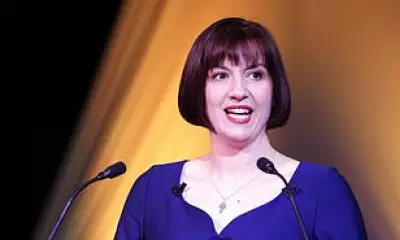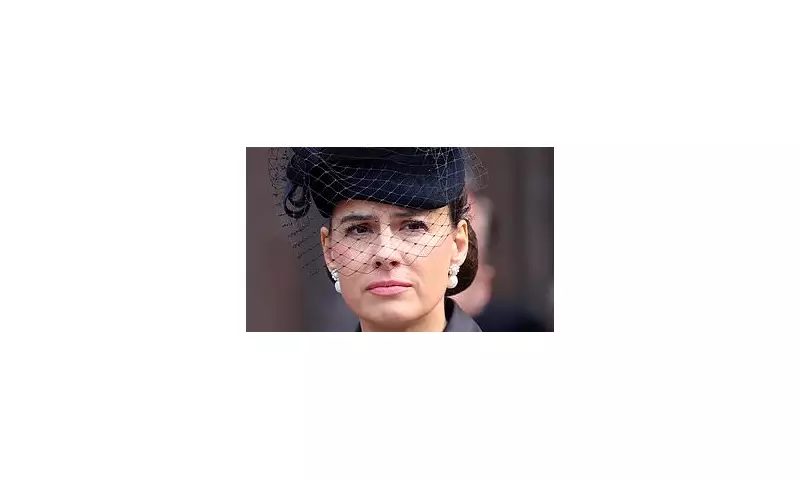
Actress and outspoken campaigner Sophie Winkleman has made a startling confession, revealing she has 'failed spectacularly' in her own home by allowing her 12-year-old daughter a mobile phone. This admission comes despite her vigorous public campaigning for a ban on smartphones for under-16s and screens in schools.
From Campaigner to Capitulation
The Peep Show star, 45, who is married to Lord Frederick Windsor and shares two daughters, Maud, 12, and Isabella, nine, has long been a critic of devices. She has argued they damage children's education, eyesight, life chances, and mental wellbeing. However, she told The Sunday Times that her resolve crumbled when her eldest daughter, Maud, presented a heartfelt case.
"She's 12 and she went to a school where they all had phones and she said: 'Dear mother, your ideology is really ruining my life. I don't know what anyone's talking about every morning when I come in. I'm so isolated,'" Winkleman recounted. She described Maud as being "very articulate and sweet about it," leading to her eventual concession. Maud now has a phone but does not have any social media accounts.

The Call for Government Legislation
Winkleman argued that the current patchwork approach, where some children have phones and others do not, creates social rifts and leaves those without feeling ostracised. She insists the responsibility must shift to the government to create a uniform, nationwide policy.
"[There's] sort of a need for children to do what their friends are doing and if it's not legislated, we all lose. I mean, it's brutal," she said. "And the parents who are very strong, their children are very unhappy and they bang on at them all the time and it's a cause of so much friction. I think most people with young children would be very, very grateful for some government legislation."
Her plea highlights a stark reality underscored by recent research: the average teenager now spends 11 hours a day on screens, while 55 percent of children aged eight to 11 own a smartphone.
The Political Battle Over School Phone Bans
The issue sits at the heart of an ongoing political debate. Earlier this year, the Conservatives pushed for an amendment to the Schools Bill to make mobile phone bans in classrooms law. This move was defeated by Labour MPs, who argued that official guidance already exists and most schools already impose restrictions.
Education Secretary Bridget Phillipson previously dismissed the Tory proposal as a ‘headline-grabbing gimmick’. Currently, non-statutory guidance advises schools to prohibit phone use, but they are not legally bound to follow it.
This legal grey area has prompted direct action. A teenager and a mother-of-three recently joined an existing legal challenge against the government, arguing the guidance fails to adequately protect pupils. The case, launched in July by fathers Will Orr-Ewing and Pete Montgomery, calls for a total smartphone ban in schools, citing safeguarding failures due to the extreme content accessible online.
However, some private school leaders have cautioned that an 'outright ban' lacks 'nuance', suggesting policies should be 'community specific' and acknowledging phones can help with safety, like tracking journeys to and from school.
A survey this year found that while 100 percent of primary schools have a mobile phone ban, the figure is 83 percent in secondary schools, with a further 16 percent allowing limited use outside lessons.
A Department for Education spokesman stated: "Phones have no place in our schools, and leaders already have the power to ban phones. Research from the Children’s Commissioner shows that 99.8 per cent of primary schools and 90 per cent of secondary schools already have policies restricting the use of mobile phones."